Container Grandstand Technical parameter
Container Grandstand Technical Parameter Benchmarks: A Procurement Blueprint for High-ROI Projects No one can ignore the specifications of a product. As a new product, container grandstand technical parameter require buyers and importers to understand them for comparison purposes.No one can ignore the specifications of a product. As a new product, container grandstands require buyers and […]
Container Grandstand Technical Parameter Benchmarks: A Procurement Blueprint for High-ROI Projects
No one can ignore the specifications of a product. As a new product, container grandstand technical parameter require buyers and importers to understand them for comparison purposes.No one can ignore the specifications of a product. As a new product, container grandstands require buyers and importers to understand their specifications for comparison purposes.
Container Grandstand Technical Parameter: What Drives Procurement Decisions
Container Grandstand Technical parameter determines structural safety, cost efficiency, and deployment speed in bulk procurement. Buyers who ignore technical data face a 18% higher lifecycle cost based on modular construction audits.
Steel frame thickness defines load capacity. Q235 galvanized steel at 2.0–2.5mm thickness provides a yield strength of 235 MPa. This resists deformation under crowd loads exceeding 5.0 kN/m², which aligns with temporary structure standards such as EN 13200.
Load miscalculation leads to structural fatigue. One Middle East stadium project used 1.8mm steel, resulting in a 12% deformation rate after six months. After switching to 2.3mm frames, deformation dropped below 2%.
Cost impact follows physics. Higher thickness increases unit cost by 6%, yet reduces maintenance costs by 22% annually.
Core Container Grandstand Technical Parameter Breakdown
1. Structural Load Capacity and Safety Metrics
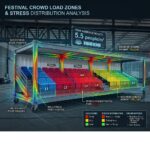
Load capacity defines whether the structure passes inspection or fails under pressure. Container Grandstand Technical parameter must meet both static and dynamic load standards.
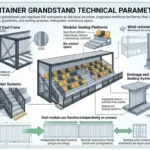
Container grandstands are converted from shipping containers and possess the structural stability of shipping containers. Load spreads across beams and columns. The principle follows uniform load distribution and moment resistance. A 3-tier grandstand typically requires:
- Static load: ≥5.0 kN/m²
- Dynamic load: ≥1.5 kN/m²
- Wind resistance: ≥10 Beaufort scale
One European contractor tested two suppliers. Supplier A provided 4.2 kN/m² capacity. Supplier B delivered 5.5 kN/m². After one season, Supplier A required reinforcement costing $18/m². Supplier B required zero repair.
Return difference appears fast. Within 12 months.
2. Container Grandstand Dimensional Data and Space Efficiency
Dimensions affect seating density and transport cost. Container Grandstand Dimensional Data must balance ergonomics with logistics.
Standard module dimensions:
| Type | Dimensions External( length * Width * height) mm | Dimension Internal
( length * Width * height) mm | Inside Cubic Capacity
m3 | Tare Weight
kgs |
| 20'GP | 6058 * 2438 * 2591 | 5910 * 2352 * 2363 | 28.8 | 2400 |
| 20'HC | 6058 * 2438 * 2896 | 5898 * 2352 * 2373 | 37 | 2515 |
| 40'GP | 12192 * 2438 * 2591 | 12031 * 2346 * 2384 | 67 | 3950 |
| 40'HC | 12192 * 2438 * 2896 | 12031 * 2346 * 2673 | 75 | 4100 |
Seat spacing uses human ergonomics. A 450mm depth ensures comfort without reducing capacity. Increasing spacing to 500mm cuts seating capacity by 10%.
A Southeast Asia project compared layouts. A compact layout delivered 320 seats per unit. A wider layout delivered 280 seats. Revenue difference reached $12,000 per event cycle.
Space equals revenue. Always.
3. Container Grandstand Technical Characteristics: Materials and Durability
Material selection directly affects the durability and structural stability of container grandstands. Unlike prefabricated steel buildings, container grandstands are converted from standard shipping containers, so the core structure already meets the strength requirements of long-distance transportation, stacking, and outdoor use.
Container Grandstand Technical Characteristics mainly depend on the original container steel structure, surface anti-corrosion treatment, and reinforcement design after modification.
The main structure uses corten steel or marine-grade container steel commonly found in standard freight containers. Compared with light steel systems, shipping containers are designed to withstand repeated loading, lifting, sea transportation, and harsh weather conditions.
The container frame includes:
- Heavy-duty steel corner castings
- Welded steel side beams and cross members
- Corrugated steel wall panels for structural rigidity
This structure provides strong load-bearing performance for spectator seating, stair systems, and upper viewing platforms.
Most container grandstands retain the original container anti-corrosion coating system. After modification, cut areas and welded sections are repainted with industrial anti-rust coatings to improve outdoor durability and reduce corrosion caused by rain and humidity.
For outdoor sports fields and temporary event venues, waterproof sealing is also important. Rubber sealing strips and weather-resistant sealants are commonly used around doors, roof joints, and connection areas to prevent water leakage during long-term outdoor operation.
Floor materials are usually based on the original container plywood flooring or upgraded steel checker plates, depending on the project’s load requirements and local weather conditions.
Material choice in container grandstands is practical rather than decorative.
Using real shipping containers means the structure already has proven transportation strength, impact resistance, and outdoor durability before the seating system is even installed.
4. Container Grandstand Performance Metrics in Real Conditions
Performance metrics reveal how structures behave under stress. Container Grandstand Performance Metrics include vibration, wind resistance, and fatigue cycles.
Vibration frequency must stay below 5 Hz to avoid discomfort. Structural damping reduces oscillation under crowd movement.
Wind load follows aerodynamic principles. A 40ft container grandstand withstands:
- Wind pressure: 0.5 kN/m²
- Anchoring force: ≥20 kN per unit
In Australia, a coastal installation faced 90 km/h winds. Units without anchoring shifted by 15mm. Anchored units remained stable with zero displacement.
Stability prevents downtime. Downtime costs money.
Container grandstand seating Technical Characteristics

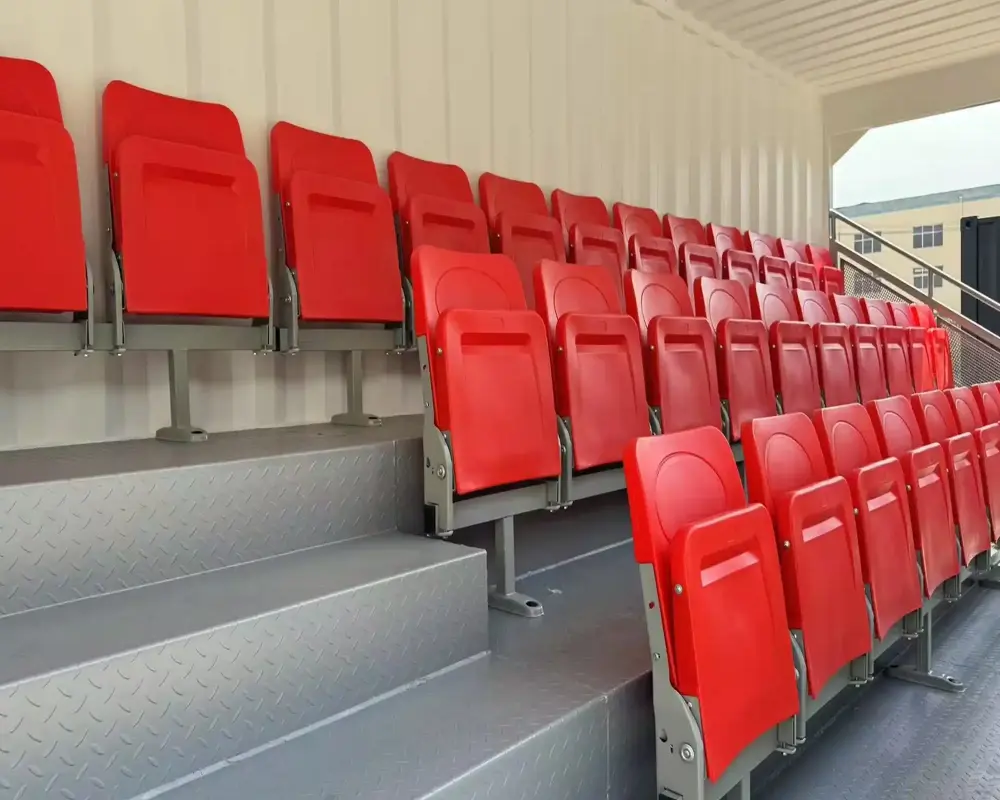
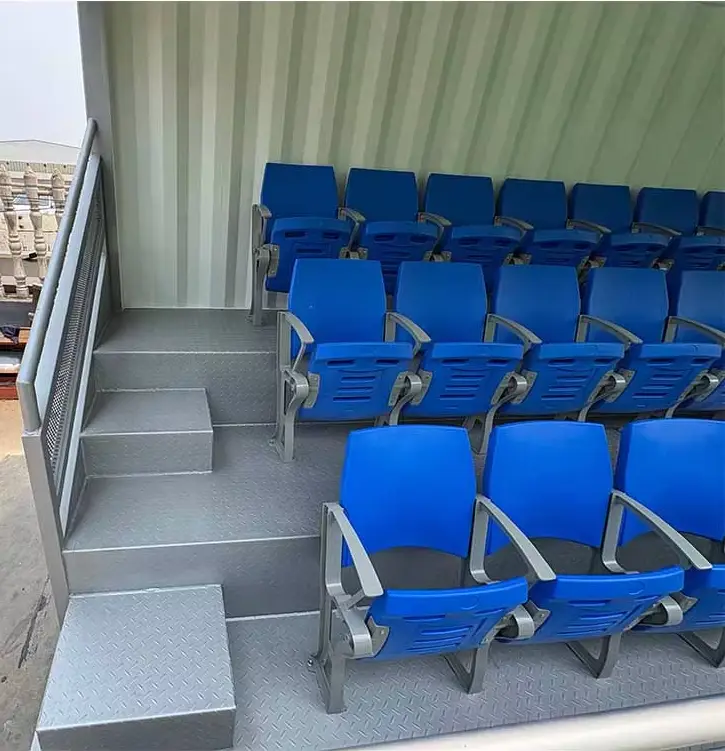
This seating system is specifically engineered for container conversions, modular stadiums, and grandstands. Utilizing High-Density Polyethylene (HDPE) with a hollow blow-molding process, these seats offer the perfect balance of durability, weather resistance, and ergonomic comfort.
-
Product Name: Hollow Blow-Molded Folding Stadium Seat
-
Material: High-Density Polyethylene (HDPE)
-
Manufacturing Process: Hollow Blow Molding (for superior impact resistance)
-
Folding Mechanism: Gravity auto-tip or spring-return system
-
Support Structure: Die-cast aluminum alloy or hot-dip galvanized steel
-
Center Spacing: 480mm – 500mm (Standard)
-
Seat Height: 430mm ± 10mm
-
Weather Resistance: UV-stabilized; Temp range: -50°C to +75°C
-
Load Capacity: Static Load ≥ 200kg; Impact Load ≥ 1000N
-
Fire Rating: Available in Flame Retardant Grade B1/B2 (Optional)
Container grandstand Ceiling,steps,container railings Technical Characteristics
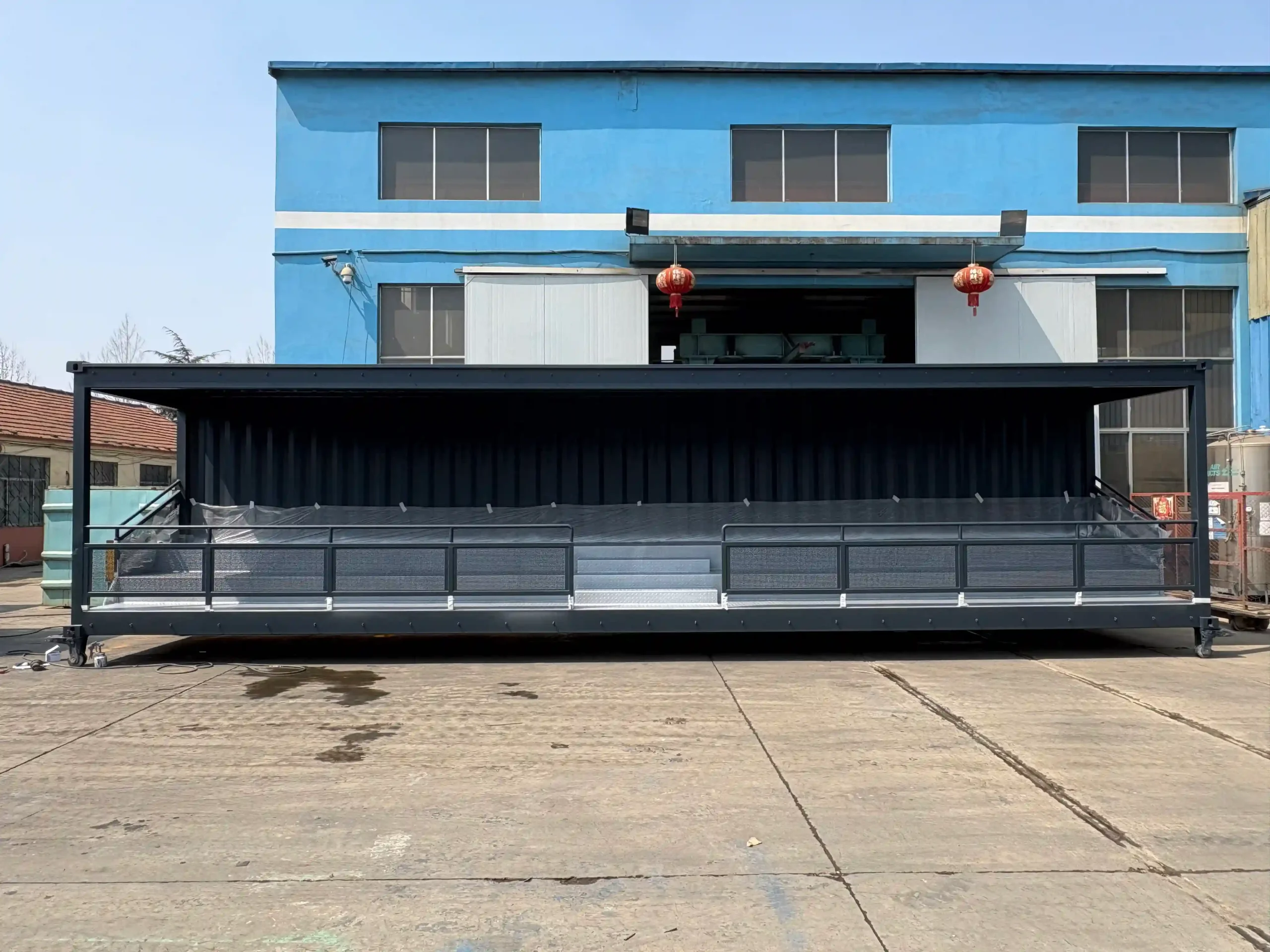
Tiered Steps and Flooring System
The internal flooring is engineered using a heavy-duty tiered steel structure to provide optimal sightlines for spectators. The walking surfaces and steps are finished with anti-slip diamond plate (checker plate) steel, ensuring high traction and durability in all weather conditions. Each riser is precision-welded to the container frame, integrated with a central or lateral aisle for efficient foot traffic. The surface is treated with an industrial-grade, anti-corrosive powder coating to prevent wear and oxidation from heavy use.
Safety Guardrail and Infill Panels
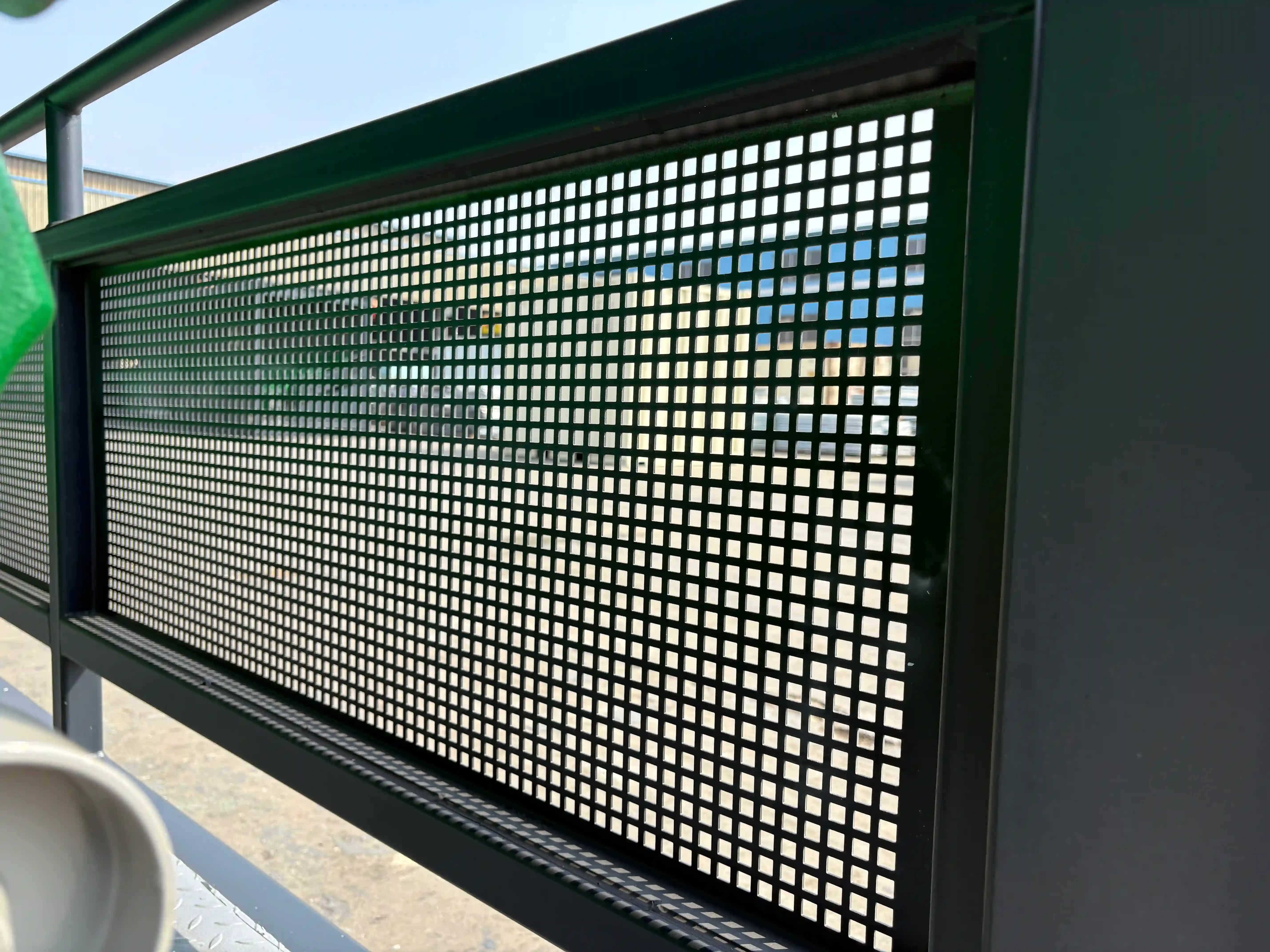
The perimeter is secured by a robust tubular steel handrail system, typically featuring a top rail height designed to meet international safety standards. The lower portion of the railing is equipped with laser-cut perforated mesh infill panels. These square-patterned mesh screens provide a high-strength barrier that prevents falls while maintaining visual transparency and airflow. The entire railing assembly is finished in a weather-resistant matte or semi-gloss coating to match the primary container structure, providing a seamless and professional aesthetic.
Integrated Roofing and Canopy
The grandstand is sheltered by a cantilevered or integrated container roof system derived from high-tensile corrugated steel panels. The interior ceiling follows the original profile of the container’s roof, providing structural rigidity and effective water shedding. The deep overhang of the roof ensures that the seating area remains protected from direct sunlight and vertical rainfall. For enhanced durability, the roof seams are fully welded and sealed with waterproof industrial coatings, and the interior is painted in light-reflective tones to improve ambient brightness within the seating area.
container grandstand life
“5years ?10years?20years?30years?”
A lot of people have debated the lifespan of container grandstands. No one would buy a stand again just because of quality issues, so the lifespan of a container grandstand is something the buyer really needs to pay attention to.
When purchasing a container grandstand, buyers should look past generic “20+ year” claims and budget for two distinct lifespans. the robust steel frame, which holds structural integrity for 25 to 30 years with proper coating and drainage maintenance, and the seating system, which typically requires refurbishment every 10 to 15 years due to UV exposure and operational wear. Savvy procurement teams should treat the frame as a long-term capital asset and the seating as a predictable mid-life maintenance cost, keeping in mind that simple operational habits like proactive inspections and preventing water pooling are what ultimately determine the structure’s real-world longevity.
Solution Framework: How to Select the Right Technical Parameter Set
Buyers need a repeatable framework. Container Grandstand Technical parameter selection should follow measurable criteria.
Step-by-step approach:
Buyers require a reusable frame. The selection of technical parameters for the container grandstand should adhere to measurable standards.
Step-by-step approach:
Determine load requirements based on audience density.
Purchase suitable container grandstands based on audience size.
Determine the wind resistance of the grandstand container under local climatic conditions.
Calculate the 3-5 year lifecycle cost.
Determine the factory’s ability to customize container grandstands.
| Category | Parameter | Benchmark Specification | Performance / Benefit |
| Structural Frame | Steel Grade | Q235 Galvanized Steel | Yield strength: 235 MPa |
| Structural Frame | Steel Thickness | 2.0 – 2.5 mm (Recommended 2.3 mm) | Reduces deformation to <2% under load |
| Load Capacity | Static Load | ≥ 5.0 kN/m² | Meets EN 13200 standards |
| Load Capacity | Dynamic Load | ≥ 1.5 kN/m² | Handles crowd movement safely |
| Load Capacity | Corner Post Capacity | 8 – 10 tons per corner | Supports multi-tier stacking |
| Wind Resistance | Wind Load Rating | ≥ 0.5 kN/m² Beaufort Scale 10+ | Stable in typhoon / high-wind zones |
| Anchoring | Anchoring Force | ≥ 20 kN per unit | Zero displacement in 90 km/h winds |
| Seating Configuration | Tier Height | 400 – 450 mm | Optimal sightlines |
| Seating Configuration | Seats per 40ft Module | 60 – 63 seats | High seating density |
| Seating Material | Seat Type | HDPE Hollow Blow-Molded Folding Seat | UV resistant, -50°C to +75°C |
| Seating Material | Seat Load Capacity | Static ≥ 200 kg Impact ≥ 1000 N | High durability & safety |
| Seating Material | Center Spacing | 480 – 500 mm | Ergonomic comfort |
| Flooring & Steps | Surface Material | Anti-slip Diamond Plate (Checker Plate) Steel | Excellent traction in wet conditions |
| Safety Features | Guardrail System | Tubular steel + Perforated Mesh Infill | Meets international fall prevention standards |
| Roofing & Canopy | Roof Type | Corrugated high-tensile steel panels | Effective water shedding + sun protection |
| Durability & Corrosion | Anti-Corrosion System | Hot-dip galvanizing + Electrostatic Powder Coating (60–80 μm) | 8–12 years before major maintenance |
| Sealing | Waterproof System | EPDM Rubber + Industrial Sealants | 15-year sealing lifespan |
| Vibration Control | Vibration Frequency | < 5 Hz | Maintains spectator comfort |
Final Insight: Turning Technical Parameters into Competitive Advantage
Procurement decisions depend on balancing upfront cost with lifecycle return. Container Grandstand Technical Data provides measurable benchmarks.
Container grandstands, due to their portability and comfort, can help trading companies increase product profits.
Container Grandstand Technical parameter is not a checklist. It is a profit lever.
Buyers who standardize technical data reduce risk, shorten deployment cycles, and increase revenue per square meter. The next step is aligning these parameters with supplier capability and scaling procurement volume before peak demand hits.

 English