Container Grandstand: A Practical Buying Guide for Sports and Outdoor Events
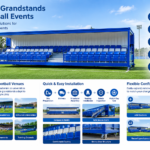
A container grandstand is a portable spectator seating solution made by converting a standard shipping container into a covered or open seating structure. It can be used for sports fields, temporary events, schools, festivals, race tracks, and other venues where permanent seating is not required.
For importers, event companies, stadium contractors, and distributors, buying a container grandstand is not simply about choosing the number of seats. The container size, seating layout, roof structure, transport method, installation requirements, local regulations, and final application all affect the project cost and delivery process.
This guide explains the main factors to consider when sourcing a container grandstand for commercial or project use.
What Is a Container Grandstand?
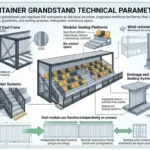
A container grandstand is a spectator stand built around a shipping container structure. The container provides the main structural frame, while the upper or internal area can be modified to accommodate spectator seats, stairs, handrails, roofing, and other components.
Unlike traditional concrete grandstands, a container-based structure can be manufactured and transported as a relatively compact unit.
For B2B buyers, this creates several practical advantages:
- Easier transportation between locations
- Faster deployment at temporary venues
- Factory-based manufacturing
- Standardized container dimensions
- Options for seating capacity and layout
- Possibility of covered spectator seating
- Suitable for rental and event businesses
- Easier storage when the structure is not in use
The actual design should still be checked against the requirements of the destination country and the intended installation site.
Where Are Container Grandstands Used?
The application determines many of the design requirements.
Sports Events
Portable spectator stands are commonly considered for football, rugby, basketball, tennis, athletics, and other sporting events.
A container grandstand can provide additional seating when an existing stadium needs temporary capacity.
For sports facilities, buyers should pay particular attention to:
- Viewing angle
- Number of seats
- Access stairs
- Guardrails
- Roof coverage
- Player and spectator circulation
- Emergency exits
- Local safety requirements
Outdoor Events and Festivals
Event organizers often need temporary seating that can be installed and removed according to the event schedule.
Container spectator stands can be used for:
- Music festivals
- Community events
- Outdoor performances
- School competitions
- Racing events
- Ceremonies
- Temporary sporting events
For these projects, transport and installation time can be as important as the seating capacity.
Schools and Training Facilities
Schools, sports clubs, and training centers may require additional spectator seating without constructing a permanent building.
A modular container grandstand can be considered when the site needs flexible seating or when future expansion is expected.
Event Rental Companies
Rental companies have different requirements from one-time project buyers.
They normally need products that can be transported repeatedly and used at different locations.
Important factors include:
- Structural durability
- Ease of transportation
- Installation method
- Maintenance
- Seat replacement
- Weather protection
- Loading and unloading requirements
A supplier should therefore understand whether the buyer plans to use the grandstand for one project or as part of a rental fleet.
How Many Seats Can a Container Grandstand Provide?
Seating capacity depends on the container dimensions, seating arrangement, stair position, access requirements, and overall design.
A 40ft high cube container, for example, provides a compact base for a medium-size spectator stand.
One practical configuration is a 40ft container grandstand with 63 seats. The unit can be equipped with HDPE or aluminum alloy seats, a roof, stairs, and optional guardrails.
For B2B purchasing, it is better to specify the required capacity before requesting a quotation.
Instead of asking only:
“How much is a container grandstand?”
provide the supplier with information such as:
- Required number of seats
- Container length
- Covered or uncovered seating
- Seat material
- Required stairs
- Guardrail requirements
- Installation location
- Quantity required
- Destination port
This allows the factory to calculate the structure and transportation requirements more accurately.
Container Grandstand vs. Traditional Temporary Grandstand
The two solutions serve similar purposes, but their construction and logistics can be different.
| Factor |
Container Grandstand |
Traditional Temporary Grandstand |
| Main structure |
Shipping container-based |
Modular steel/aluminum structure |
| Transportation |
Container logistics |
Component-based transport |
| Factory production |
High |
Depends on supplier |
| Deployment |
Relatively compact |
Requires assembly |
| Storage |
Compact container format |
Disassembled components |
| Customization |
Seats, roof, stairs, rails |
Usually highly modular |
| Suitable applications |
Events, sports, temporary venues |
Events, stadiums, sports facilities |
The correct choice depends on the project requirements. Buyers should compare the complete delivered cost rather than looking only at the factory quotation.
What Should You Check Before Ordering?
A quotation should include more than the number of seats and unit price.
1. Container Size
Confirm whether the product is based on a 20ft, 40ft, or 40ft high cube container.
The external dimensions affect:
- Transport
- Site access
- Shipping
- Installation
- Final seating layout
2. Seat Material
For outdoor projects, ask about:
- UV resistance
- Weather resistance
- Seat fixing method
- Replacement options
- Color choices
If the grandstand will be used frequently, seat durability becomes an important operating cost.
3. Roof Structure
A roof can provide protection from sun and rain.
However, adding a roof also affects:
- Overall height
- Wind load
- Transport dimensions
- Structural requirements
- Local approval requirements
The roof should therefore be included in the design from the beginning rather than treated as an afterthought.
4. Stairs and Handrails
Spectator access needs to be considered carefully.
Ask the supplier to confirm:
- Number of stairs
- Stair width
- Handrail design
- Guardrail height
- Access position
- Connection method
Local building and event regulations may specify additional requirements.
5. Container Condition
If a shipping container is used as the structural base, clarify whether the supplier uses:
- New containers
- Used containers
- New high cube containers
- Modified standard containers
This can affect both appearance and structural condition.
How Is a Container Grandstand Manufactured?
A factory-produced container grandstand normally goes through several stages.
Step 1: Container Preparation
The container is inspected and prepared for modification.
Openings and structural changes are completed according to the approved design.
Step 2: Structural Modification
Additional steel components may be added to support the seating platform, stairs, roof, and other components.
The structure should be checked before surface treatment.
Step 3: Surface Treatment
The steel components are cleaned and protected against corrosion.
Depending on the design, different coating or paint systems may be used.
Step 4: Seat Installation
Seats are installed according to the approved layout.
The factory should check seat spacing and fixing points before final inspection.
Step 5: Roof and Safety Components
Roof panels, guardrails, stairs, and other components are installed.
Step 6: Factory Inspection
Before shipment, the supplier should check dimensions, welding or bolted connections, seat installation, doors, stairs, and other visible components.
For larger B2B orders, buyers can also arrange a pre-shipment inspection.
How Is a Container Grandstand Transported?
Transportation is one of the main issues that importers need to consider.
The factory location, destination port, container dimensions, and final installation site all influence the logistics plan.
For international orders, the supplier should be able to provide information about:
- Factory loading
- Container dimensions
- Gross weight
- Loading method
- Port handling
- Shipping options
- Destination port
- Unloading requirements
For example, a 40ft container grandstand can be designed around standard container logistics. This can simplify international shipping compared with transporting a large permanent structure.
However, the buyer should still confirm the shipping line’s requirements before placing a large order.
How Long Does Installation Take?
Installation time depends on the final configuration and site conditions.
A factory can complete most manufacturing work before shipment. This reduces the amount of work required at the destination.
A typical installation may require:
- Crane or lifting equipment
- Basic power tools
- Hand tools
- Measuring tools
- Several workers
For B2B projects, the supplier should provide installation drawings or instructions before shipment.
This is particularly important when the importer plans to install the product through a local contractor.
What Information Should You Send to a Factory?
A detailed inquiry helps the factory provide a more useful quotation.
You can send the following information:
Project: Container Grandstand
Quantity: 5 units
Capacity: 60–70 seats per unit
Container: 40ft High Cube
Roof: Required
Seats: HDPE
Guardrails: Required
Stairs: Required
Application: Football stadium
Destination:
Delivery: CIF [Port Name]
If you have a site drawing, event layout, or reference image, send it with the inquiry.
This is much more effective than sending only the keyword “container grandstand price.”
What Should Importers Look for in a Supplier?
For B2B buyers, the supplier’s manufacturing capability is an important part of the purchasing decision.
Before ordering, consider asking:
- Is the company a direct manufacturer?
- Where is the production facility?
- Can they provide factory photos or videos?
- What container models do they manufacture?
- Can they customize seating capacity?
- Can they provide production drawings?
- What inspection process is available?
- What is the normal production lead time?
- Can they handle export packaging and loading?
- Have they supplied similar products to overseas markets?
- Can they provide installation instructions?
A supplier that understands both manufacturing and export logistics can reduce communication between the factory, freight forwarder, installer, and final customer.
Container Grandstand for Importers and Distributors
For distributors and rental companies, the product should be evaluated as a business asset rather than only as a construction product.
The key questions are different:
Can it be transported easily?
Can it be reused?
Can replacement seats and components be supplied?
Can different configurations be produced?
Can the factory support repeat orders?
Can the supplier maintain consistent specifications?
These questions become especially important when purchasing multiple units.
A distributor may start with a small order for one project and later need several units with the same dimensions and appearance. Production consistency can therefore be more important than a small difference in the first quotation.
Container Grandstand Purchasing Checklist
Before confirming an order, check the following:
This checklist can help prevent specification differences between the quotation and the final product.
Why Work With a Container Grandstand Factory?
For importers and project contractors, buying directly from a factory can simplify the communication process.
A direct manufacturer can normally discuss:
- Product dimensions
- Structural changes
- Seat configuration
- Roof options
- Custom colors
- Production drawings
- Factory inspection
- Packaging and loading
- Repeat orders
At Container House Co., Ltd, we manufacture container-based products for overseas B2B customers and can discuss container grandstand configurations according to the required seating capacity, application, and shipping requirements.
For projects that require a 40ft container grandstand, covered bleacher, or container spectator stands, buyers can provide the required seat quantity, destination country, and project application for a factory quotation.
Final Thoughts
A container grandstand is not simply a container with seats installed inside it. The structure, seating layout, roof, stairs, safety components, transportation, and installation all need to work together.
For importers, distributors, event companies, and contractors, the most useful approach is to define the project requirements before comparing quotations.
Start with the required seating capacity and application. Then confirm the container size, structural design, roof, seats, access system, transportation method, and installation requirements.
A clear specification helps the factory calculate the product correctly and gives the buyer a more reliable basis for comparing suppliers.

 English