Container Grandstand Manufacturer: A Buyer’s Guide to Sourcing Quality Structures If you’ve spent any time requesting quotes for stadium seating, you already know the container grandstand market is crowded. Search “container grandstand manufacturer” and you’ll get dozens of listings that look nearly identical — same stock photos, same vague product descriptions, same “customization available” line […]
If you’ve spent any time requesting quotes for stadium seating, you already know the container grandstand market is crowded. Search “container grandstand manufacturer” and you’ll get dozens of listings that look nearly identical — same stock photos, same vague product descriptions, same “customization available” line at the bottom. Sorting out who actually builds these structures from who is just reselling them is the first real task in front of any buyer.
This guide walks through what separates a capable manufacturer from a middleman, using our own production of the 40ft container grandstand seat (63-seat configuration) as the reference point throughout. We’ll cover the four things that matter most once you get past the price quote: how the product is actually made, what manufacturing capacity really looks like on the ground, how quality gets checked before a container ships, and what past buyers say once the structure is installed and in use.
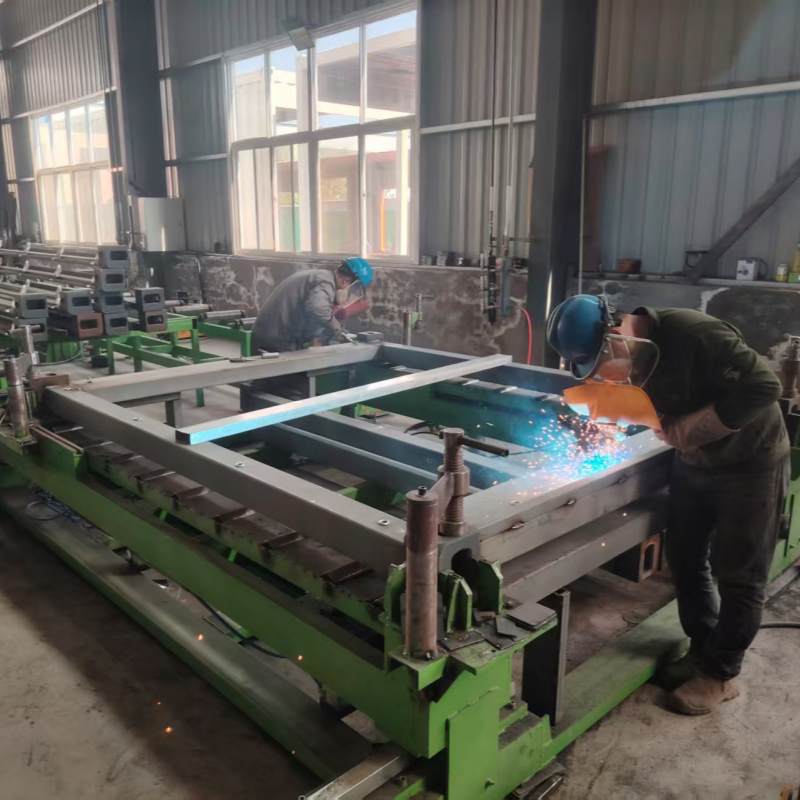
In this industry, plenty of companies call themselves manufacturers on their website homepage and then subcontract the actual welding and fabrication to a third party they’ve never inspected. That’s not automatically a problem — some trading companies manage quality well — but it does change your risk profile. If something goes wrong with the steel frame six months after installation, you want to know whether you’re dealing with the people who built it or a middleman who has to relay your complaint to someone else.
A few direct questions tend to surface the truth quickly: Can they name the workshop location? Can they send unedited video of welders on the floor, not a five-second highlight reel? Do they know the wall thickness of the container frame off the top of their head, or do they have to “check with the factory”? None of this is complicated, but it does require asking before you commit a deposit.
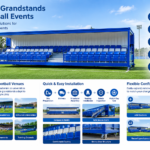
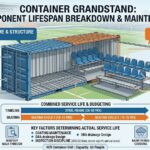
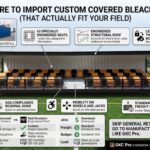
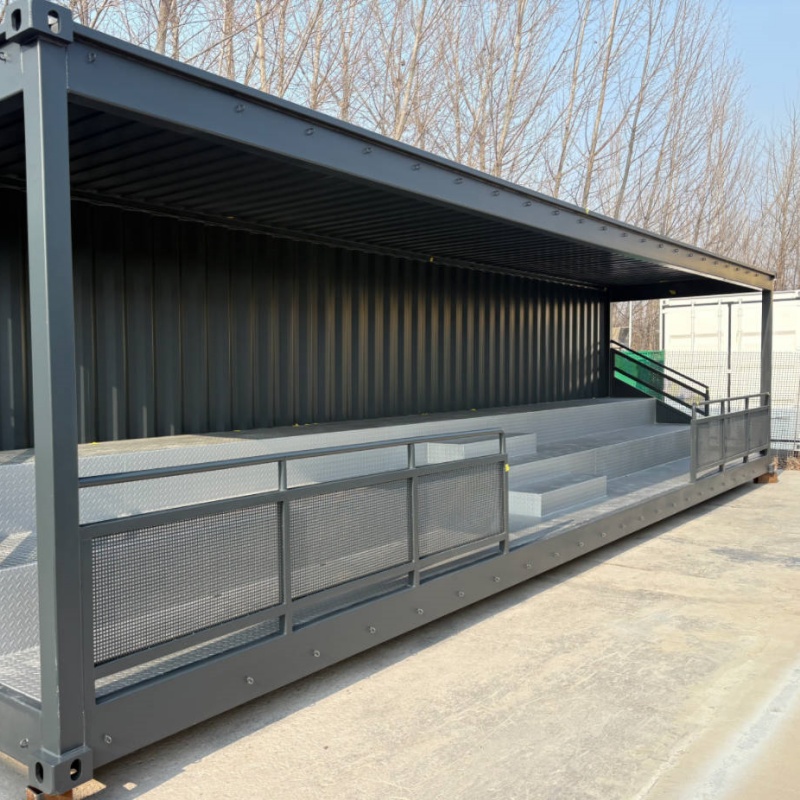
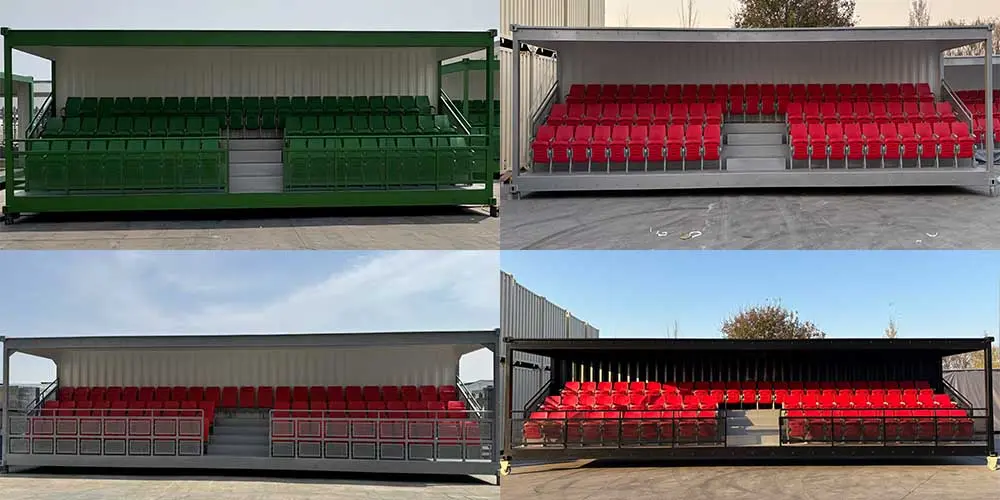
The 40ft container base is popular for a reason — it ships as a single standard unit, requires no on-site welding, and unfolds or assembles into a tiered seating block without heavy cranes at the destination in most configurations. Built out to 63 seats, the structure typically spans several tiers with a rear access stair and, depending on the buyer’s local code requirements, a handrail configuration along the open edges.
Sports clubs and school athletic departments tend to ask for this size when they need something bigger than a set of portable bleachers but don’t have budget or space for a permanent poured-concrete stand. Municipal buyers procuring for a community field often specify it too, since a container-based unit can be relocated later if the field layout changes — something a permanent structure can’t offer.
You can review the full technical breakdown — load ratings, steel gauge, tier rise and going, and container base dimensions — on our container grandstand technical specifications page, which is worth reading before you finalize a quote request so you’re comparing apples to apples across suppliers.
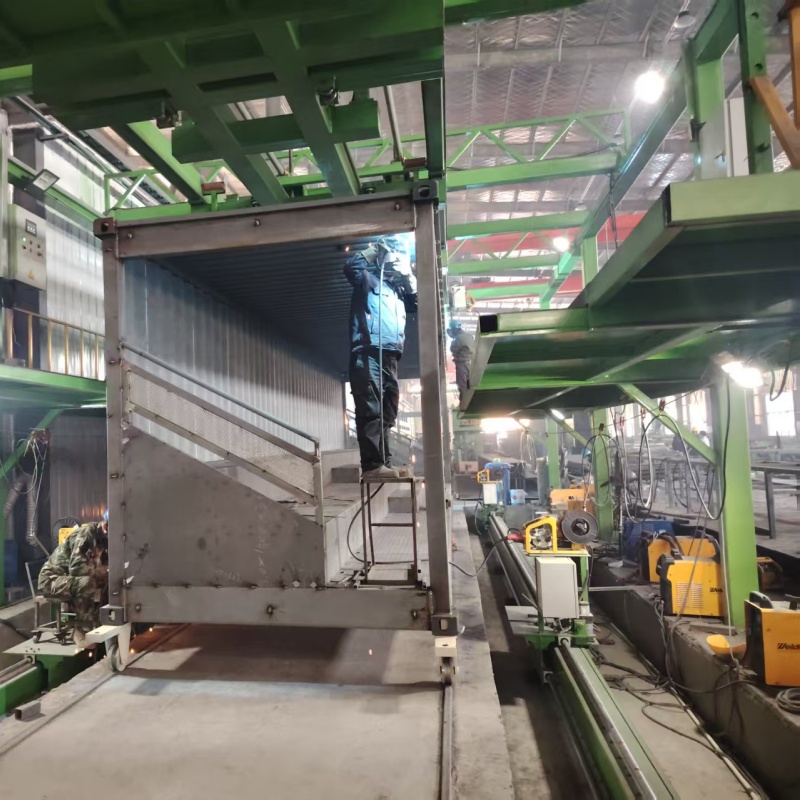
Manufacturing a container grandstand isn’t a single operation — it’s closer to four separate trades happening under one roof. Steel cutting and forming comes first, followed by frame welding, then surface treatment, and finally seating and safety hardware installation before the unit is loaded. Buyers who understand this sequence tend to ask sharper questions during factory audits, because each stage has its own failure points.
Structural steel for the frame gets cut to spec and formed before welding begins. Any manufacturer worth working with should be able to show mill test certificates for the steel batch used on your order — not a generic certificate from a different production run. Welding follows, typically done by certified welders working from engineering drawings rather than by eye. This is where a good structural design, ideally reviewed against the framework the American Institute of Steel Construction publishes for load-bearing steel structures, actually matters — a grandstand under dynamic crowd load behaves very differently from a static container.
After welding, surface treatment — sandblasting, priming, and a weather-resistant topcoat — protects against corrosion, which matters more than most first-time buyers expect if the unit is headed somewhere with high humidity or coastal salt exposure. Seating rows, handrails, and stairs go in last, followed by a full walk-through before the unit is packed for shipping.
For a detailed look at the individual production and QC stages, see our cluster article on the production process and workflow for container grandstands.
“Large-scale production capacity” is one of those phrases every supplier claims, so it’s fairly meaningless on its own. What actually matters to a buyer is simpler: can they hit your delivery date without cutting corners, and can they handle your specific configuration without treating it as an unfamiliar one-off.
Workshop size, welding line count, and how many container-based structures a factory ships per month are the concrete numbers worth asking for. A factory that has produced dozens of 40ft grandstand units will have already worked through the tolerance issues and assembly quirks that a newer operation is still discovering on your dime. We go into our own production footprint and equipment in more detail in the article on manufacturing strength and factory capability.
Quality control on a grandstand order isn’t a single sign-off at the end. It has to happen at each stage — raw material check, in-process weld inspection, and final pre-shipment inspection — because a defect caught after painting and assembly is far more expensive to fix than one caught at the cutting stage.
Weld inspection deserves particular attention. Structural welds on a seating frame carry real load once people are sitting and standing on it, and a visual check alone won’t catch subsurface defects. Reputable manufacturers reference recognized testing methods, and buyers with strict local code requirements sometimes request inspection aligned with standards published by ASTM International, a nonprofit standards organization widely used as a reference point for structural material testing.
We cover our own inspection checkpoints and the documentation we provide buyers — inspection photos, material certificates, and pre-shipment reports — in the article on quality inspection for container grandstands.
Specifications and factory tours only tell you so much. The more useful signal, once you’ve narrowed your shortlist, is what past buyers report after the structure has been sitting in a field or stadium through a season or two of actual use — how the paint holds up, whether the stairs feel solid under a crowd, whether the supplier answered the phone when a bolt needed replacing.
We’ve collected feedback from several buyers across different regions and use cases in the customer reviews article, including a few comments on things that went less smoothly early on and how they were resolved — worth reading if you want a picture that’s less polished than a typical testimonials page.
⭐⭐⭐⭐⭐ “A Total Game-Changer for Our School Field!”
Reviewer: Athletic Director at a Private High School
“We needed to expand our stadium seating quickly before the new season, and traditional concrete construction was way out of our budget and timeline. These shipping container grandstands were a total game-changer. The modular setup took just a few days once the crane dropped them in. The canopy and railings feel incredibly sturdy and secure. Plus, the fact that we can relocate them in the future if the school layout changes is a massive bonus. Highly recommend!”
Review 2: ⭐⭐⭐⭐ “Great Flexibility, but Plan Your Logistics”
Reviewer: Event & Festival Coordinator
“We’ve used these container grandstands for multiple outdoor events now. Love the modern aesthetic and the fact that we can use the bottom container as a ticketing booth or storage space. It’s weather-resistant and holds up great against heavy crowd use. Just a quick heads-up for anyone buying: make sure your ground is perfectly leveled before delivery. Also, they are incredibly heavy (obviously), so don’t underestimate the crane and shipping costs in your budget.”
If you’re evaluating a 40ft container grandstand seat with a 63-seat layout for a school, sports club, or municipal field, our 40ft container grandstand product has current specifications, standard lead times, and configuration options. From there, the four cluster articles linked above go deeper into exactly how we build, inspect, and stand behind what we ship.
Your email address will not be published. Required fields are marked *
 English