A distributor in Perth placed an order in early May, told his client the pool would be ready for the first heatwave of summer, and then watched that promise slip by three weeks because nobody had separated “shipping time” from “the whole rest of the process” when the quote came in. That gap between what […]
A distributor in Perth placed an order in early May, told his client the pool would be ready for the first heatwave of summer, and then watched that promise slip by three weeks because nobody had separated “shipping time” from “the whole rest of the process” when the quote came in. That gap between what a factory quotes and what actually lands on a truck at the destination port is where most container pool orders go sideways. This article breaks down what shipping time really covers, how long each stage takes, and what an importer or distributor needs to lock down before promising a delivery date to anyone.
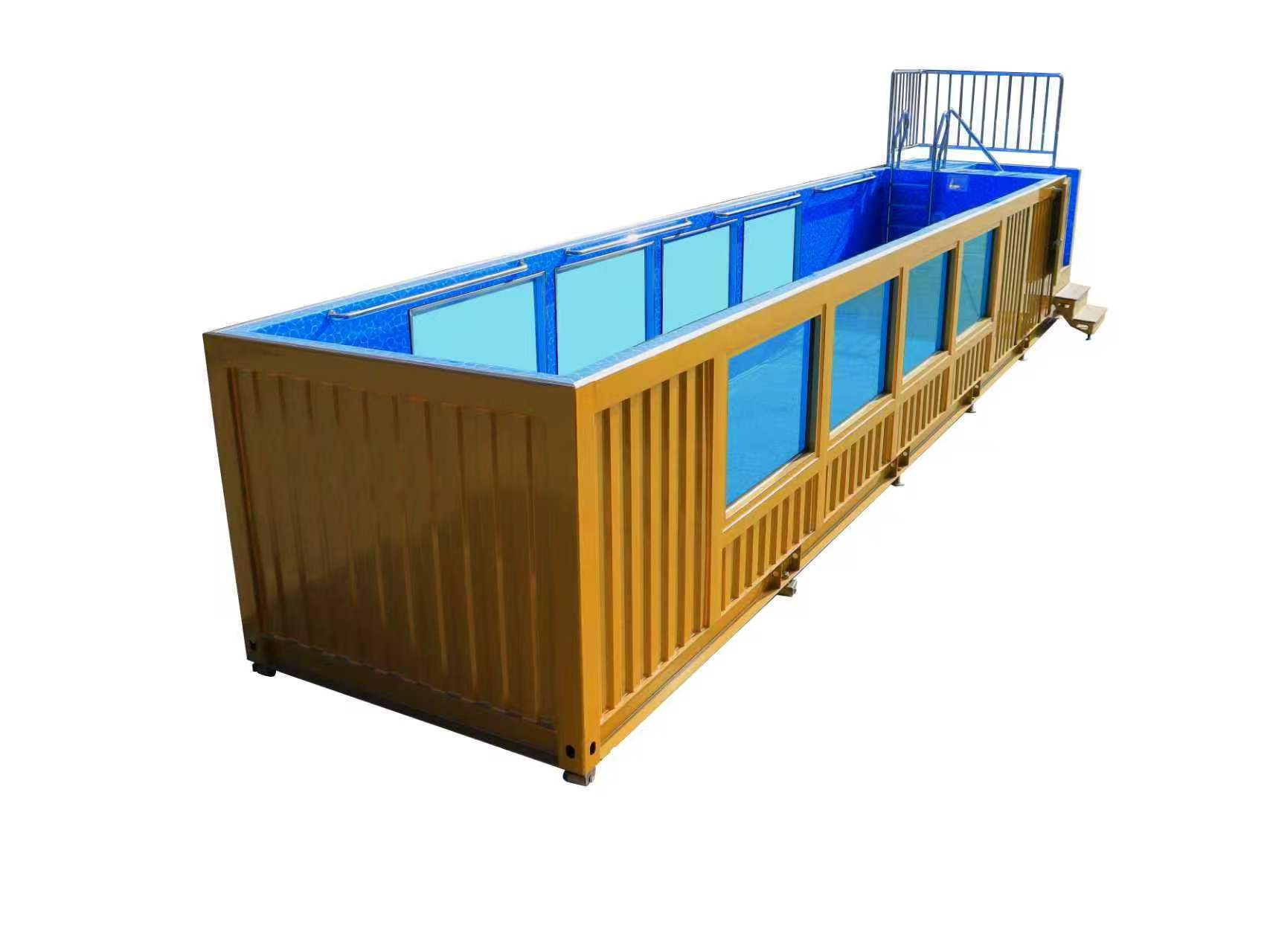
Ask ten suppliers for a shipping time and you’ll get ten different numbers, because most of them are only quoting the ocean transit — the part between the container leaving a Chinese port and arriving at the destination port. That’s one leg of a four-leg trip. The full sequence runs: production at the factory, inland trucking to the port of departure, ocean freight, and then customs clearance plus inland delivery on the receiving end. Skip any one of those legs when you’re calculating a delivery date and you’ll be the one explaining the delay to a customer, not the factory.
This matters more for a container pool than for most products, because the unit isn’t a small box that clears customs in an afternoon — it’s declared as either a modified shipping container or specialized pool equipment depending on the destination country, and that classification decision alone can add days if it isn’t settled before the container ships.
Factory lead time for standard export goods out of China typically runs 15 to 30 days from order confirmation and deposit, and a container pool sits toward the middle of that range rather than the fast end — the base steel structure itself takes little time, but cutting the pool opening, reinforcing the frame, applying the interior waterproof lining, and curing it properly before the unit ever touches water adds real days that can’t be rushed without risking the one component that fails first: the lining.
A rushed lining is the single most common reason a container pool develops leaks within the first year, so a buyer chasing a two-week production promise should ask exactly what step got compressed to hit that number. Customization stretches this window further — a request for a specific coating color, a viewing window, or a non-standard depth means the factory is no longer pulling from a repeatable process, and 30-plus days from confirmation to ready-for-loading isn’t unusual once drawings need a revision or two.
Once the container actually leaves port, transit time from China to the US or Europe typically runs four to eight weeks, and that range holds whether the cargo is a container pool, a prefab house shell, or anything else moving by standard ocean freight — the pool itself doesn’t change the sailing schedule. Trans-Pacific routes to Australia generally run shorter, often landing in the three-to-four-week range given the shorter overall distance, though buyers should still confirm the specific port pair rather than assume a blanket number.
Here’s the part that catches new importers off guard: the freight quote and the destination arrival date rarely account for congestion. Normal port conditions add five to ten days beyond the printed transit time simply from vessel queuing and terminal handling. During peak periods — the pre-Chinese-New-Year rush most of all — that congestion window can stretch to fourteen or twenty-one days at transshipment hubs, and a distributor who books freight in December without accounting for that seasonal squeeze is the one fielding angry calls in February.
Customs clearance splits into two very different outcomes, and which one you get is mostly out of your hands. A document exam — where the paperwork is reviewed without opening the container — typically clears in two to three days. A physical exam, where the container gets opened and inspected, runs seven to fourteen days and can add $1,000 to $3,000 in port storage and handling fees on top of the delay itself.
The single biggest lever an importer has over which outcome they get is HS code accuracy. A container pool misclassified as a standard shipping container, or vice versa, is exactly the kind of paperwork mismatch that triggers a physical exam — not because customs officers are picking on the shipment, but because the declared value and the declared product don’t line up cleanly. Confirming the correct classification with a customs broker before the container books passage costs nothing and saves the two weeks that a hold at port would otherwise cost.
This is the seasonal trap that catches importers every single year, and it’s entirely avoidable with a calendar. Most Chinese factories close for fourteen to twenty-one days around the holiday, but the real disruption runs longer than the closure itself — container drayage from factory to port becomes difficult in the two to three weeks before the holiday as truck drivers head home, and recovery afterward isn’t instant either. New worker training, equipment recommissioning, and a supplier-side scramble to catch up all stretch the real return to normal production well past the first day factories reopen.
An order placed in early January with a January production promise is, in practice, an order that either ships late or ships rushed — and a rushed container pool is exactly the product where a shortcut in the lining shows up as a leak eighteen months later. Buyers ordering for a spring or early-summer installation should count backward from Chinese New Year and place the order with enough buffer that production doesn’t collide with the shutdown.
Here’s where the comparison actually matters for a buyer deciding where to source. Locally built container pool companies in markets like the US and Canada quote their own lead times, and those numbers aren’t always faster than importing — one North American builder currently quotes six to eight weeks from order to delivery, while a completed-pool builder covered by Axios reported being roughly eight months out on new orders during a high-demand stretch, purely from backlog rather than shipping distance.
That’s the detail worth sitting with: a factory-direct import from China, landing in four to eight weeks of ocean transit plus fifteen to thirty days of production, can realistically compete with — or beat — a domestic builder’s own backlog, especially during a seasonal demand spike when every local shop is booked out. The tradeoff runs the other way too: a domestic builder can usually absorb a warranty issue faster than a factory eight thousand miles away, so the calculus isn’t purely about which number is smaller.
Feedback from actual buyers tends to focus on the handoff moment more than the paperwork stages behind it. One buyer reviewing a container pool company on Trustpilot described the installation process as seamless once the unit arrived, with the team keeping them updated in real time through delivery — the kind of comment that reflects good communication during transit as much as a smooth physical install. Buyers researching container pools broadly report a similar pattern: once the unit is actually on-site, setup itself takes days, not weeks, since the pool arrives essentially complete. The frustration buyers report almost never centers on installation day — it centers on the weeks before that, when a vague “shipping time” quote didn’t match what actually happened at the port.
A few habits separate importers who hit their delivery promises from those who don’t. Confirm production lead time and shipping time as two separate numbers in writing, since conflating them is the single most common estimating mistake in this category. Book ocean freight early during any period within six weeks of Chinese New Year, since vessel space tightens fast and late bookings get pushed to slower, more congested sailings. Verify HS code classification with a broker before the container ships rather than after a hold notice arrives. And resist any factory quote that promises a compressed production timeline on a fully customized unit — ask specifically whether the interior lining cure time was shortened to hit that number, because that’s the shortcut that turns into a warranty claim.
None of this requires exotic logistics knowledge. It requires treating the shipping quote as four separate numbers instead of one, and asking the supplier to itemize each stage before a delivery date gets promised to anyone downstream.
Add it up honestly and a realistic window runs somewhere between nine and eighteen weeks from deposit to delivery at the destination port — fifteen to thirty days of production, four to eight weeks of ocean freight, and anywhere from a few days to two weeks for customs, before local trucking and installation even start. That’s a wider window than most quotes advertise, and it’s the number a serious buyer should actually plan around, not the ocean-transit figure alone. Distributors who want the full specification sheet and current lead times can review the container pool product line directly, and buyers who are still deciding whether a container pool fits their project at all should start with the complete container pool buying guide for importers and wholesalers, which covers sourcing questions beyond just timing.
Shipping delays in this category almost never come from the ocean voyage itself — they come from treating a four-stage process as if it were one number. Get production, freight, and customs clearance quoted and confirmed separately, and the delivery date you promise a customer has a real chance of holding.
Authoritative external references cited in this article:
Your email address will not be published. Required fields are marked *


 English