A distributor in Melbourne sends the same message every buying season: her local granny flat supplier just raised prices 18% again, and her margin on a $40,000 unit shrank to almost nothing. She’s not alone. Import managers across Australia, the U.S., the Gulf, and East Africa are asking the same question in different words — […]
A distributor in Melbourne sends the same message every buying season: her local granny flat supplier just raised prices 18% again, and her margin on a $40,000 unit shrank to almost nothing. She’s not alone. Import managers across Australia, the U.S., the Gulf, and East Africa are asking the same question in different words — can I import a granny flat from China directly, skip the local markup, and still land a unit that passes inspection? The short answer is yes, but the process has enough moving parts that most first-time importers get at least one of them wrong. This article walks through what an expandable granny flat actually is, what it costs to import from a Chinese factory, and where importers lose money if they don’t ask the right questions upfront.
A granny flat is a small secondary dwelling — traditionally built for an aging parent, now used just as often as a rental unit, guest house, or worker accommodation. The definition hasn’t changed much. What’s changed is where importers are sourcing the structure itself.
Site-built granny flats in markets like Australia and the U.S. run $150 to $300 per square foot, with most completed projects landing between $60,000 and $360,000. That price is almost entirely local labor and local material markup — a Chinese factory building the same steel-and-panel structure at scale can land a comparable unit for a fraction of that, before freight and duty. That gap is exactly why importers keep this category on their sourcing list even when shipping costs rise: the expandable granny flat folds down to a shippable footprint and still opens into a full livable unit in a few hours on-site.
Terminology matters for customs classification, not just marketing. A granny pod is a specialized elder-care unit, usually smaller, sometimes fitted with medical monitoring. A granny flat is broader — rental income, home office, guest space, or elder care, depending on the floor plan an importer orders. An ADU is simply the North American term for the same category.
For import purposes, what matters is the HS code the factory declares, not which of these three labels ends up on the marketing page. An importer bringing in a residential steel structure needs the correct classification confirmed before the container ships — not after it’s sitting in a bonded warehouse waiting on a customs broker to sort out a paperwork mismatch.
Start with the ex-works price, then add every line item that shows up after the factory invoice, because that’s where importers get surprised.
The factory price for a folded steel unit depends on size, insulation grade, and interior finish — not on labor hours, since on-site assembly runs 2 to 4 hours with a 2 to 3 person crew instead of a multi-week framing schedule a local contractor would bill for. On top of that ex-works number, an importer needs to budget for ocean freight, which drops significantly per unit when multiple folded units share a single standard container. Import duty and customs clearance typically add 5 to 15 percent of declared value depending on the destination country, and that percentage swings hard based on whether the HS code was classified correctly the first time. Inland trucking at both the origin port and the destination port is a separate cost, and it’s the one importers most often forget to quote before committing to a shipment. Add site prep — a flat pad or piers, plus a crane or forklift for offloading — and the landed cost is meaningfully higher than the number on the factory quote, but still well under the $150-to-$300-per-square-foot benchmark for a site-built unit in most destination markets.
Container loading efficiency is the single biggest lever an importer has over per-unit freight cost, so size selection isn’t just a floor-plan decision — it’s a shipping decision.
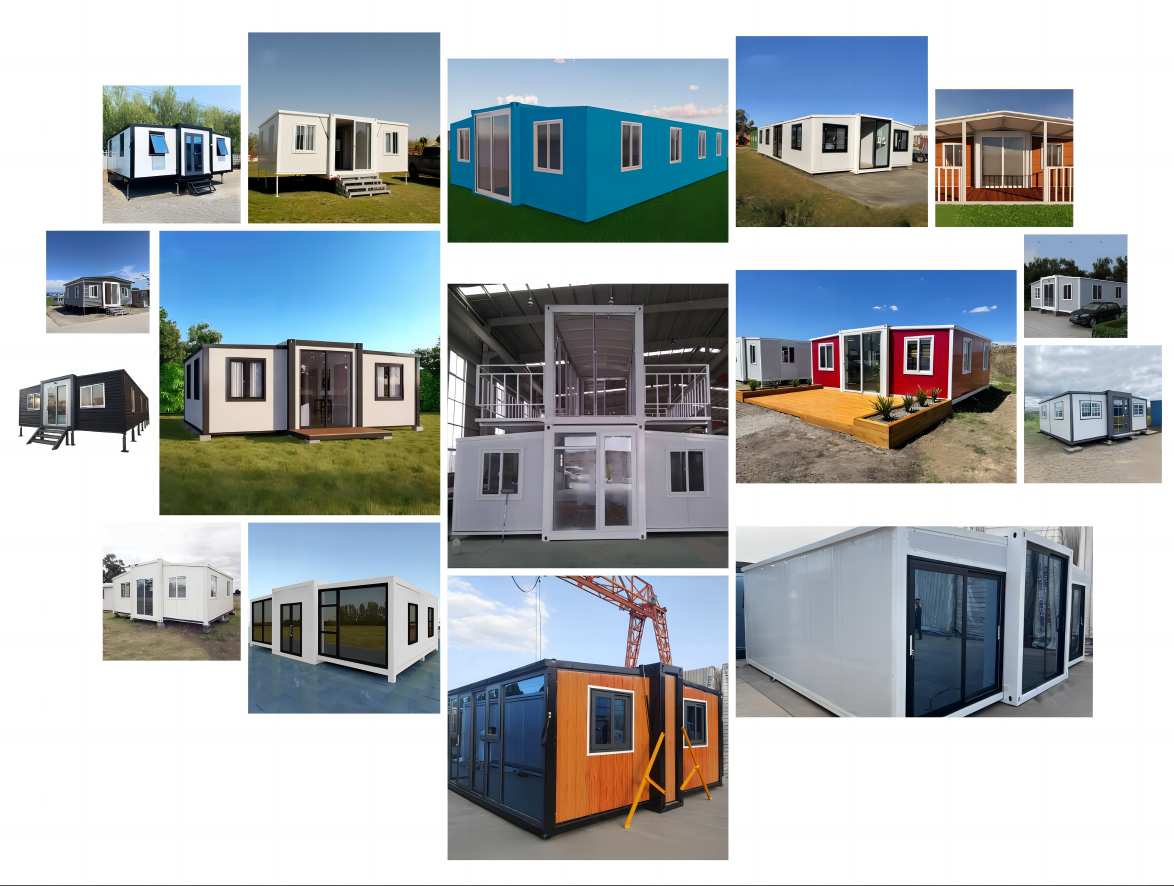
A 20ft-class unit is the entry point: smallest footprint, lowest ex-works price, and the easiest to combine multiple folded units inside one standard shipping container, which is where an importer’s real margin gets protected. Full specs are on the 20ft expandable container house page. A 30ft-class unit steps up to a two-room layout and still folds down efficiently for freight. The 40ft-class configuration, detailed on the 40ft expandable container house page, is the largest single-fold option and fits a full kitchen and two bedrooms, but takes up proportionally more container space per unit, which changes the freight math for importers ordering in volume. For importers who need a 3-bedroom or duplex-style rental product, a double-storey shipping container home stacks modules instead of expanding a single one, and needs to be quoted separately for freight since it doesn’t fold to the same compact shipping footprint.
A 20ft-class unit expands to roughly 35 to 40 square meters of usable floor area with no internal load-bearing columns, folding down to about the footprint of a standard shipping container for transit. That’s the number importers should be asking every supplier for before comparing quotes — usable floor area after expansion, not just the folded shipping dimensions on the spec sheet.
This is the part importers skip when they’re moving fast, and it’s the part that causes returns and disputes later. The structural frame on a legitimate factory-built unit is Q235 galvanized steel, not a lighter-gauge substitute dressed up to look the same in a photo. Ask the supplier for the actual gauge specification on the top and bottom side rails, the secondary beams, and the corner hangers — a factory with nothing to hide will send this without hesitation.
Wall insulation choice should match the destination climate: rock wool for fire resistance and hot-climate markets, EPS sandwich panel where cost matters more than thermal mass. Wind resistance on a properly engineered unit should be rated to Level 10, and importers should get that rating in writing rather than accepting “durable” as a description. Expected service life on a well-built unit runs 15 to 20 years with normal maintenance. None of these specs show up in a glossy render, but they’re exactly what a customs inspector, a local building authority, or an unhappy end customer will ask about eighteen months after the container clears port.
Structural steel welding and fabrication standards for this category generally reference the codes maintained by the American Institute of Steel Construction, a nonprofit standards body, and importers bringing modular steel structures into North America should also be familiar with guidance published by the Modular Building Institute, the industry’s nonprofit trade association. For units headed into markets with residential building code requirements, cross-checking against the International Code Council’s published standards before finalizing a purchase order can save an importer from a rejected shipment at the local permitting stage.
Every importer in this category is solving a slightly different version of the same problem. African importers are sourcing worker-camp and mining-site accommodation, where speed of deployment matters more than finish quality. Middle East contractors are importing temporary housing for oil and construction projects, where insulation spec against extreme heat is the deciding factor in supplier selection. European distributors are importing backyard granny flats and short-term rental units, where local council size limits shape which configuration clears customs and permitting without a fight. North American importers are bringing units in for classic ADU use and remote-site housing where local construction crews are expensive or unavailable. Southeast Asian operators are importing units for resort bungalows and retail kiosks, where the unit needs to look finished on arrival, not industrial.
For importers specifically sourcing emergency or disaster-response housing, deployment speed is the entire business case — units arrive pre-wired and pre-plumbed, foundation-flexible enough to sit on a temporary pad without a full civil works package. There’s a deeper breakdown of that sourcing scenario in the guide on expandable container houses for emergency placement.
Feedback from importers who’ve run a full sourcing-to-deployment cycle tends to be specific, not glowing. An importer running worker housing in Africa reported installation costs came in roughly 40 percent lower than sourcing local labor and materials for the same headcount. A European rental-property distributor said the unit was tenant-ready fast enough that it paid for itself within the first rental season. A Middle East contractor flagged that the frame held up through a full summer of extreme heat and wind loading without the panel warping that a cheaper competitor’s units showed after one season. A U.S. importer put it simply: it was the only option that fit a budget after two local contractor bids had already blown past it. None of that should be read as a guarantee — supplier quality varies — but the pattern across regions is consistent enough to be useful signal when evaluating a new factory.
Payment structures in this category typically run through T/T or Alibaba Pay, and importers should confirm the split — deposit versus balance on shipment, versus balance on inspection — before production starts, not after. Incoterms matter more here than in most product categories, since the difference between EXW, FOB, CIF, CFR, DAP, and DDP determines which party carries risk and cost at each stage of the shipment, and it’s worth negotiating this explicitly rather than accepting whatever term appears on the factory’s standard quote. Confirm the HS code classification in writing before the container books, since a misclassification is the single most common reason a shipment gets held at customs. Ask for MOQ and lead time specific to the configuration ordered — standard units typically ship in 30 days, but any customization extends that window, and importers who don’t confirm this upfront are the ones calling their broker in week three asking where the container is.
Run the comparison on the numbers that matter to an importer’s margin, not the ones that sound good in a sales deck. Rental income on a granny-flat-style unit typically runs $500 to $2,000 per month depending on market — the same range a locally built unit generates, which means the entire return-on-investment advantage comes from acquisition cost, not rental performance. Steel-frame, sandwich-panel construction generally needs less ongoing maintenance than a wood-framed structure exposed to the same weather, which matters to an importer who’s also fielding warranty calls after the sale. A folded unit can be closed back up and relocated to another lot; a poured-foundation local build cannot, which is a real selling point for distributors reselling into markets where tenants or land leases change. Factory-direct pricing plus freight and customs still typically undercuts a $150-to-$300-per-square-foot local build by a wide margin, even after every import cost is added in — but importers should run that math against their specific destination country’s duty rate before assuming the gap holds everywhere equally.
Customization is where a factory earns repeat import orders instead of a one-time sale. Size and layout can shift to match local rental unit expectations — module count, room configuration, and bedroom-to-bathroom ratio all move based on what a given market expects a granny flat to include. Exterior finish and color can be branded for resale under a distributor’s own name. Interior wall material, flooring, and ceiling finish should match what local building codes and buyer expectations require, and this is worth specifying in the purchase order rather than accepting factory defaults. Electrical configuration needs to match the destination country’s voltage standard — 110V, 220V, or 380V — and this is a detail that gets missed more often than it should on a first import order. Plumbing layout, including off-grid sewage treatment options, matters for importers selling into markets without reliable municipal hookups. Solar integration and upgraded insulation are increasingly requested add-ons as energy costs rise in destination markets.
For importers building out a full catalog rather than a single SKU, a mobile expandable prefab house or a fold-out container house variant fills different price points within the same product line, which helps a distributor cover more of the market with one supplier relationship instead of managing quality control across several factories.
| Category | Key Details | Notes / Impact |
|---|---|---|
| Local vs China Cost | Local site-built: $150–$300/sq ft ($60k–$360k total). China factory-direct: fraction of local cost (ex-works) + ocean freight + duty (5–15%) + inland trucking + site prep | Landed cost still well below local benchmark; assembly only 2–4 hours with 2–3 person crew |
| Sizes & Loading | 20ft: ~35–40 m² usable, highest container efficiency 30ft: two-room layout, good efficiency 40ft: kitchen + 2 bedrooms, lower efficiency Double-storey: 3-bed/duplex, stacked (separate freight quote) | Container loading efficiency is the biggest lever on per-unit freight cost |
| Must-Verify Specs | Frame: Q235 galvanized steel (actual gauge on rails/beams/hangers) Insulation: Rock wool (hot/fire) or EPS Wind: Level 10 (in writing) Life: 15–20 years Standards: AISC + MBI (NA); ICC cross-check | Skipping these causes returns, disputes, or rejected permits |
| Who Imports & Why | Africa: worker/mining camps (speed) Middle East: oil/construction housing (heat insulation) Europe: backyard/rental units (council size limits) North America: ADUs/remote housing (high local costs) SE Asia: resorts/kiosks (finished look) Emergency: rapid deployment | All solve the same core problem: lower cost + faster deployment than local builds |
| Paperwork & Payment | Payment: T/T or Alibaba Pay (confirm deposit/balance split) Incoterms: negotiate EXW/FOB/CIF/CFR/DAP/DDP explicitly HS code: confirm in writing before booking Lead time: 30 days standard (custom longer) MOQ: confirm per configuration | Wrong HS code is the #1 cause of customs holds |
| ROI Drivers | Rental income: $500–$2,000/month (same as local) Lower acquisition cost + lower maintenance + relocatable | Entire margin advantage comes from purchase price, not rental performance |
| Customization | Layout, exterior brand colors, interior finishes, voltage (110/220/380V), plumbing/off-grid, solar, insulation upgrades | Specify everything in the PO; factory defaults often mismatch local codes |
| Final Decision Factors | Compare: local contractor quote vs fully landed China cost vs duty rate + lead time of destination country | Strong margin case for most markets if HS code, steel specs, and Incoterms are locked correctly |
Strip away the sales language and an importer’s decision comes down to three numbers: the local contractor or supplier quote, the fully landed cost of a factory-direct unit, and the duty rate and lead time for the destination country. For most importers comparing a $150-to-$300-per-square-foot local build against a folded steel unit that clears customs and assembles in a few hours on-site, the margin case is strong. The risk sits in the details — HS code accuracy, verified structural specs, and Incoterm negotiation — which is exactly why the checklist above matters as much as the price on the factory’s first quote.
Importers ready to move from research to a formal quote can review the full spec sheet on the contact Container House Co., Ltd directly for a landed-cost breakdown built around a specific destination country and order volume. Distributors comparing sourcing options can also review completed import case studies or the full expandable container house buyer’s guide before committing to a first purchase order.
Your email address will not be published. Required fields are marked *

 English