How Container Pools Work: Installation, Operation, and Real-World Applications A container pool starts life as a standard 20ft or 40ft shipping container before being cut, reinforced, and fitted out as a self-contained swimming pool unit. For buyers comparing it against a poured-concrete or fiberglass build, the appeal comes down to three things: the pool is […]
A container pool starts life as a standard 20ft or 40ft shipping container before being cut, reinforced, and fitted out as a self-contained swimming pool unit. For buyers comparing it against a poured-concrete or fiberglass build, the appeal comes down to three things: the pool is assembled and pressure-tested at the factory before it ever leaves China, it ships as one unit, and it can be placed and filled within days of arrival rather than weeks. This article walks through how the system actually works on site, what ongoing operation looks like, and where these pools are being deployed commercially.
Underneath the industrial exterior, a container pool is built from a few core systems:
Because all of this is assembled and leak-tested before shipment, the buyer isn’t relying on a job-site crew to get the waterproofing right — that risk sits with the factory, which is the main reason this product category exists in the first place.
Site preparation. The pad has to be level and load-bearing — a poured concrete slab or a compacted gravel base — since an uneven foundation is the most common cause of stress cracking in the liner over time. Buyers also need to plan drainage, electrical runs, and any local fencing or non-slip surface requirements before the unit arrives, not after.
Placement. A 20ft unit generally weighs in the 2–3 ton range empty and requires a crane or forklift for placement — this isn’t a job for a pallet jack. Leveling matters more than most buyers expect; a tolerance outside roughly 5mm can throw off water balance and put uneven load on the liner seams.
Commissioning. Once set, the circulation pump and filter get a dry test before water goes in, heating systems (particularly heat pumps, which need outdoor clearance and condensate drainage) are checked, and the pool is typically monitored for 24–48 hours after first fill to catch any fitting leaks before the site is considered done.
Ongoing operation. Standard pool maintenance applies from there — pH checked and held around 7.2–7.6, filters backwashed or replaced on a regular cycle, and the steel shell inspected periodically for coating wear, particularly in coastal or high-salinity environments where recoating on a roughly annual basis is worth budgeting for.
Residential backyards. This is the core market in North America and Australia — a 20ft unit installed in a fraction of the time a concrete build takes, which matters to homeowners working around a compressed construction season or a limited backyard footprint.
Short-term rental and hospitality. Airbnb hosts, boutique hotels, and glamping operators use container pools as a differentiator listing photos sell well, and the unit can be relocated if the property layout changes, which isn’t true of a poured pool.
Rental and event use. Pool rental operators use container units for weddings, corporate events, and pop-up installations specifically because they can be trucked in, craned into place, and removed within a day or two, then reused on the next job.
Temporary and institutional deployment. The same durability and fast-deployment characteristics that make these useful for events also make them a fit for workforce camps, disaster-relief staging areas, and training facilities that need a pool without a permanent structure.
Commercial fitness and therapy use. A 40ft unit fitted with a counter-current swim system works as a compact lap-training pool, and the format is also used for contrast hot/cold therapy pools in gyms and rehab facilities where space is at a premium.
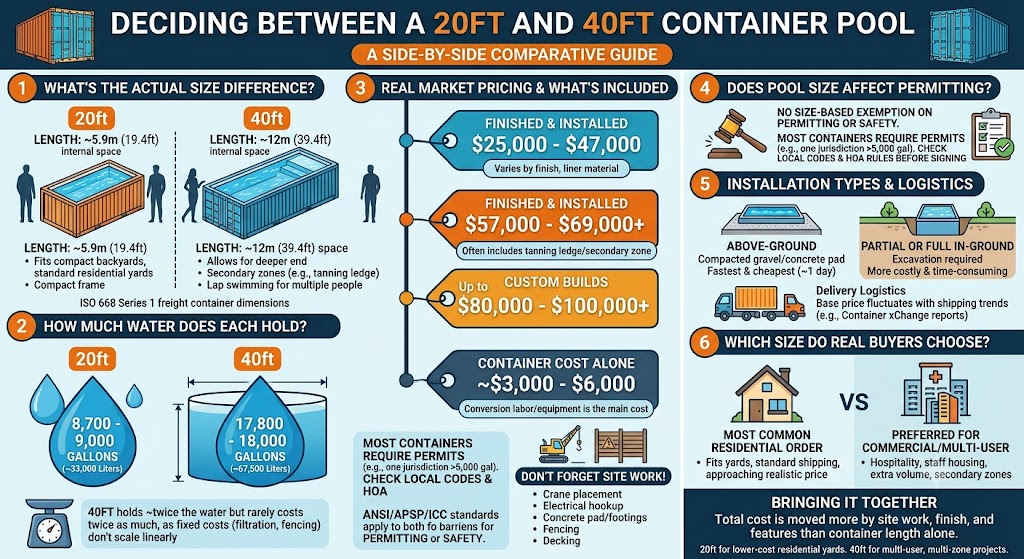
Buyers weighing 20ft against 40ft are really deciding between a residential leisure pool (comfortable for 4–6 people) and a training or high-traffic commercial unit. On lifespan, the steel shell itself holds up for 15–20+ years under normal maintenance per manufacturer specifications, though liner material — whichever type is used — typically needs replacement on a 5–10 year cycle well before the shell does. That gap is worth asking suppliers about directly, since liner replacement cost and availability varies a lot between manufacturers.
For a full breakdown of the import process, certification requirements, and shipping timelines, see our container pool buyer’s guide and container pool exporter pages.
Your email address will not be published. Required fields are marked *

 English