Bleacher Brand & Grandstand Brand Manufacturers Worldwide: A Procurement-Focused Comparative Analysis For procurement managers, choosing the right bleacher brand or grandstand brand is not a branding exercise—it directly determines structural safety, lifecycle cost, and installation efficiency. A poorly engineered grandstand system can increase steel fatigue rates by over 18% within five years due to dynamic […]
For procurement managers, choosing the right bleacher brand or grandstand brand is not a branding exercise—it directly determines structural safety, lifecycle cost, and installation efficiency. A poorly engineered grandstand system can increase steel fatigue rates by over 18% within five years due to dynamic load miscalculations, while optimized systems reduce maintenance costs by up to 35%.
The global grandstand industry operates on three core engineering principles:
Typical procurement cost breakdown:
Understanding regional bleacher brand ecosystems allows buyers to optimize:
Leading China Bleacher Brand list – China Container grandstand
Market Phenomenon
China dominates global exports with over 60% share of modular grandstand systems, driven by scale manufacturing and standardized steel fabrication.
Engineering Principle
Chinese manufacturers rely on:
Modular bolt-connection systems reduce welding dependency, minimizing stress concentration points.
Case Reference
A Southeast Asia stadium project using Chinese modular bleachers reduced installation time from 45 days to 18 days, saving 32% in labor costs.
Economic Benefit
Lower manufacturing cost + fast delivery = highest ROI for:
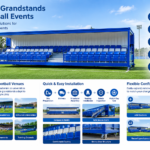
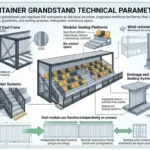
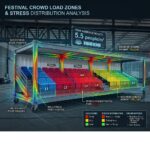
New grandstand product: container grandstand
Our container grandstands offer a modular, cost-effective, and portable seating solution for sports venues and events. Built from high-strength shipping containers, they combine industrial durability with modern design.
Japan and South Korea are traditional manufacturing powerhouses, with many well-known seating brands and companies that buyers can consider.
Focus on precision engineering and seismic compliance.
Engineering Principle
Case Reference
A Japanese municipal stadium reduced structural vibration by 22% using tuned mass damping seating systems.
Economic Benefit
Higher upfront cost but reduced long-term structural risk in seismic zones.
Market Phenomenon
Demand driven by mega-events (World Cup, regional tournaments).
Engineering Principle
Data Comparison
Case Reference
Qatar stadium temporary grandstands deployed modular systems for rapid dismantling post-event, reducing asset depreciation by 40%.
Economic Benefit
Optimized for temporary high-capacity usage with resale value retention.
Top Southeast Asia Bleacher Supplier List for A Procurement Guide
Market Phenomenon
Price-sensitive markets with high humidity environments.
Engineering Principle
Case Reference
Indonesia sports complex used container bleacher grandstand extending lifespan from 8 to 15 years.
Economic Benefit
Balanced cost-performance ratio suitable for public infrastructure budgets.
Market Phenomenon
Strict safety compliance and outdoor durability requirements.
Engineering Principle
Data Comparison
Case Reference
Coastal stadium installations showed 28% lower degradation using marine-grade coatings.
Economic Benefit
Reduced maintenance cycles in harsh outdoor environments.
Market Phenomenon
Highly regulated market with strong emphasis on safety standards.
Engineering Principle
Data Comparison
Case Reference
High school stadium upgrades reduced liability risks and insurance premiums by 18%.
Economic Benefit
Higher compliance reduces legal and operational risks.
Canada Grandstand Brand: Top 5 Canadian Suppliers & Complete Buyer’s Guide
Market Phenomenon
Cold climate engineering requirements.
Engineering Principle
Data Comparison
Case Reference
Winter stadium installations maintained structural integrity after 10 freeze cycles annually.
Economic Benefit
Lower repair frequency in extreme climates.
Market Phenomenon
Budget-driven infrastructure expansion.
Engineering Principle
Data Comparison
Case Reference
Community stadium projects achieved 25% cost savings via simplified design.
Economic Benefit
Accessible pricing for public sector projects.
Market Phenomenon
Heavy-duty structures for extreme climates.
Engineering Principle
Data Comparison
Case Reference
Winter sports venues showed 30% higher durability vs standard systems.
Economic Benefit
Long-term resilience in harsh weather reduces lifecycle cost.
Market Phenomenon
Premium engineering and sustainability focus.
Engineering Principle
Data Comparison
Case Reference
UEFA stadium upgrades reduced carbon footprint by 20% using modular aluminum systems.
Economic Benefit
Higher ESG value + long lifecycle.
Market Phenomenon
Rapid infrastructure growth with cost constraints.
Engineering Principle
Data Comparison
Case Reference
Mobile grandstands used for multi-city tournaments reduced logistics cost by 30%.
Economic Benefit
Flexible deployment across regions.
To select the optimal bleacher brand or grandstand brand, buyers should align decisions with three variables:
1. Project Type
2. Environmental Conditions
3. Budget vs Lifecycle Cost
Final Insight
A strategic sourcing model combining:
This hybrid approach can reduce total project cost by 20–35% while maintaining international safety standards—making it the dominant strategy among global contractors and stadium developers.
Your email address will not be published. Required fields are marked *

 English