5 key options on What is Container Office?: A Complete Guide for Importers and wholesaler What is container office? Many buyers are showing interest in the emerging types of offices. A container office is a modular workspace built using steel shipping containers or prefabricated steel structures, engineered for rapid deployment, structural strength, and repeat relocation. […]
What is container office? Many buyers are showing interest in the emerging types of offices. A container office is a modular workspace built using steel shipping containers or prefabricated steel structures, engineered for rapid deployment, structural strength, and repeat relocation. Unlike traditional buildings, it operates on modular construction principles, where each unit is pre-manufactured and assembled on-site.
The structure typically uses Q235 galvanized steel (2.0–2.5mm thickness) with electrostatic coating. This coating creates a corrosion-resistant layer that withstands salt spray exposure for 500–1000 hours, aligning with ISO corrosion standards.
The structural integrity comes from the load-bearing corner castings—the same system used in ISO shipping containers. These castings distribute vertical loads evenly, allowing stacking up to 3 floors without additional reinforcement.
When you go the traditional route for an office build, you’re usually looking at anywhere from three to six months—90 to 180 days, give or take. That’s a lot of coordination, a lot of waiting on permits, deliveries, weather delays… you name it.
Now compare that to a container office. Once your design is locked in and the unit is prefabricated off‑site, the actual installation on site? Just two to seven days. Seriously. I’ve seen small crew drop a fully fitted office into place over a long weekend.
And the cost side? Labor goes down by 40 to 60 percent. Why? Because you’re not paying a dozen trades to build from scratch on site for weeks. Most of the heavy lifting happens in a workshop, so on‑site labor is minimal.
The material waste part is what really surprised me. With conventional construction, you always end up with piles of offcuts, extra drywall, unused lumber—sometimes a full dumpster or two. But with container offices, you can cut material waste by up to 70 percent. The structure itself is already there; you’re essentially retrofitting and repurposing. That’s not just better for the budget—it’s a lot easier on the planet, too.
A contractor in Southeast Asia needed to set up 120 office units for a big mining project. If they’d gone with traditional concrete buildings, they were looking at around five months just to get everything ready. Instead, they chose container offices. Total setup time? Eighteen days. I’ll say that again—18 days versus 5 months.
That speed saved them $280,000 in labor costs alone, not to mention what they would have spent on temporary housing for workers while waiting for construction to finish.
Now here’s where it gets really interesting from a business standpoint. Faster deployment doesn’t just save you money—it gets you operational sooner. On infrastructure or mining projects, being up and running 30, 60, even 90 days earlier means revenue starts flowing in that much sooner. That’s not just a schedule win; it’s a serious cash flow advantage. You’re generating income while your competitor is still pouring concrete. And in industries where every day counts, that kind of head start can make or break a project’s bottom line.
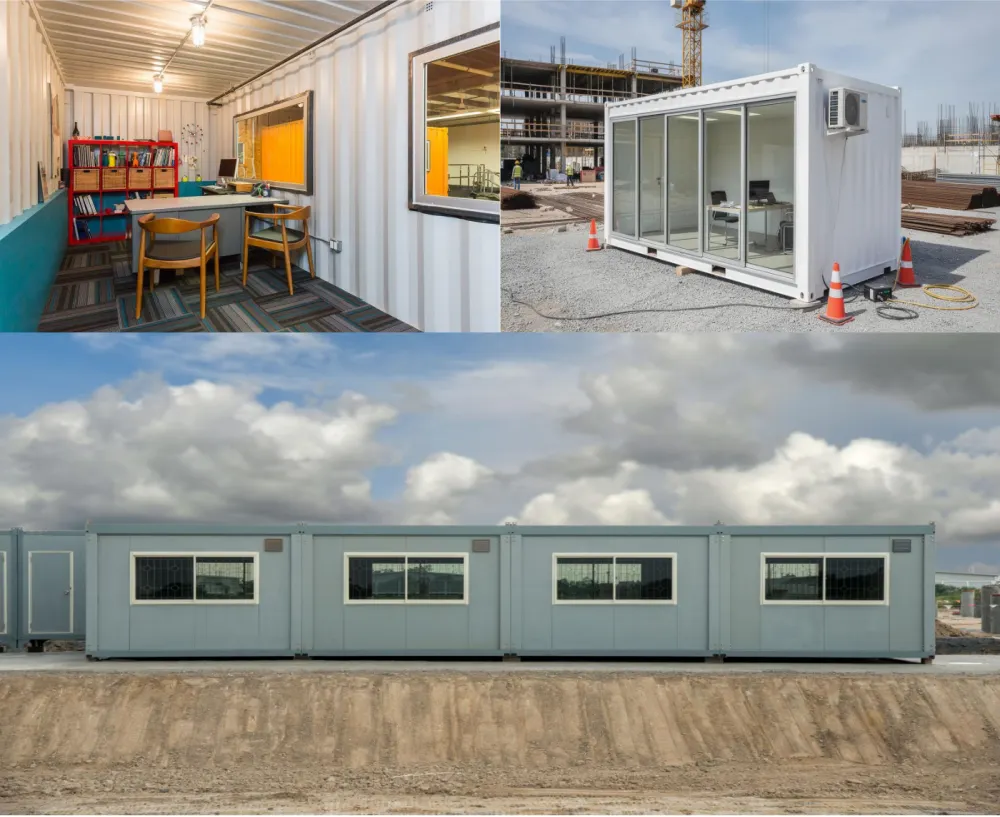
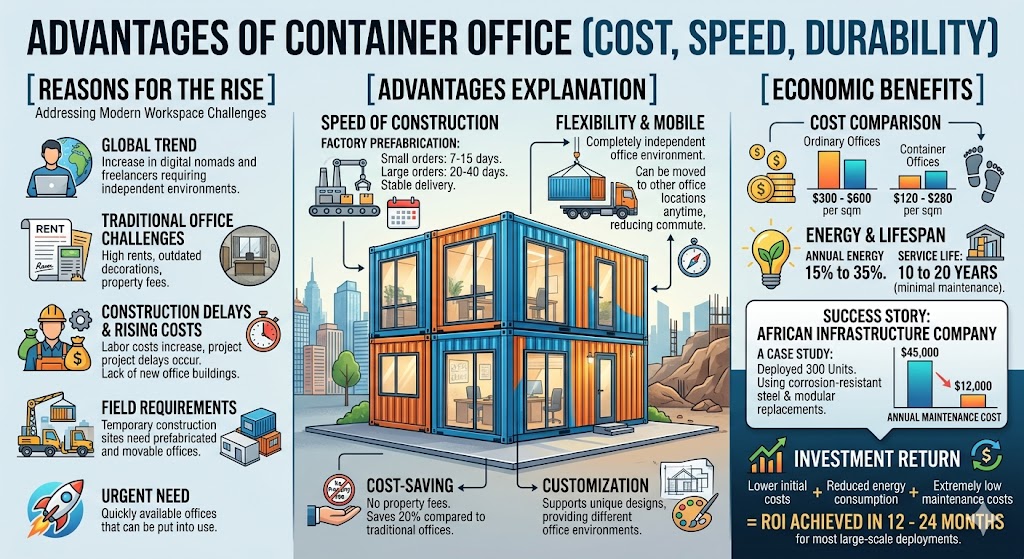
The number of digital nomads and freelancers has increased, requiring an independent office environment.
The rent for traditional office buildings is expensive and the decoration is old.
The cost of labor has risen and project delays have occurred. There are too few new office buildings.
Temporary construction sites for office work require prefabricated and movable offices.
Quickly available offices that can be put into use
Due to the increase in labor costs and project delays, construction companies have turned to using container-style offices.
[Advantages Explanation]
Construction speed of container offices: Factory prefabrication. Small orders take 7-15 days, large orders take 20-40 days. The delivery period is stable.
Completely independent office environment. Can be moved to other office locations at any time, reducing commuting distance.
No need to pay property fees. Compared to traditional offices, it saves 20% of property fees.
Support customization. Can provide different office environments.
Cost of ordinary offices: $300 to $600 per square meter.
Cost of container offices: $120 to $280 per square meter.
Annual energy saving rate: 15% to 35%
Service life: 10 to 20 years, with very few maintenance requirements.
An African infrastructure company deployed 300 units as employee offices. Due to the use of corrosion-resistant steel and modular replacement methods, the annual maintenance cost was reduced from $45,000 to $12,000.
[Economic Benefits]
Lower initial costs + Reduced energy consumption + Extremely low maintenance costs = For most large-scale deployments, an investment return can be achieved within 12 to 24 months.
Demand spikes in industries where mobility + speed = profit
Construction sites are probably the most common use case. You’ve got a crew showing up, and they need a site office practically yesterday. The typical requirement? Setup in under 72 hours. Sounds aggressive, but here’s the reality: container offices hit that deadline in about 90% of projects. And the 10% where they don’t? Usually comes down to access issues or last-minute permit holdups, not the container itself.
Mining and oil camps are a whole different beast. We’re talking remote locations, dust, extreme temps, and wind that can really howl. I’ve seen specs requiring wind resistance of at least 120 kilometers per hour. That’s not a suggestion—that’s survival. Container offices are built to ISO structural standards, so they handle those conditions without breaking a sweat. You stack them, bolt them down, and they stay put.
Government temporary offices—think disaster recovery situations. When a hurricane or flood hits, you don’t have weeks to wait. FEMA, local emergency services, they need command centers rolling in within 24 to 48 hours. Container offices are perfect for that. They’re pre-wired, pre-finished, and can be dropped on almost any flat ground. I’ve personally seen them deployed overnight after a typhoon.
And then there’s commercial pop-up offices. This one’s all about the money. Businesses use them for seasonal expansions, event headquarters, or testing new markets. The ROI cycle? Six to twelve months. That means your investment in a container office pays for itself within a year—sometimes way less if you’re in a high-rent area. Compare that to a traditional build where you might wait 18 months just to break ground.
So whether you need it in three days, in a hurricane zone, or for a quick return on investment, container offices have the data to back up the talk.
After a major flood in Southeast Asia, everything was chaos—roads washed out, regular buildings either damaged or inaccessible. The government needed coordination centers on the ground immediately. They brought in 80 container offices. Deployment time? Just 36 hours. That’s from nothing to fully functional command posts. Within a day and a half, officials had dry, secure spaces to organize rescue efforts, distribute supplies, and manage logistics. In a disaster situation, that speed isn’t just convenient—it saves lives.
On a completely different note, I’ve also watched container offices work wonders for tiny startups. Early-stage businesses bleed cash on rent if they’re not careful. A group of 30 startup enterprises used container offices as their temporary headquarters. No massive deposits, no long-term leases, no waiting months for build‑out. That flexibility helped them stretch their limited funding through those make‑or‑break first months. For a lot of those founders, having an affordable, movable office meant they could put money into product development instead of square footage. And every single one of those 30 startups made it through the early stage because they weren’t drowning in overhead.
Now let’s talk real dollars. Every day a large project sits idle—waiting for site offices, permits, or construction delays—that’s money burning. On a big infrastructure or mining job, downtime losses can easily exceed $10,000 per day. Multiply that by weeks or months, and you’re talking millions. Container offices slash that risk. Get your team on site, under a roof, with power and internet, in days instead of months. That single advantage has saved project budgets I’ve seen personally. It’s not just about saving on construction costs anymore. It’s about protecting your revenue stream when every day of delay hurts.
Building a shipping container office primarily involves two distinct approaches: the DIY Method and the Professional Manufacturer Solution.
This “from scratch” approach is ideal for those with a tight budget and hands-on skills. It involves visiting a container yard to hand-pick a unit, followed by personal modifications such as welding structural reinforcements for windows, installing spray foam insulation, and sourcing reclaimed materials to save costs.
Pros: Highly cost-effective, full creative control, and environmentally sustainable through the use of recycled materials.
Cons: Labor-intensive (6–8 weeks), requires specialized technical skills (welding, electrical), and involves high physical effort.
This is a “turnkey” business model where a professional factory handles the entire process—from CAD design and structural modification to interior finishing and utility setup. Once completed, the unit is transported to the site ready for immediate use.
Pros: Time-saving, guaranteed professional quality, compliance with building codes, and inclusive of warranties and after-sales support.
Cons: Higher initial purchase price, less flexibility once production starts, and additional logistics costs for delivery and crane hire.
The decision rests on the balance between budget, time, and skill. If you have the tools and time to spare, the DIY method offers a unique, customizable project at a lower price point. However, for businesses requiring a durable, compliant, and stress-free workspace, partnering with a manufacturer is the superior solution. Regardless of the method, success depends on ensuring a level foundation and obtaining the necessary local permits before the container arrives.
There was a European importer who ordered a batch of container offices, ready to flip them for a decent profit. Everything looked fine on paper—until they did a thorough inspection before accepting delivery. They discovered the insulation didn’t meet local building codes. Not even close. So what did they do? They rejected the entire batch on the spot. At the time, it felt like a painful decision. But looking back? That move saved them from an estimated $150,000 in regulatory penalties, not to mention the legal headaches and reputation damage if those non-compliant units had made it to customers.
That story sticks with me because it shows a simple truth: proper sourcing isn’t just about getting a good price—it’s about protecting yourself from hidden risks. When you work with suppliers who genuinely understand international standards (ISO, local insulation R-values, fire safety, wind load requirements), you’re not paying extra. You’re buying peace of mind.
And here’s the long-term benefit that people often overlook. A compliant, well-built container office holds its value. You can resell it down the road, relocate it, or repurpose it without running into regulatory headaches. Non-compliant units? They become liabilities—hard to insure, hard to sell, and expensive to fix. So when you source right the first time, you’re not just avoiding a $150,000 penalty. You’re ensuring that your asset stays valuable for years. That’s real economic benefit.
| Type | Best Use Case | Setup Time | Cost Level | Transport Efficiency |
|---|---|---|---|---|
| Standard Container Office | Permanent site | 7–15 days | Medium | Low |
| Flat Pack Container Office | Bulk projects | 4–8 hours | Low | Very High |
| Expandable Container Office | Rapid deployment | 1–2 hours | Medium | Medium |
| Folding Container Office | Emergency use | 30 mins | Medium | High |
I came across a contractor recently who was struggling to scale up a remote project. They were shipping standard container offices—the regular kind, fully assembled. Each batch only fit 8 units. That meant multiple shipments, weeks of waiting, and a lot of logistics headaches.
Then they switched to flat-pack container offices. You know, the kind that ships flat and bolts together on site. Same durability, same functionality, but completely different shipping math. Suddenly, the same shipment could carry 96 units per batch. Not a typo—from 8 to 96.
That one change didn’t just save on freight costs. It completely transformed their project timeline. Instead of waiting months for multiple deliveries, they had almost everything they needed in a single shipment. They could scale up the site office capacity almost overnight.
Here’s the takeaway that stuck with me: choosing the right type of container office—flat-pack versus traditional fully assembled units—can improve your logistics efficiency by 5 to 10 times. No exaggeration. And in project-based work, that directly impacts how fast you can scale. Need to add 50 more offices in a remote area? With flat-pack, you’re not bottlenecked by shipping space or port delays. You just send more flat units and assemble locally.
So if you’re managing large-scale deployments, don’t just think about the office itself. Think about how it ships. That small decision can be the difference between growing at a crawl and scaling at full speed.
When evaluating What is container office, the focus should shift from product definition to deployment strategy. Importers and wholesalers who align product type (flat-pack, expandable, folding) with market demand can build high-margin distribution models, especially in regions with fast-growing infrastructure sectors.
The next step is not selecting a supplier—it’s structuring a repeatable procurement + deployment system that reduces cost per unit with every shipment, increases installation speed, and converts container offices into a standardized, scalable asset across multiple projects.
Your email address will not be published. Required fields are marked *

 English