Unlike typical large temporary grandstands with tens of thousands of seats, container grandstands are a relatively new product category. They are created by modifying shipping containers into structural seating units. Container grandstands can serve as both temporary and permanent-style venues, deploying quickly to accommodate anywhere from a few dozen to several thousand spectators. This guide walks procurement teams through what container grandstands are, how they’re built, where they’re used, and what to check before signing a purchase order.
A container grandstand is a modular seating system built on modified shipping containers, designed for fast deployment in sports venues, events, and temporary stadiums. It combines structural steel containers with tiered seating to create stable, scalable spectator areas.
The core idea is simple: a standard ISO shipping container already has a certified, weatherproof steel structure capable of stacking and long-distance transport. Manufacturers reinforce that structure, then fit it with raked seating tiers, access stairs, guardrails, and a roof system. The result is a self-contained grandstand module that arrives on a flatbed or in a standard container slot, gets craned into position, and is ready for spectators within days rather than the weeks or months a poured-concrete stand requires.
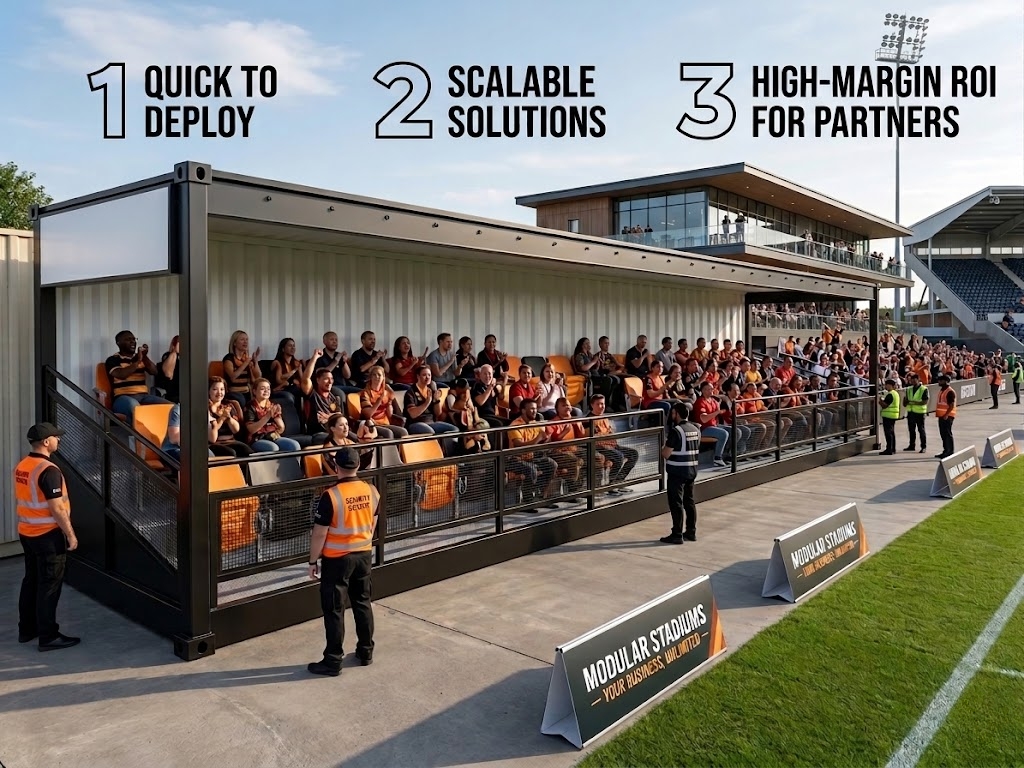
For procurement teams, the appeal comes from three factors:
Instead of constructing permanent stands, buyers can deploy container grandstands within days and relocate or resell them when an event cycle ends — a meaningful advantage for organizers running multi-city tours, seasonal leagues, or one-off championship events.
We have the container grandstand product pages for your reference.
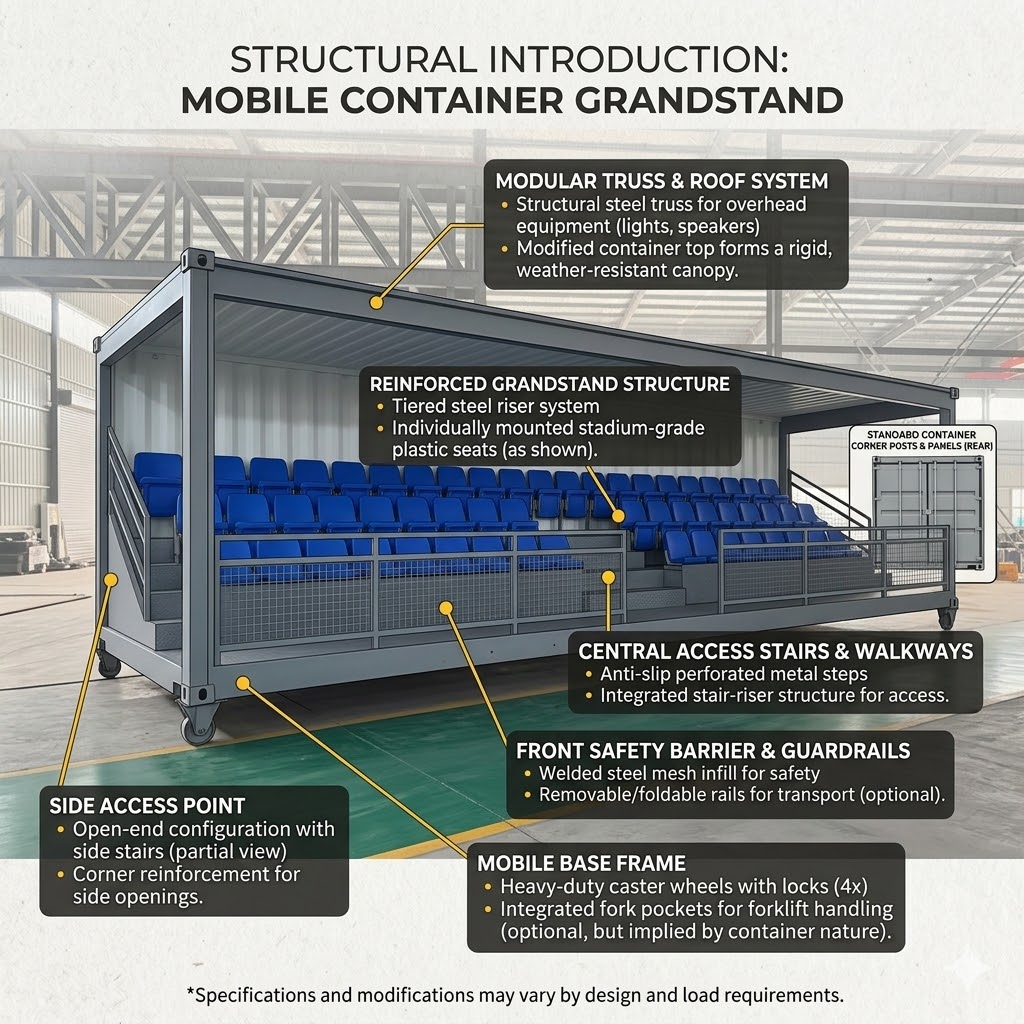
As an emerging product category, the global market for container grandstands is showing a clear expansion trend, driven by three overlapping demand sources:
Our products are specifically engineered for outdoor temporary events, but the ownership model varies by buyer. Whether units are used by an end customer for a single venue, resold to regional distributors, or leased out repeatedly by a rental fleet operator, all three paths show promising market trends as more federations formalize crowd-safety requirements for temporary seating.
Related reading on market dynamics:
Together, these four pieces give buyers a fuller picture of current pricing benchmarks, design trends, and how container grandstands compare to scaffold-based or poured-concrete alternatives.
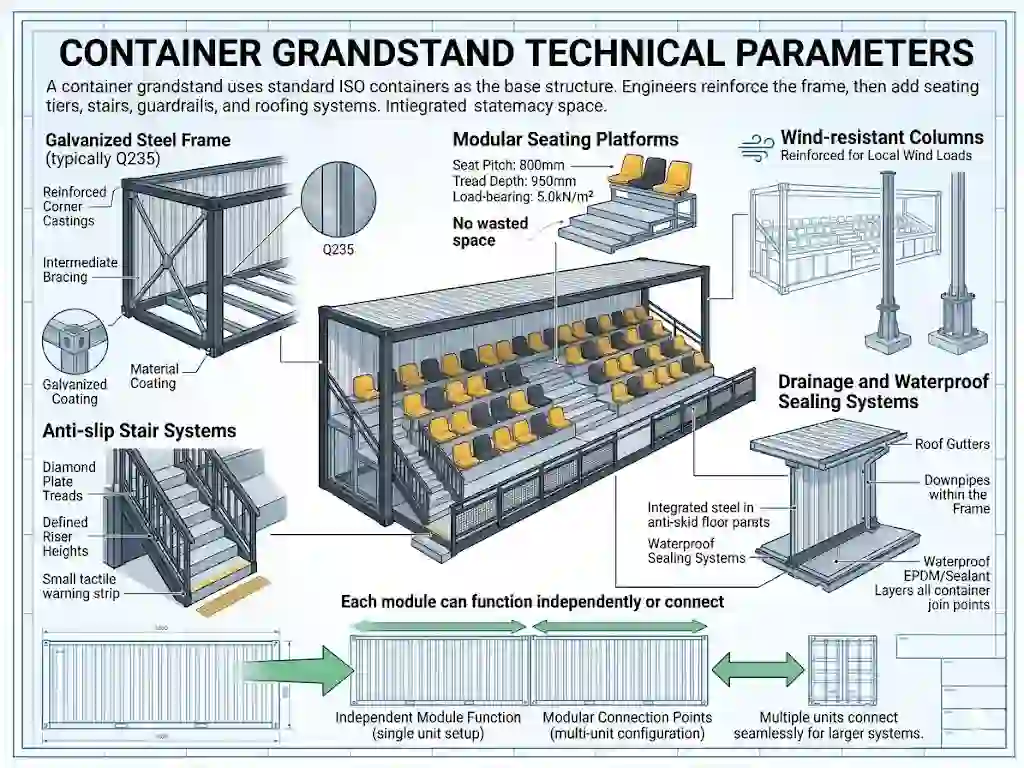
A container grandstand uses standard ISO containers as the base structure. Engineers reinforce the frame, then add seating tiers, stairs, guardrails, and roofing systems — no wasted space between the shipping-container shell and the finished spectator unit.
container grandstand structural components include:
Each module can function independently or connect to form larger seating systems — a factor buyers should confirm with their supplier during the RFQ stage, since not every manufacturer engineers modules for lateral connection.
Container grandstands are not limited to sports. Buyers deploy them across multiple industries wherever temporary, code-compliant seating is needed on short notice.
Common container grandstand applications include:
Each scenario demands a different balance of capacity, mobility, and permanence, which is exactly what modular container systems are built to flex around — a 63-seat single module suits a school sports day, while a connected multi-module system scales to stadium-overflow capacity.
Although container grandstands are a relatively new product category, a number of manufacturers worldwide have already developed and produced them for use in stadiums, performances, and similar events. Manufacturers differ in a few key respects that matter to buyers doing supplier due diligence:
We track and introduce these different container grandstand manufacturers around the world, so buyers can compare positioning before requesting quotes.
We will list and introduce these different container grandstand brands around the world.
Container Grandstand Certification: The Complete Global Guide
Regulations vary by country. Ignoring them delays projects — often at the worst possible moment, when a venue is already booked and a stand fails a pre-event inspection.
Buyers should verify:
Refer to recognized standards such as EN 13200 (spectator facilities) via official industry bodies. Buyers sourcing across multiple countries should request certification documentation mapped to each target market rather than assuming a single certificate covers all deployment regions.

A container grandstand gives procurement teams a deployable seating system that balances speed, cost, and flexibility. It replaces long construction cycles with modular assembly and opens new revenue channels through customization.
The next step is evaluating suppliers based on engineering capability, delivery speed, and customization depth. That choice determines whether the project scales or stalls.
 English