7 ключевых различий между американскими домокомплектами и китайскими сборными домами: Руководство для покупателя. Устали от высоких затрат? Всё больше американцев импортируют дома напрямую из Китая. Столкнувшись с ростом расходов на строительство в США, многие покупатели активно сравнивают американские домокомплекты с китайскими сборными домами, чтобы снизить бюджетное давление, сохраняя при этом качество.
Устали от высоких затрат? Всё больше американцев импортируют дома напрямую из Китая. Столкнувшись с ростом расходов на строительство в США, многие покупатели активно сравнивают американские домокомплекты с китайскими сборными домами, чтобы снизить бюджетное давление, сохраняя при этом качество. Это руководство раскрывает реальные различия между импортом сборных домов из Китая и выбором отечественных американских домокомплектов.
При сравнении американских домокомплектов с импортными китайскими сборными домами решающими факторами часто являются не цифры в ценовом предложении, а полная стоимость с учётом доставки, сроки поставки и стабильность поставщика. Один просчёт может уничтожить вашу маржу.
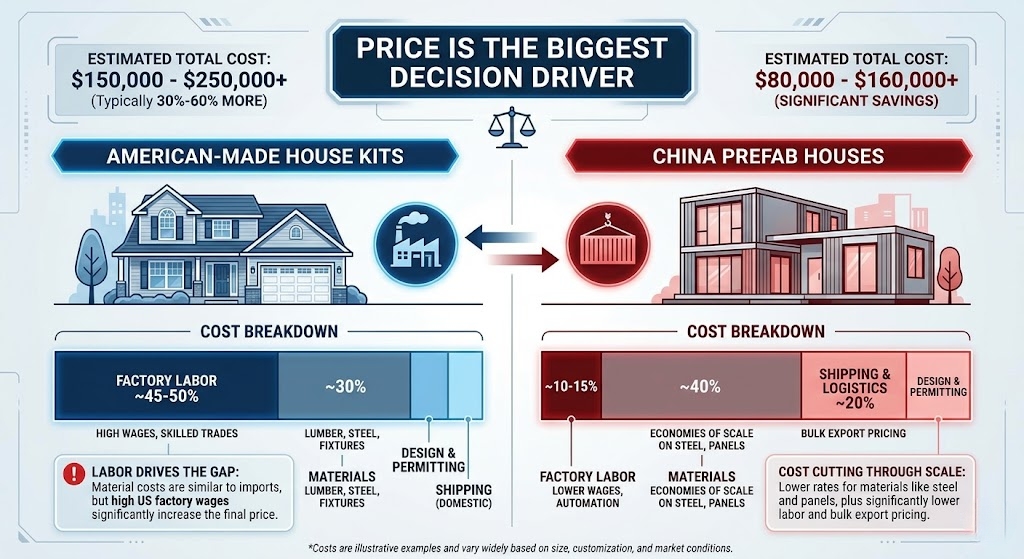
Цена — главный фактор принятия решений. Главный фактор принятия решений — цена. Без обсуждений.
Американские домокомплекты часто стоят на 30–60% дороже импортных сборных домов. Разницу создает труд. Стоимость материалов схожа, но зарплаты на заводах в США поднимают конечную цену.
Китайские сборные дома снижают стоимость за счет масштаба. Сталь, панели и рабочая сила — все по более низким ставкам. Оптовые экспортные цены еще больше снижают стоимость. В Китае существует соответствующий промышленный пояс по производству контейнерных домов, что позволяет осуществлять крупномасштабные закупки сырья и подбирать подходящую рабочую силу для производства.
Для закупочных команд реальный вопрос — не цена, а полная стоимость с учётом доставки.
Блестящее предложение от китайского поставщика сборных домов? Это лишь отправная точка. Вам нужно добавить стоимость перевозки, пошлины, портовые сборы и наземную транспортировку до вашего участка. В совокупности эти дополнительные расходы обычно добавляют от 10% до 25% к базовой цене китайского сборного модуля.
Китай обычно выигрывает по первоначальной стоимости, и этот разрыв — источник маржи: возможность кастомизации, компенсации колебаний стоимости фрахта или победы в тендерах над конкурентами, использующими более дорогие местные комплекты.
Какой вывод? Китай выигрывает по первоначальной стоимости. Точка. И именно здесь начинается ваша маржа. Разрыв между тем, что вы платите с учётом доставки, и тем, за что вы можете продать или оценить готовый проект? Это реальная прибыль. Она даёт вам пространство для кастомизации, для поглощения волатильности фрахта или просто для того, чтобы перебить цену конкурентов, которые застряли с более дорогими отечественными комплектами.
Значит ли это, что американские комплекты никогда не являются правильным выбором? Конечно, нет. Если вам нужна доставка на следующей неделе, отсутствие проблем с импортом или строгое соблюдение требования «Покупай американское», расчёты меняются. Но для большинства оптовых покупателей, которые планируют заранее? Преимущество китайских сборных домов по стоимости с учётом доставки трудно игнорировать.
Посчитайте сами. Получите полное предложение CFR или CIF, позвоните своему экспедитору, добавьте резерв на пошлины. Думаю, вы увидите то же, что и мы: маржа начинается здесь.
Задержки убивают сделки. Задержки поставок по заказу на 50 единиц могут сдвинуть проект на 6–8 недель — достаточно, чтобы сорвать строительный сезон.
Американские производители предлагают более короткие внутренние сроки поставки, обычно 4–8 недель. Никакого риска морских перевозок. Никаких задержек на таможне.
Китайские поставщики сборных домов выполняют производство за 20 дней. Производство в несезон. Быстро. Но доставка занимает 20–35 дней в зависимости от пункта назначения.
Если ваш проект находится в Северной Америке и требует быстрого развертывания, американские комплекты снижают неопределенность.
Если график вашего проекта позволяет планирование, китайские сборные дома масштабируются быстрее для крупных заказов.
Краткий ответ:
Если ваш проект находится в Северной Америке и требует быстрого развёртывания, американские комплекты снижают неопределённость. Если сроки проекта позволяют планирование, китайские сборные дома масштабируются быстрее для крупных заказов.
Для проектов с плотным графиком в несколько недель, требующих поставки в этом месяце, американские домокомплекты — более безопасный выбор. Для крупных заказов от 20 единиц, где сроки позволяют запланировать морскую перевозку за один-два месяца, китайские сборные дома дают более значительное преимущество по полной стоимости с учётом доставки.
Вопросы качества возникают в каждой сделке. Позвольте мне сказать вам правду.
Я понимаю. Вы смотрите на предложение китайского сборного дома, и в глубине души задаётесь вопросом: “Будет ли это так же надёжно, как американский модуль?”
Основное опасение многих покупателей — сможет ли качество китайских сборных домов соответствовать качеству домов, произведённых на американских заводах. Ответ — да, при условии выбора поставщика соответствующего уровня.
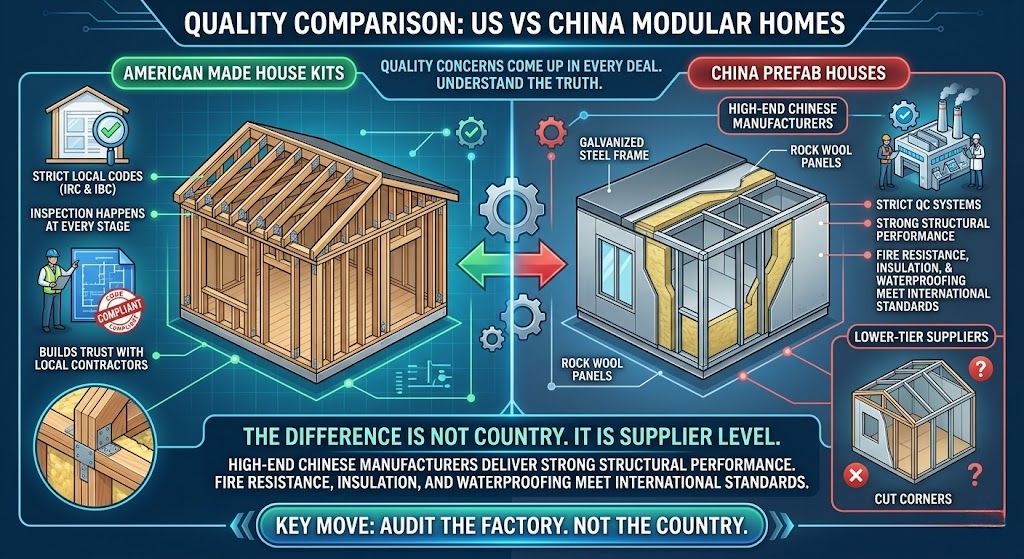
Американские домокомплекты следуют строгим местным строительным нормам —IRC, IBC, и так далее. Проверки проводятся на каждом этапе: каркас, электрика, изоляция, финальный осмотр. Такой уровень контроля вызывает большое доверие у местных подрядчиков и инспекторов. Они знают, что получают. Никаких сюрпризов.
Китайские сборные дома значительно различаются в зависимости от уровня поставщика.
Заводы высшего уровня используют оцинкованные стальные каркасы, которые не ржавеют, панели из каменной ваты, которые действительно изолируют и устойчивы к огню, и строгие системы контроля качества, которые не уступают любым западным аналогам. Такие модули прибывают прочными, ровными и готовыми к прохождению норм.
Но поставщики более низкого уровня экономят. Тонкая сталь. Некачественный пенопласт. Неплотные уплотнители. Вы экономите немного денег на старте, но расплачиваетесь позже протечками, ржавчиной и структурными проблемами.
Итак, вот правда, которую никто не хочет говорить вслух: разница не в стране. Это уровень поставщика.
Плохой американский комплект тоже существует — хотя и редко. А высококлассный китайский производитель? Они обеспечивают высокую структурную прочность, реальную огнестойкость, надлежащую изоляцию и гидроизоляцию, соответствующие международным стандартам. Я видел модули, которые выдерживали тайфуны, пустынную жару и морозные зимы без единого отказа.
Ключ в том, чтобы тщательно изучить поставщика. Запрашивайте спецификации материалов. Требуйте стороннюю инспекцию. Посетите завод, если можете. Не гонитесь только за самой низкой ценой.
Потому что, когда вы работаете с правильным китайским производителем, вы не жертвуете качеством. Вы получаете продукт американского уровня по стоимости с учётом доставки, которая действительно имеет смысл для вашей прибыли.
Ключевое действие:
Проверяйте завод, а не страну. При выборе китайских поставщиков не придерживайтесь принципа приоритета самой низкой цены. Вместо этого выбирайте контейнерные дома со средней ценой и убедитесь, что вы полностью понимаете, какие материалы используются в контейнерных домах..
То, что отлично выглядит на бумаге, часто нужно корректировать на месте. Возможно, клиент хочет дополнительную спальню. Возможно, угол наклона крыши нужно изменить из-за снеговой нагрузки. Возможно, они хотят кухню на противоположной стене. Мелочи, которые могут сделать или разрушить сделку.
Американские домокомплекты часто сопротивляются этому. Они поставляются с фиксированными шаблонами — выберите одну из трёх или четырёх планировок, выберите цвет, готово. Хотите что-то другое? Это “индивидуальный заказ”. А это означает более высокие затраты и более длительные сроки поставки. Я видел, как простые изменения добавляли недели к доставке. Для застройщика, пытающегося уложиться в сроки, это проблема.
Китайские заводы сборных домов работают по совершенно другой модели. Модульные системы изначально созданы для гибкости. Планировки, размеры, внутренние конфигурации — вы можете настроить почти всё, не изобретая велосипед. Производственные линии настроены на эффективную обработку изменений, а не на их наказание.
Итак, что вы можете реально изменить? Многое:
Планировка комнат – перемещение стен, объединение пространств, добавление эркера. Всё, что требует участок.
Материалы стен – гипсокартон, фанера, панели, даже плитка во влажных зонах. Меняются за секунды.
Кровельные системы – плоские, скатные, утеплённые, со свесами. Под любой местный климат.
Электрическая схема – розетки, выключатели, освещение, распределительные щиты. Разместите так, как требует ваш рынок.
Для застройщиков и дистрибьюторов эта гибкость открывает больше рыночных сегментов. Вы не застряли, продавая одну и ту же коробку всем. Хотите ориентироваться на элитную аренду для отдыха? Улучшите отделку. Нужно бюджетное жильё для рабочих? Сведите к самому необходимому. Один поставщик, одна производственная линия, десятки вариаций продукта.
В этом реальное преимущество sourcing из Китая. Не только в цене. Возможность сказать “да”, когда клиент просит что-то другое. И в этом бизнесе именно так вы получаете повторных клиентов.
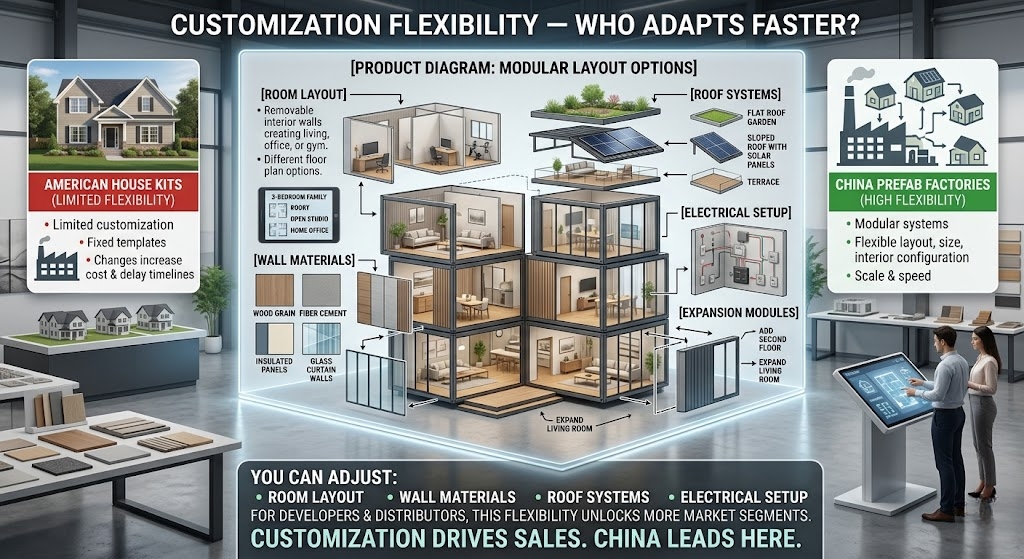
Кастомизация стимулирует продажи.
Китайские заводы выполнили множество крупномасштабных проектов и имеют обширный опыт в удовлетворении разнообразных потребностей глобальных клиентов в кастомизации. Кроме того, будучи мировым производственным центром, Китай экономит время и средства на закупку сырья и кастомизацию продукции, что значительно ниже, чем в США. Поэтому Китай лучше подходит для крупномасштабного производства контейнерных домов на заказ.
Американские сборные дома отражают уникальную американскую эстетику, и их стили интерьера могут лучше соответствовать потребностям стран Европы и Америки. Китайские поставщики, напротив, в целом испытывают недостаток инноваций, что приводит к более однородному ассортименту стилей интерьера.
Эта часть определяет успех реализации.
Американские комплекты поступают готовыми к местной сборке. Подрядчики знакомы с системой. Обучение не требуется.
Китайские сборные дома требуют четкого планирования монтажа.. Хорошие заводы предоставляют:
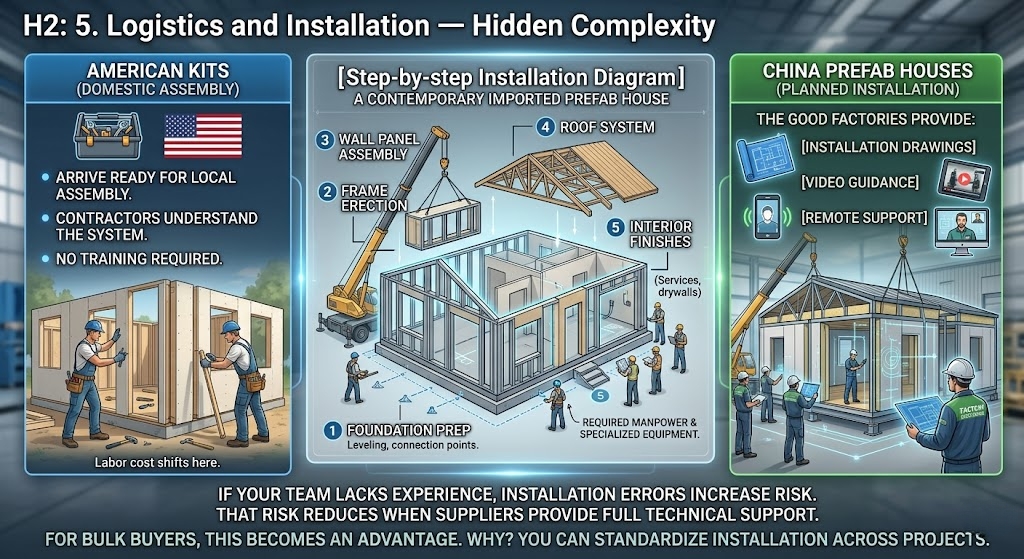
Вы смотрите на цену американского домокомплекта против китайского сборного дома, и китайский модуль почти всегда выигрывает по первоначальной стоимости. Но рабочая сила — это джокер. Если ваша бригада никогда не работала с модульным строительством — или, что ещё хуже, никогда не видела китайский сборный дом вблизи — ошибки при монтаже могут быстро съесть вашу экономию. Кривые уплотнители, пропущенные болтовые соединения, неправильные распорки. Маленькие ошибки, которые превращаются в большие проблемы.
Этот риск резко снижается, когда ваш поставщик предоставляет полную техническую поддержку. Руководства по сборке, видеоинструкции, даже supervision на месте, если заказ достаточно крупный. Хороший китайский производитель не просто отправляет коробки. Он помогает вам правильно их собрать.. Для оптовых покупателей — застройщиков, дистрибьюторов, подрядчиков, закупающих 20, 50, 100+ единиц — это становится серьёзным преимуществом.
Потому что вы можете стандартизировать монтаж по всем проектам.
Почему? Одинаковое оборудование, одинаковая последовательность, одинаковые допуски. Обучите свою бригаду один раз, а затем повторяйте этот процесс на объекте за объектом. Без изобретения велосипеда. Без звонков поставщику с вопросом «какой болт куда идёт» на каждом новом объекте. С американскими комплектами вы часто остаётесь один на один после доставки. С качественным китайским поставщиком, предлагающим реальную поддержку, вы получаете согласованность. А согласованность означает более низкие затраты на рабочую силу за единицу с течением времени, меньше повторных вызовов и более быстрый оборот проекта.. Это скрытое преимущество. Не только цена коробки. Стоимость установки её на место, правильно с первого раза, каждый раз.
Вот где сделки проваливаются. И я наблюдал это чаще, чем хотелось бы признать.
Вы находите отличную цену на китайские сборные дома. Цифры сходятся. Сроки сходятся. Все в восторге. Затем кто-то задаёт правильный вопрос: «Сертифицировано ли это для нашего рынка?».
Именно здесь сделки проваливаются. И я наблюдал это чаще, чем хотелось бы признать. Соответствие нормам — вот где проваливаются многие сделки по импорту сборных домов.
Китайские сборные дома? Другая история. Они должны с нуля соответствовать вашим местным нормам. Это означает проверку:“
Строительные нормы – ветровые нагрузки, снеговые нагрузки, сейсмические требования. То, что работает в Шанхае, может не подойти во Флориде.
Показатели огнестойкости – стеновые сборки, изоляция, потолочные материалы. Некоторые страны требуют ASTM E84, другие хотят EN 13501. Разные тесты, разные проходные баллы.
Электрические стандарты – напряжение, методы проводки, спецификации автоматических выключателей, заземление. Модуль, рассчитанный на 220В/50Гц, не пройдёт проверку на рынке 120В/60Гц.
Показатели огнестойкости — стеновые конструкции, изоляция, потолочные материалы. Некоторые страны требуют ASTM E84,, другие — EN 13501. Разные испытания, разные проходные баллы.
Итак, какой вывод? Не пропускайте разговор о соответствии нормам. Встройте его в свой процесс sourcing. Получите документацию. Протестируйте образцы, если необходимо. Потому что самый дешёвый модуль в мире ничего не стоит, если вы не можете легально его установить.
Сделайте это правильно, и китайский сборный дом всё равно выигрывает по цене. Но сначала вы должны заработать эту победу на бумажной стороне.“
Серьёзный покупатель — оцените три вещи: стоимость жизненного цикла, скорость развёртывания и масштабируемость.
Цена — это только входной билет. Как модуль работает в течение пяти лет, как быстро вы можете установить 50 из них на месте и сможете ли вы удвоить это количество в следующем квартале, не начиная весь процесс sourcing заново? Вот настоящая математика.
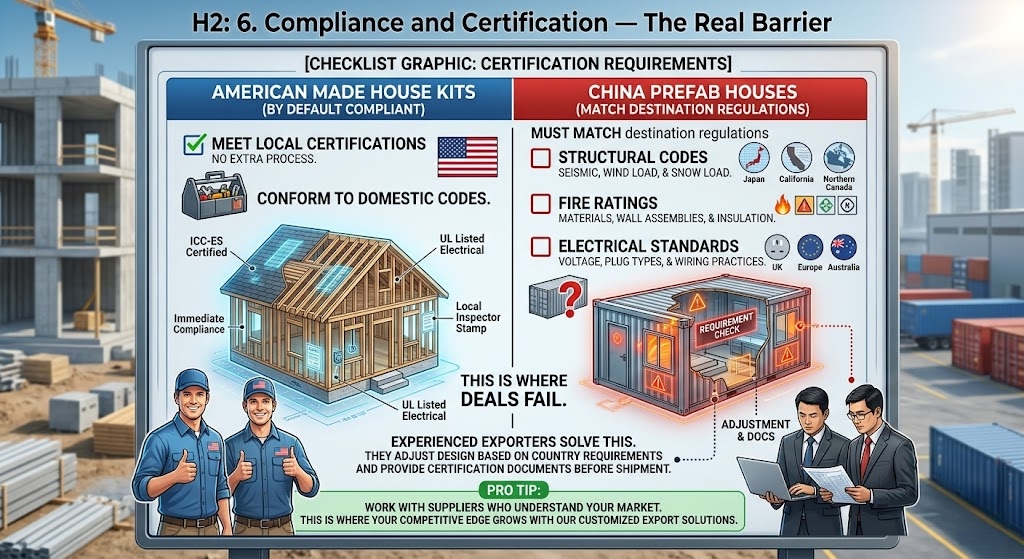
Опытные экспортеры решают эту задачу.
Они адаптируют проект под требования страны и предоставляют сертификационные документы до отгрузки.
Профессиональный совет:
Работайте с поставщиками, которые понимают ваш рынок.
Именно здесь Ваше конкурентное преимущество растет благодаря нашим индивидуальным экспортным решениям..
Поскольку китайские поставщики продают свою продукцию по всему миру, они получили только общеизвестные глобальные сертификаты для модульных домов. Однако они не оформляли менее распространенные сертификаты для других рынков мира. Поэтому заранее уточните у китайских поставщиков, есть ли у них необходимые вам сертификаты.
Для серьёзных покупателей наиболее важны три фактора: – 100 единиц, сжатые сроки, удалённое место. Китайские поставщики отгружают партиями, быстро собирают и справляются с объёмом без труда.
Цена — лишь отправная точка. Как объект показывает себя в течение пяти лет, как быстро можно развернуть 50 единиц и можно ли удвоить это количество в следующем квартале без повторного запуска процесса поиска поставщика — вот настоящий расчёт.
– временные магазины, киоски с едой, мобильные торговые точки. Быстрое развёртывание и лёгкое перемещение. Китайский сборный дом соответствует бизнес-модели. Это не единичные постройки. Это системы. И китайская цепочка поставок создана для питания систем.
Лагеря для рабочих Американские комплекты? Они блистают в другой нише:.
Курортов – ADU на заднем дворе, крошечный дом для родственника, дача на выходные. Один модуль, может быть, два. Вам нужна местная поддержка, знакомые материалы и никакой импортной документации.
Торговые объекты – pop‑up shops, food kiosks, mobile stores. Fast deployment and easy relocation. China prefab fits the business model.
These aren’t one‑off builds. They’re systems. And the Chinese supply chain is built to feed systems.
American kits? They shine in a different lane:
Малого жилого строительства – an ADU in the backyard, a tiny home for a relative, a weekend cabin. One unit, maybe two. You want local support, familiar materials, and no import paperwork.
Проектов местных подрядчиков – Это застройщик, который знает нормы, имеет готовую бригаду и нуждается в комплекте, который можно получить уже на следующей неделе. Американские комплекты — это решение «подключи и работай» для этого рынка.
Итак, вот честный расклад. Если вы девелопер, возводящий рабочий посёлок на 200 номеров, — китайское быстровозводимое жильё — ваш вариант. Если вы домовладелец, добавляющий кабинет на заднем дворе, — покупайте американское.
Разные инструменты для разных задач. Умный покупатель просто знает, какой инструмент подходит для какой руки.

При импорте в больших объемах маржа быстро растет.
При локальном строительстве в малых объемах американские комплекты снижают сложность.
Давайте обсудим плюсы и минусы покупки быстровозводимого дома из Китая. Я изложу всё чётко и прямо.
Сначала плюсы, потому что их немало.
Ниже стоимость – Это главное. Даже с учётом доставки и пошлин цена с выгрузкой обычно оказывается значительно ниже, чем у отечественных комплектов. Для оптовых покупателей экономия накапливается быстро.
Быстрое производство – После утверждения проекта большинство китайских заводов могут изготовить 20, 50 и даже 100 единиц за 30–45 дней. Попробуйте получить такое от местного подрядчика.
Высокая степень кастомизации – Нужна другая планировка? Эффектная внешняя облицовка? Особая электропроводка? Китайские модульные системы созданы для гибкости. Вы не ограничены тремя типовыми планами.
Масштабируемое предложение – Требуется 10 единиц сейчас и ещё 50 в следующем квартале? Китайские поставщики имеют производственные линии, способные обработать объём без перезапуска инженерного процесса. Это огромное преимущество для девелоперов.
Теперь минусы. Потому что ничто не идеально.
Сроки доставки – Вы ждёте контейнеровоз. Обычное время транзита из Китая в США или Европу — от 4 до 8 недель, плюс таможенное оформление. Если единицы нужны на следующей неделе — это проблема.
Сложность соответствия требованиям – Ваши местные строительные нормы могут отличаться от стандартных спецификаций завода. Вам необходимо заранее указать ветровые нагрузки, классы огнестойкости, стандарты электропроводки. Пропустите этот шаг — и можете получить единицы, не проходящие инспекцию.
Разнообразие поставщиков – Это скрытая ловушка. Завод высшего уровня использует оцинкованную сталь, минераловатный утеплитель и строгий контроль качества. Завод низшего уровня экономит на толщине стали и гидроизоляции. В брошюрах они выглядят одинаково. На объекте работают совершенно по-разному. Поэтому проверка поставщика обязательна.
Итог? Китайское быстровозводимое жильё имеет смысл для покупателей, которые планируют заранее, изучают поставщиков и нуждаются в экономически эффективных, настраиваемых единицах в масштабе. Если скорость превыше всего или вы покупаете одну единицу для заднего двора — возможно, стоит поискать в другом месте. Но для масштабных проектов? Плюсы обычно перевешивают.
| Аспект | Американские домокомплекты | Китайские сборные дома | Ключевой вывод / Победитель | |
|---|---|---|---|---|
| 1 | Разбивка затрат | На 30–60% дороже (в основном из-за более высоких затрат на рабочую силу в США). Затраты на материалы сопоставимы. | Значительно более низкая базовая стоимость за счет масштаба, более низких зарплат и оптовых экспортных цен. Стоимость с учетом доставки и пошлин добавляет 10–25%, но итоговая сумма обычно все равно ниже. | Китай выигрывает по первоначальной стоимости и марже. |
| 2 | Сроки поставки | 4–8 недель в сумме. Внутреннее производство, без океанских перевозок и таможенных задержек. | Производство: 20–30 дней (очень быстро). Морская перевозка: 20–35 дней. | Американские комплекты — для срочных/быстрых проектов. Китай Китайские — для запланированных крупных проектов. |
| 3 | Сравнение качества | Строгое соблюдение норм IRC/IBC с поэтапными проверками. Высокое доверие со стороны местных подрядчиков. | Зависит от поставщика. Заводы высшего уровня используют оцинкованную сталь, каменную вату и соответствуют международным стандартам по огнестойкости, изоляции и гидроизоляции. Поставщики низшего уровня могут экономить. | Зависит не от страны, а от поставщика. Проверяйте завод. |
| 4 | Гибкость кастомизации | Ограничена. Следование фиксированным шаблонам; изменения увеличивают стоимость и сроки. | Высокая гибкость. Модульные системы позволяют легко менять планировку, материалы стен, кровельные системы, электрику и расширение. | Китай лидирует — идеально для застройщиков и различных сегментов рынка. |
| 5 | Логистика и монтаж | Поставляется готовым к местной сборке. Подрядчики сразу понимают систему — обучение не требуется. | Требует планирования. Хорошие поставщики предоставляют подробные чертежи, видеоинструкции и удаленную поддержку. Возможны ошибки монтажа при отсутствии опыта. | Китай — преимущество для крупных/стандартизированных проектов после обучения команды. |
| 6 | Соответствие и сертификация | По умолчанию соответствует местным сертификатам (дополнительных шагов не требуется). | Должны быть адаптированы под нормы страны назначения (строительные, пожарные, электрические). Опытные экспортеры предоставляют сертификационные документы до отгрузки. | Американские комплекты проще. Китай Китайские — работоспособны с опытными поставщиками. |
| 7 | ROI и бизнес-стратегия | Лучше всего подходят для малого жилого строительства и проектов местных подрядчиков. Меньше сложностей, но более узкая маржа. | Доминируют в крупномасштабных проектах (рабочие лагеря, курорты, торговые объекты). Более высокая маржа при масштабе и большая масштабируемость. | Китай — для роста с высокой маржой при больших объемах. Американский Для малого/локального объёма. |
Ваше преимущество зависит от исполнения.
Американские домокомплекты против китайского быстровозводимого жилья — это не вопрос того, что универсально лучше, а того, что подходит для вашего проекта.
Вот логика принятия решения.
Выбирайте американские домокомплекты, если:
Выберите Китайские сборные дома если:
Сравнение американские комплекты домов против китайских сборных домов не сводится к тому, что лучше.
Речь о том, что подходит вашей бизнес-модели.
Ваш адрес электронной почты не будет опубликован. Обязательные поля отмечены *
 Английский язык