Protección del Sistema Eléctrico en Casas Contenedor: Una Guía Práctica de Seguridad para Proyectos Reales
Las casas contenedor se utilizan ampliamente en obras de construcción, campamentos laborales, oficinas modulares e incluso aplicaciones residenciales debido a su movilidad, eficiencia de costos y rápida implementación. Sin embargo, las estructuras temporales no implican estándares de seguridad temporales—especialmente cuando se trata de sistemas eléctricos. En esta guía, desglosaremos cómo implementar una protección confiable del sistema eléctrico en casas contenedor, basada en experiencia real de instalación y estándares prácticos de ingeniería.
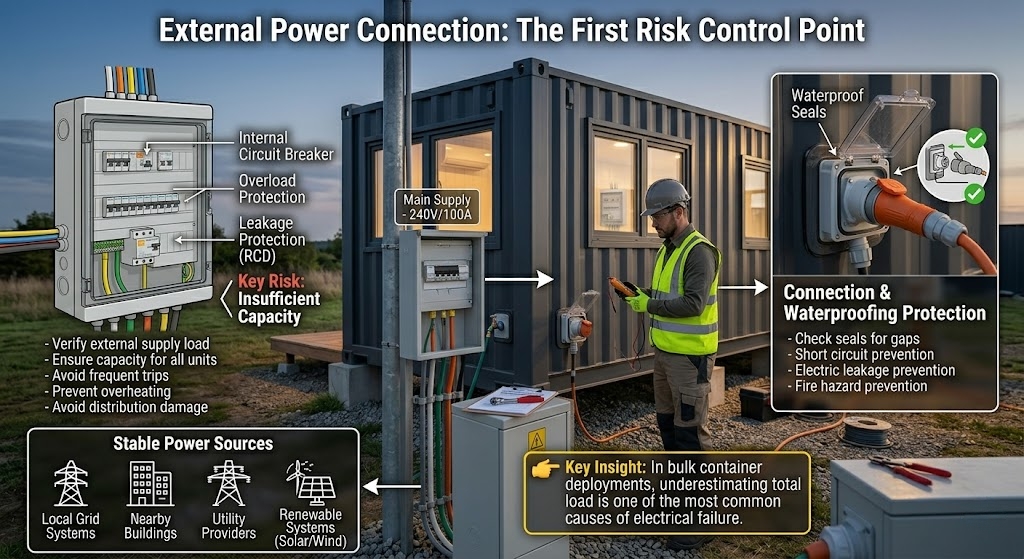
1. Conexión Eléctrica Externa: El Primer Punto de Control de Riesgos
La mayoría de las casas contenedor dependen de conexiones externas de agua y electricidad. Una vez que el contenedor está en posición, puede ponerse en funcionamiento conectándolo a fuentes de energía y agua cercanas.
Sin embargo, deben seguirse varias medidas críticas de protección:
- Asegurar una capacidad de energía suficiente
Antes de conectar, verifique que la fuente de alimentación externa pueda manejar la carga total de todas las unidades contenedor. Una capacidad insuficiente puede provocar:
- Disparos frecuentes del disyuntor
- Sobrecalentamiento
- Daños en los sistemas de distribución
- Impermeabilizar todos los puntos de conexión
Un sellado deficiente en las interfaces puede causar:
- Cortocircuitos
- Fugas eléctricas
- Riesgos de incendio
- Utilizar fuentes de energía estables
La electricidad puede obtenerse de:
- Sistemas de red locales
- Edificios cercanos
- Proveedores de servicios públicos
- Sistemas renovables (solar o eólico)
👉 Perspectiva clave: En despliegues de contenedores a gran escala, subestimar la carga total es una de las causas más comunes de fallos eléctricos.
2.1 Normas Adecuadas de Cableado
Una casa contenedor segura debe seguir reglas de cableado estructurado:
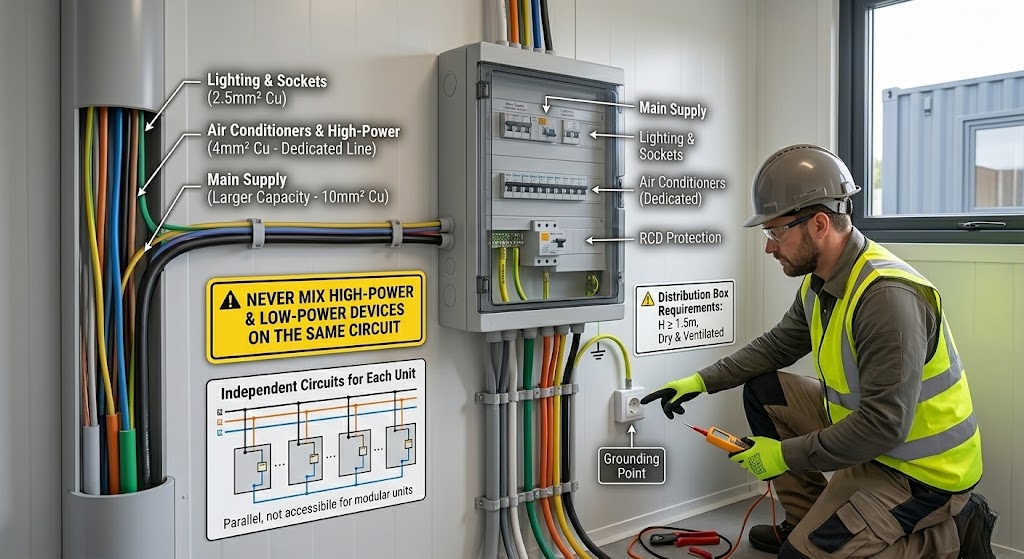
- Circuitos de iluminación y tomacorrientes: Cables de cobre de 2.5 mm²
- Aires acondicionados y equipos de alta potencia: Líneas dedicadas de 4 mm²
- Líneas principales de suministro: Cables de mayor capacidad según la carga
⚠️ Nunca mezcle dispositivos de alta potencia y baja potencia en el mismo circuito.
2.2 Circuitos Independientes para Cada Unidad
Para proyectos de contenedores modulares:
- Cada contenedor debe tener acceso eléctrico principal independiente
- Utilice conexiones en paralelo, no conexiones en serie
- Los puntos de conexión externos deben permanecer accesibles
Esto asegura:
- Una unidad puede retirarse o reubicarse sin afectar a las demás
- Distribución estable de energía en todo el sistema
2.3 Protección del Cuadro de Distribución
El cuadro de distribución es el núcleo de la seguridad eléctrica.
Estándares de instalación:
- Altura ≥ 1.5 metros sobre el suelo
- Instalado en áreas secas y ventiladas
- Equipado con:
- Disyuntores
- Dispositivos de protección contra fugas (RCD)
- Protección contra sobrecargas
👉 Asegúrese siempre de una conexión a tierra adecuada para prevenir riesgos de descarga eléctrica.
3. Reglas Diarias de Seguridad en el Uso Eléctrico
Incluso con un sistema bien instalado, el mal uso puede causar fallos.
Mejores prácticas:
- Evite el uso simultáneo de múltiples electrodomésticos de alta potencia
- Asignar la responsabilidad del monitoreo diario de la energía eléctrica
- Apagar la energía cuando no esté en uso
- Nunca permitir modificaciones no autorizadas del cableado
Nota especial:
- Los aires acondicionados y calefactores deben tener circuitos dedicados con protección contra fugas
4. Protección contra agua y humedad
El agua y la electricidad representan el mayor riesgo combinado en las casas contenedor.
Áreas de enfoque:
- Uniones de conexión externas
- Baños y cocinas
- Tendido de cables exterior
Métodos de protección:
- Enchufes y cajas de conexión impermeables
- Tendido de cables elevado
- Sellado adecuado con EPDM o materiales similares
5. Inspección y mantenimiento regulares
Un sistema robusto aún requiere monitoreo continuo.
Lista de verificación de inspección:
- Inspección eléctrica completa semanal
- Verificar:
- Cables envejecidos
- Conexiones sueltas
- Puntos de sobrecalentamiento
- Probar la estabilidad del voltaje (típicamente alrededor de 220V ±10%)
- Asegurar que los extintores sean accesibles
6. Medidas de protección de emergencia
Las fallas eléctricas deben manejarse de inmediato y correctamente:
- Corte de energía → Apagar todos los dispositivos
- Incendio eléctrico → Cortar la energía antes de extinguir
- Descarga eléctrica → Usar únicamente herramientas de rescate aisladas
👉 Establezca una sistema de respuesta a emergencias 24/7 para proyectos a gran escala.
7. Planificación eléctrica inteligente para proyectos de contenedores
Antes de la instalación, siempre:
**✔ Calculate Total Load**
- Carga típica de una unidad contenedor: ≤ 8kW recomendado
**✔ Plan Functional Zones**
- Residencial: iluminación, enchufes, electrodomésticos
- Oficina: computadoras, impresoras, redes
- Comercial: requisitos específicos del equipo
**✔ Prepare for Future Expansion**
- Reservar capacidad adicional en los sistemas de distribución
- Planificar diseños de cableado escalables
8. Por qué la protección eléctrica es importante en las casas contenedor
Los sistemas eléctricos inadecuados pueden provocar:
- Cortocircuitos
- Riesgos de incendio
- Daños en los equipos
- Accidentes de seguridad
Un sistema bien diseñado garantiza:
- Operación confiable
- Durabilidad a largo plazo
- Cumplimiento de las regulaciones locales
- Condiciones seguras de vida y trabajo
Reflexiones finales: Construir de forma segura, no solo rápida
| Sección | Puntos clave | Recomendaciones prácticas |
| 1. Conexión de energía externa | Primer punto de riesgo y el más crítico | • Verificar la capacidad de energía suficiente antes de conectar • Impermeabilizar todos los puntos de conexión • Usar fuentes de energía estables (red eléctrica, generador o solar) |
| 2. Diseño eléctrico interno | Cableado y planificación de circuitos adecuados | • Iluminación y enchufes: cable de cobre de 2,5 mm² • Aires acondicionados y dispositivos de alta potencia: líneas dedicadas de 4 mm² • Cada contenedor debe tener circuitos independientes • Nunca mezclar dispositivos de alta y baja potencia en el mismo circuito |
| 3. Caja de Distribución | Núcleo de la seguridad eléctrica | • Instalar a una altura ≥ 1,5 m • Debe incluir interruptores automáticos, interruptor diferencial (protección contra fugas) y protección contra sobrecargas • Asegurar una puesta a tierra adecuada |
| 4. Protección contra agua y humedad | Prevenir riesgos eléctricos relacionados con el agua | • Utilizar enchufes y cajas de conexión impermeables • Elevar el tendido de cables • Sellar todas las uniones con EPDM o materiales equivalentes • Prestar especial atención a baños y cocinas |
| 5. Normas diarias de seguridad | Evitar el mal uso y los accidentes | • Evitar el uso simultáneo de varios electrodomésticos de alta potencia • Desconectar la corriente cuando no se utilice • No realizar modificaciones eléctricas no autorizadas • Asignar responsabilidad diaria de supervisión eléctrica |
| 6. Inspección y mantenimiento periódicos | Garantía continua de seguridad | • Inspecciones eléctricas semanales • Revisar cables envejecidos, conexiones sueltas y sobrecalentamiento • Verificar la estabilidad del voltaje (220 V ±10 %) • Mantener extintores accesibles |
| 7. Medidas de emergencia | Respuesta rápida y correcta | • Corte de energía: Apagar todos los dispositivos • Incendio eléctrico: Cortar primero la corriente • Descarga eléctrica: Utilizar únicamente herramientas aisladas • Establecer respuesta de emergencia 24/7 para proyectos grandes |
| 8. Consejos de planificación inteligente | Antes de la instalación | • Calcular la carga total (recomendado ≤ 8 kW por unidad) • Planificar para futuras ampliaciones • Reservar capacidad adicional en el sistema de distribución |
Las casas contenedor se despliegan rápidamente, pero la seguridad eléctrica no puede apresurarse.
En Container House S.L., enfatizamos:
- Sistemas eléctricos preinstalados y conformes
- Diseño modular de conexión externa
- Interfaces impermeables y desmontables
- Estándares de seguridad de nivel ingenieril para proyectos globales
Si está planificando un proyecto de casas contenedor, la protección del sistema eléctrico debe ser parte de su lista de verificación de adquisiciones principal, no una ocurrencia tardía.

 Inglés