7 key points on Prefab Restroom vs. Traditional Restrooms: A Buyer’s Decision Guide for Outdoor Projects When an importer or project buyer evaluates sanitation solutions for outdoor events, construction sites, or temporary commercial spaces, the comparison between prefab restroom systems and traditional restrooms is no longer theoretical—it directly impacts ROI, deployment speed, and compliance. A […]
When an importer or project buyer evaluates sanitation solutions for outdoor events, construction sites, or temporary commercial spaces, the comparison between prefab restroom systems and traditional restrooms is no longer theoretical—it directly impacts ROI, deployment speed, and compliance.
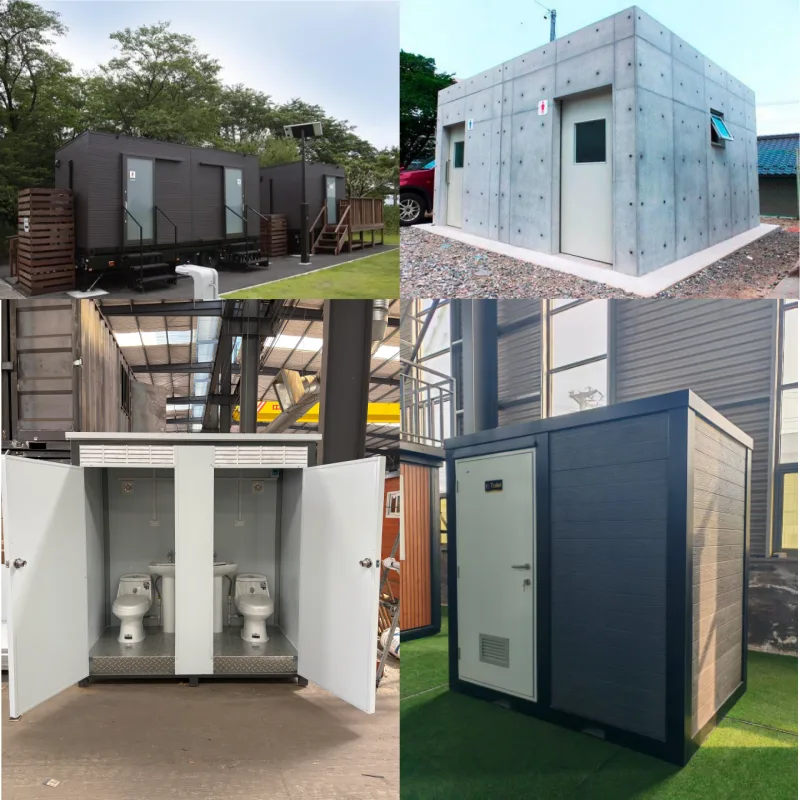
A prefabricated toilet is manufactured in a controlled factory environment using standardized modules (steel frame + insulated panels + integrated plumbing), while traditional restrooms are constructed on-site using concrete, brick, and manual labor.
The difference is not cosmetic—it is structural, logistical, and financial.
From a procurement perspective, the decision depends on three measurable variables:
According to construction benchmarks from World Bank infrastructure reports, on-site construction delays increase project costs by 12%–30% on average in developing regions. Prefab solutions directly eliminate this risk.
This article breaks down the decision using engineering principles, cost modeling, and real-world procurement.
[Principle Explanation] Load Distribution & Material Efficiency
A prefab restroom uses a Q235 galvanized steel frame (2.0–2.5mm thickness) combined with sandwich panels (rock wool or EPS). This creates a distributed load-bearing system, where stress is transferred across the frame instead of concentrated in masonry joints.
Traditional restrooms rely on:
The engineering limitation: concrete strength depends on curing conditions, which vary with humidity and temperature.
Prefab units eliminate this variable.
[Data Comparison] Structural Performance
Result:
A large outdoor festival organizer in Thailand replaced 60 traditional toilets with modular restroom buildings:
“This is very convenient and efficient. For outdoor activities with a large number of participants, prefabricated toilets need to be placed in large quantities on the site.” –carlo Neri
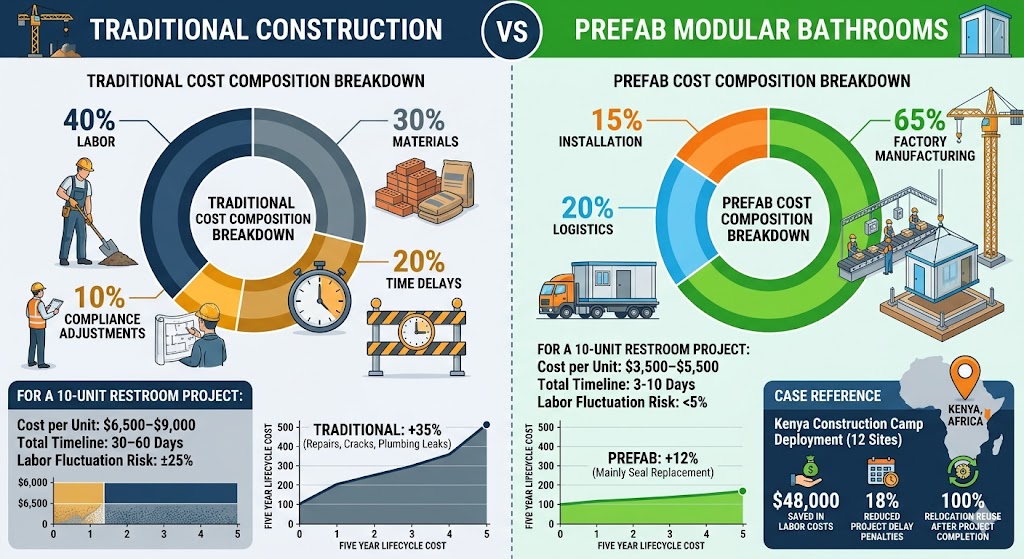
[Principle Explanation] Cost Composition Breakdown
Traditional restroom cost structure:
Prefab restroom cost structure:
Key difference: labor volatility is eliminated
[Data Comparison] Real Procurement Numbers
For a 10-unit restroom project:
Traditional Construction
Prefab Outdoor Bathroom
Lifecycle cost over 5 years:
[Case Reference] African Construction Camps
A contractor in Kenya deployed prefabricated toilet units across 12 sites:
[Principle Explanation] Parallel vs Sequential Construction
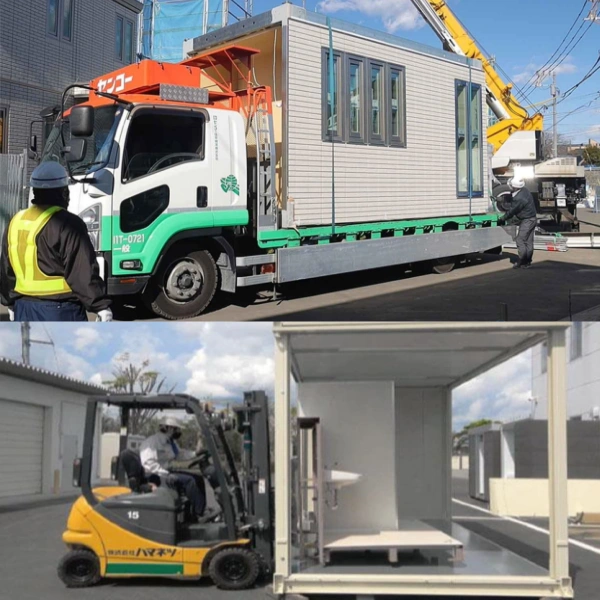
Traditional restroom construction is sequential:
Traditional restroom installations have unstable delivery times, requiring on-site construction teams for professional installation and construction. While the final quality is good, the installation time is too long and the completion time is unpredictable, impacting the efficiency of the marketing contractor.
Prefab restroom installation is parallelized:
While some prefabricated toilets may be damaged by extreme weather, their installation allows for large-scale deployment in outdoor environments. They are commonly seen at large-scale temporary outdoor events such as music festivals.
[Data Comparison] Time Efficiency
Weather impact:
[Case Reference] Middle East Event Deployment
A Qatar event organizer required 80 units:
Revenue impact:
[Principle Explanation] Modular Design Logic
A prefab restroom is designed with:
Compared to traditional toilets, prefabricated toilets are clearly a highly profitable product. Because prefabricated toilets are portable and movable, they can be rented out or resold.
This allows:
Traditional restrooms are permanently fixed assets
Traditional toilets, due to their inability to be moved, do not generate any revenue for customers but instead cause losses. Traditional toilets are usually public facilities or part of the sports stadiums. They are attached to scenic area buildings and do not generate significant economic benefits, making it impossible to rent or sell them for a second time.
[Data Comparison] Asset Utilization
Depreciation:
[Case Reference] Mining Industry Application
An Australian mining company rotated modular restroom buildings across 4 sites:
[Principle Explanation] Factory Quality Control
Prefab restroom production follows:
Traditional restrooms depend on site worker skill, leading to inconsistency.
[Data Comparison] Failure Rates
Standards reference:
[Case Reference] Public Sanitation Upgrade (India)
Municipal project replacing 200 traditional toilets:
[Principle Explanation] Containerized Transport Efficiency
Prefab restroom units are designed for:
This reduces:
[Data Comparison] Freight Efficiency
Freight cost reduction:
[Case Reference] Latin America Importers
A distributor in Chile imported prefab outdoor bathroom units:
When prefab restroom Is the Superior Choice
Choose prefab restroom if:
When Traditional Restrooms Still Make Sense
Choose traditional only if:
| Key Point | Aspect | Prefab Restroom | Traditional Restroom | Winner & Advantage |
|---|---|---|---|---|
| 1. Structural Engineering | Material & Durability | Q235 galvanized steel frame + sandwich panels (rock wool/EPS), 235 MPa yield strength | Reinforced concrete + brick/block, 10–15 MPa compressive strength | Prefab – Better wind resistance (up to 120 km/h), consistent quality, fewer defects |
| 2. Cost Model | CAPEX + Lifecycle Cost | $3,500–$5,500 per unit 5-year lifecycle: +12% | $6,500–$9,000 per unit 5-year lifecycle: +35% | Prefab – Lower initial cost, significantly lower maintenance & repair costs |
| 3. Installation Speed | Deployment Time | 3–10 days total 2–6 hours per unit | 30–60 days total 80–120 labor hours per unit | Prefab – 8–10x faster installation, minimal weather delays (<3%) |
| 4. Mobility & Reusability | Asset Flexibility | 5–10 reuse cycles, easily relocated, bolted modular design | Fixed structure, demolition required | Prefab – High resale/rental value, 60% reduction in new procurement |
| 5. Compliance & Hygiene | Quality & Reliability | Factory-controlled, ISO 9001, <2% leakage rate, pre-tested plumbing | Depends on on-site labor, 15–25% leakage rate within 2 years | Prefab – Superior hygiene, lower failure rate, better WHO compliance |
| 6. Logistics & Procurement | Shipping Efficiency | Flat-pack, 8–10 units per 40ft container 30–55% lower freight cost | Bulky components, only 3–4 units equivalent | Prefab – Easier global import, lower shipping costs, faster inventory turnover |
| 7. Best Use Cases | Decision Framework | Temporary projects, outdoor events, multiple sites, tight timelines, high labor cost areas | Permanent infrastructure (10+ years), very low local labor cost | Prefab for most outdoor/event/construction projects |
For importers, wholesalers, and project contractors, a prefab restroom is no longer a temporary substitute—it is a high-efficiency infrastructure asset.
Compared to traditional restrooms, it delivers:
Based on your project requirements, you can make the final decision by referring to the following scenario divisions:
Suitable for choosing [Prefabricated Bathroom]:
Large outdoor events/sports competitions: Such as music festivals, sports events, and exhibitions. Due to the need to set up a large number of facilities quickly and to evacuate quickly after the event.
Construction site / mining area: The workers’ living quarters need to be put into use promptly, and as the project progresses, the bathrooms need to be relocated to the next project site as a whole.
Temporary commercial spaces: such as pop-up stores, temporary parking lots, and scenic spots during peak tourist seasons.
Leasing business: For traders who need to lease out the bathrooms as assets for multiple times or for secondary resale.
Emergency rescue / epidemic prevention: Situations involving post-disaster reconstruction or urgent public health incidents where there are extremely strict requirements regarding delivery time.
Suitable for choosing the 【Traditional Bathroom】:
Permanent municipal facilities: such as city center parks, interior of large stadiums, permanent administrative buildings. With a planned service life of 20-30 years and no need for relocation.
Regions with extremely low labor costs: In remote areas where the costs of local building materials (such as bricks and stones) and labor are extremely low, and where the construction period is completely insensitive to these factors.
Deeply customized architecture: A highly customized project that requires achieving complete visual and material consistency with surrounding permanent historical buildings or special landscapes.
In outdoor events, construction camps, and commercial temporary spaces, the decision is not about preference—it is about capital efficiency and operational speed.
We hope readers can choose the appropriate bathroom solution based on their own needs and the usage scenario of their project.
Your email address will not be published. Required fields are marked *
 English