Mesures de protection d’urgence

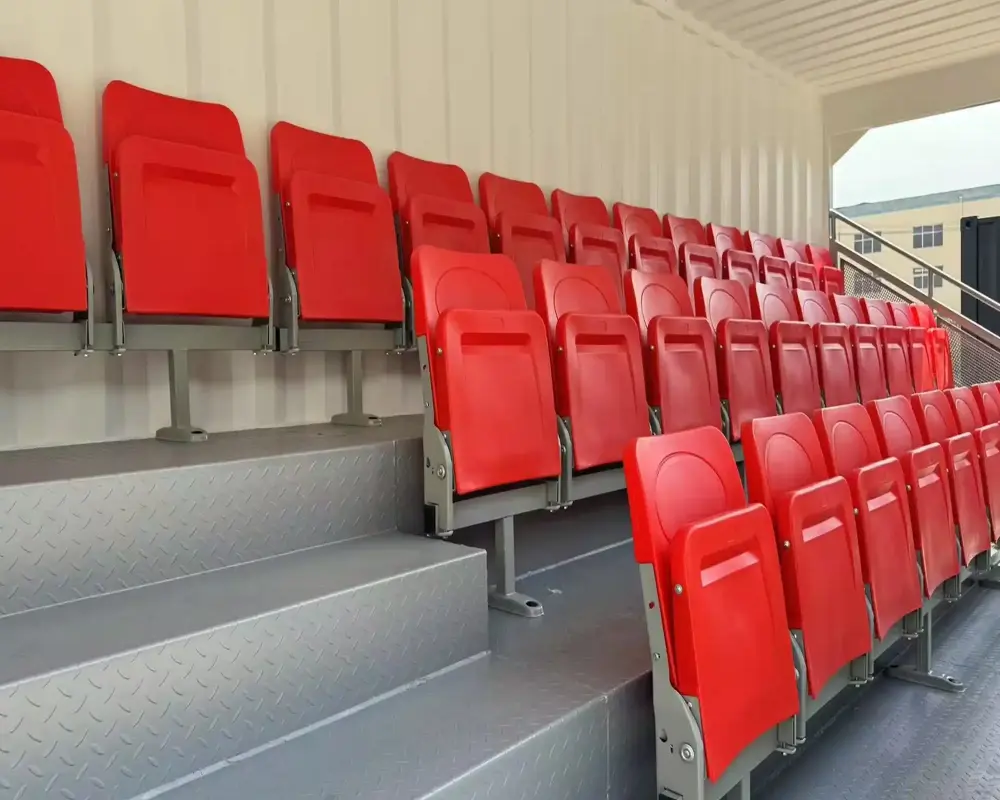
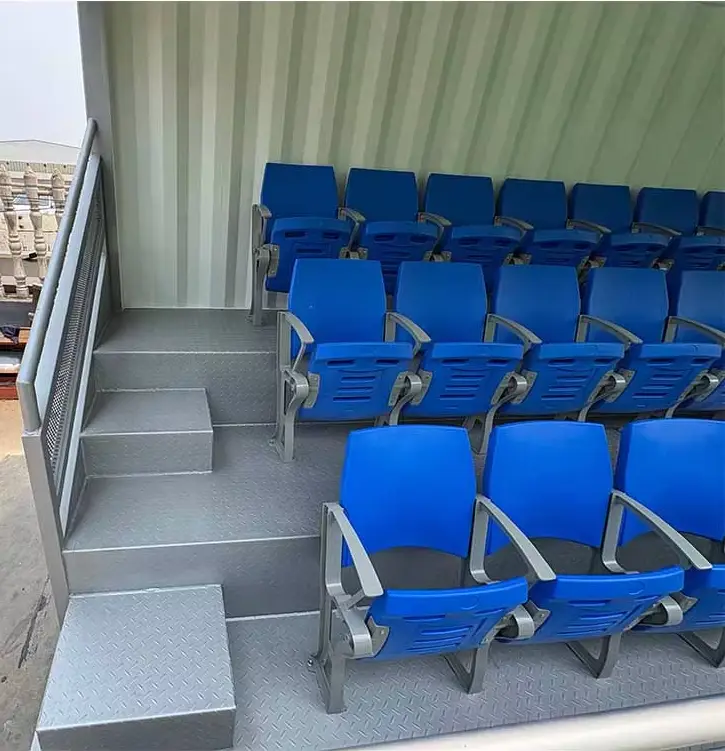
Ce système de sièges est spécialement conçu pour les conversions de conteneurs, les stades modulaires et les gradins. Utilisant du Polyéthylène Haute Densité (PEHD) avec un procédé de moulage par soufflage creux, ces sièges offrent l’équilibre parfait entre durabilité, résistance aux intempéries et confort ergonomique.
Nom du produit : Siège de stade pliant moulé par soufflage creux
Matériau : Polyéthylène Haute Densité (PEHD)
Procédé de fabrication : Moulage par soufflage creux (pour une résistance aux chocs supérieure)
Mécanisme de pliage : Système de retour automatique par gravité ou à ressort
Structure de support : Alliage d'aluminium moulé sous pression ou acier galvanisé à chaud
Entraxe : 480 mm – 500 mm (Standard)
Hauteur d'assise : 430 mm ± 10 mm
Résistance aux intempéries : Stabilisé aux UV ; Plage de température : -50 °C à +75 °C
Capacité de charge : Charge statique ≥ 200 kg ; Charge d'impact ≥ 1000 N
Classement au feu : Disponible en grade ignifuge B1/B2 (Optionnel)
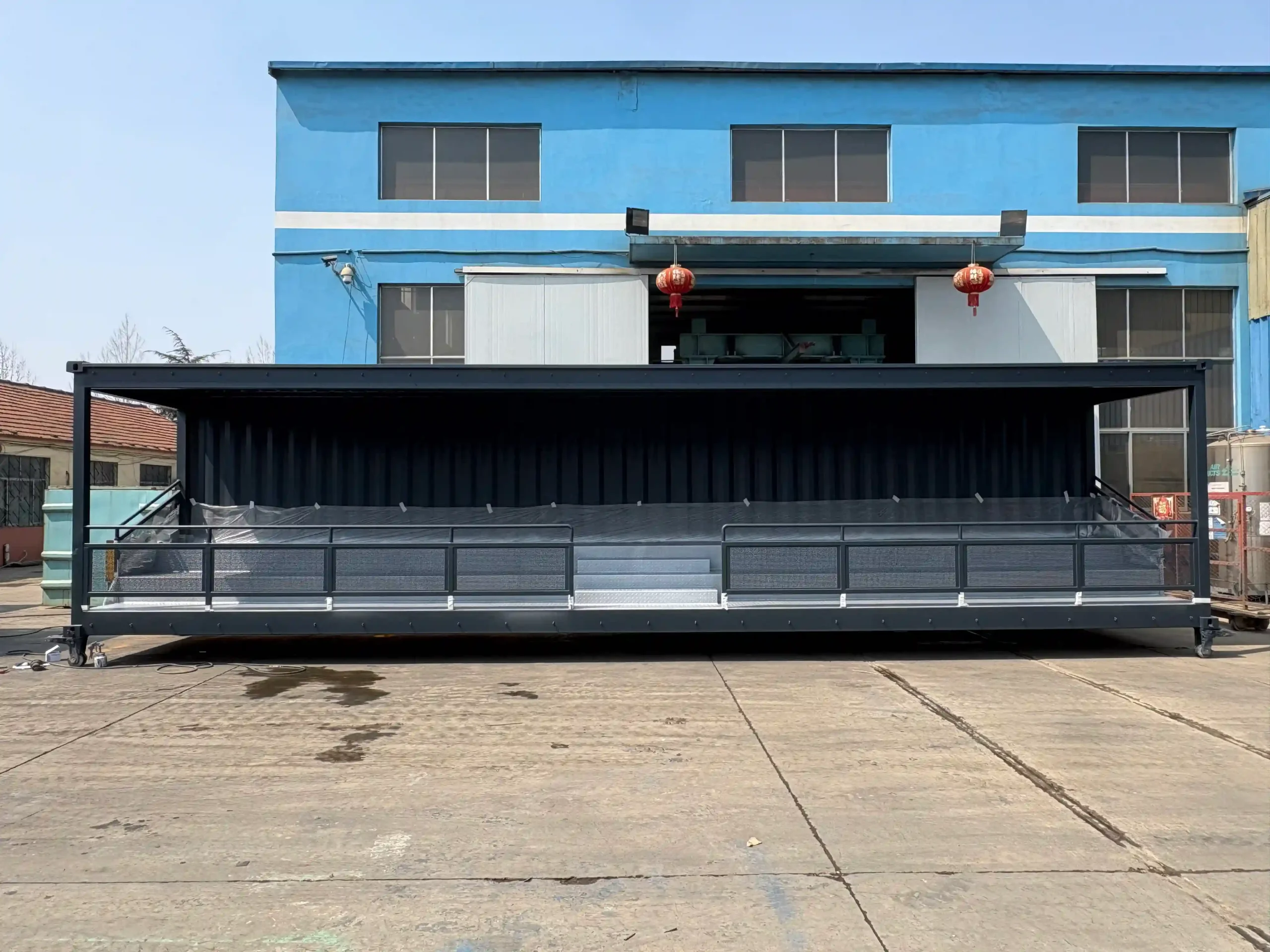
Le revêtement de sol intérieur est conçu à l'aide d'une structure en acier étagée robuste afin d'offrir une visibilité optimale aux spectateurs. Les surfaces de marche et les escaliers sont recouverts d'acier antidérapant à plaque diamantée (tôle gaufrée), garantissant une adhérence et une durabilité élevées par tous les temps. Chaque gradin est soudé avec précision au châssis du conteneur, intégré à une allée centrale ou latérale pour une circulation efficace des piétons. La surface est traitée avec un revêtement en poudre anticorrosion de qualité industrielle pour prévenir l'usure et l'oxydation dues à une utilisation intensive.
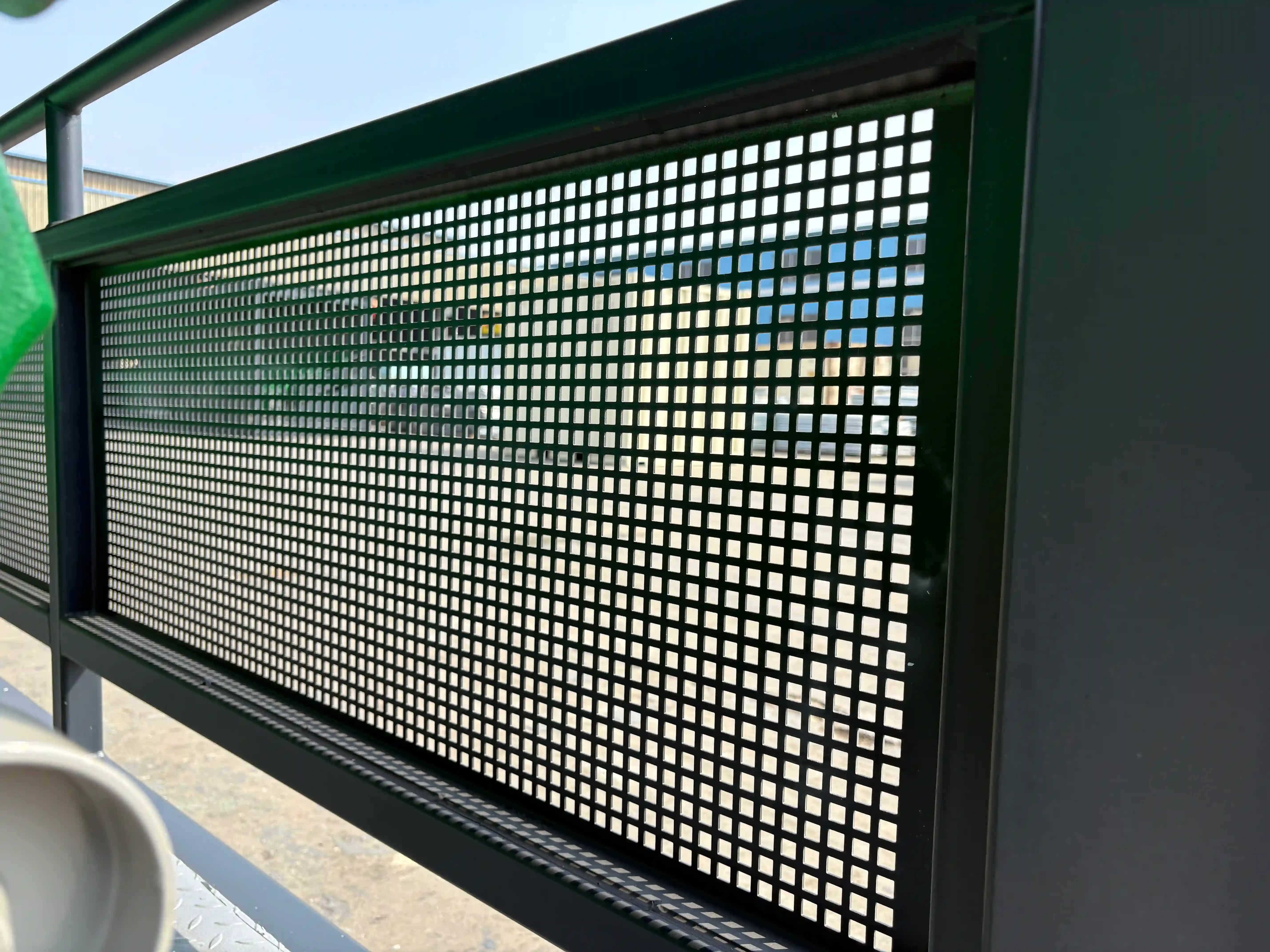
Le périmètre est sécurisé par un système robuste de mains courantes en tube d'acier, généralement conçu avec une hauteur de lisse supérieure destinée à respecter les normes de sécurité internationales. La partie inférieure du garde-corps est équipée de panneaux de remplissage en treillis métallique découpé au laser. Ces écrans à motifs carrés constituent une barrière à haute résistance qui prévient les chutes tout en maintenant la transparence visuelle et la circulation d'air. L'ensemble du garde-corps est revêtu d'un finition mate ou semi-brillante résistante aux intempéries, assortie à la structure principale du conteneur, offrant ainsi une esthétique homogène et professionnelle.
La tribune est abritée par un système de toit en porte-à-faux ou intégré au conteneur, composé de panneaux en acier ondulé à haute résistance. Le plafond intérieur suit le profil d'origine du toit du conteneur, assurant une rigidité structurelle et une évacuation efficace de l'eau. Le débord important du toit garantit que la zone d'assise reste protégée de la lumière directe du soleil et des précipitations verticales. Pour une durabilité accrue, les joints du toit sont entièrement soudés et scellés avec des revêtements industriels imperméabilisants, et l'intérieur est peint dans des tons réfléchissants pour améliorer la luminosité ambiante dans la zone d'assise.
“ 5 ans ? 10 ans ? 20 ans ? 30 ans ? ”
De nombreuses personnes ont débattu de la durée de vie des gradins en conteneur. Personne n'achèterait à nouveau un gradin en raison de problèmes de qualité, c'est pourquoi la durée de vie d'un gradin en conteneur est un élément auquel l'acheteur doit vraiment prêter attention.
Lors de l'achat d'un gradin en conteneur, les acheteurs doivent aller au-delà des affirmations génériques de “ 20+ ans ” et prévoir un budget pour deux durées de vie distinctes : le cadre en acier robuste, qui conserve son intégrité structurelle pendant 25 à 30 ans avec un entretien approprié du revêtement et du drainage, et le système de sièges, qui nécessite généralement une remise en état tous les 10 à 15 ans en raison de l'exposition aux UV et de l'usure opérationnelle. Les équipes d'approvisionnement avisées doivent considérer le cadre comme un actif immobilier à long terme et les sièges comme un coût de maintenance prévisible à mi-vie, en gardant à l'esprit que des habitudes opérationnelles simples, telles que des inspections proactives et la prévention de l'accumulation d'eau, déterminent en fin de compte la longévité réelle de la structure.
Votre adresse électronique ne sera pas publiée. Les champs obligatoires sont marqués *
 Anglais