Expandable Container House Circuit and Wire System Solution
Contractors during project construction, decorators during home renovation, and residents during home occupancy all pay attention to one crucial question: Is there a reliable power supply? Compared to the mature electrical systems of traditional concrete houses, the electrical and wiring systems of container houses require even more precision, planning, and standardization. This article will introduce the key precautions and proven solutions for designing a safe, durable, and efficient expandable container house circuit system—especially in large-scale or export-oriented projects.
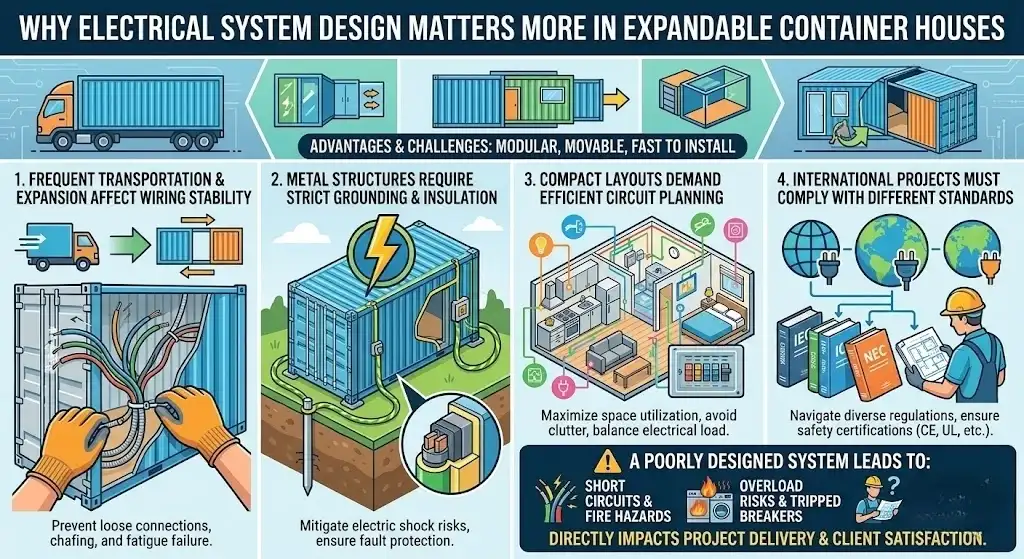
1. Why Electrical System Design Matters More in Expandable Container Houses
Expandable container houses are modular, movable, and fast to install. However, these advantages also introduce specific challenges:
- Frequent transportation and expansion can affect wiring stability
- Metal structures require stricter grounding and insulation measures
- Compact layouts demand efficient circuit planning
- International projects must comply with different electrical standards
A poorly designed system can lead to short circuits, overload risks, or maintenance difficulties—issues that directly impact project delivery and client satisfaction.
2. Challenges in Large-Scale Container House Projects
In small installations, wiring management is relatively straightforward. However, in large-scale and wide-area container house deployments, such as construction site camps or temporary worker accommodations, electrical systems often become significantly more complex.
Due to the high density of units and fast-paced installation schedules, it is common to encounter:
- Disorganized cable routing between units
- Overlapping temporary wiring solutions
- Lack of unified cable management standards
- Different national standards
- Wire protection and waterproof function
This kind of circuit disorder has a direct and measurable impact on system reliability. Based on practical project experience, unstructured wiring can increase electrical failure rates, delay maintenance response, and even create safety hazards.
3. Wire Standardization Solution
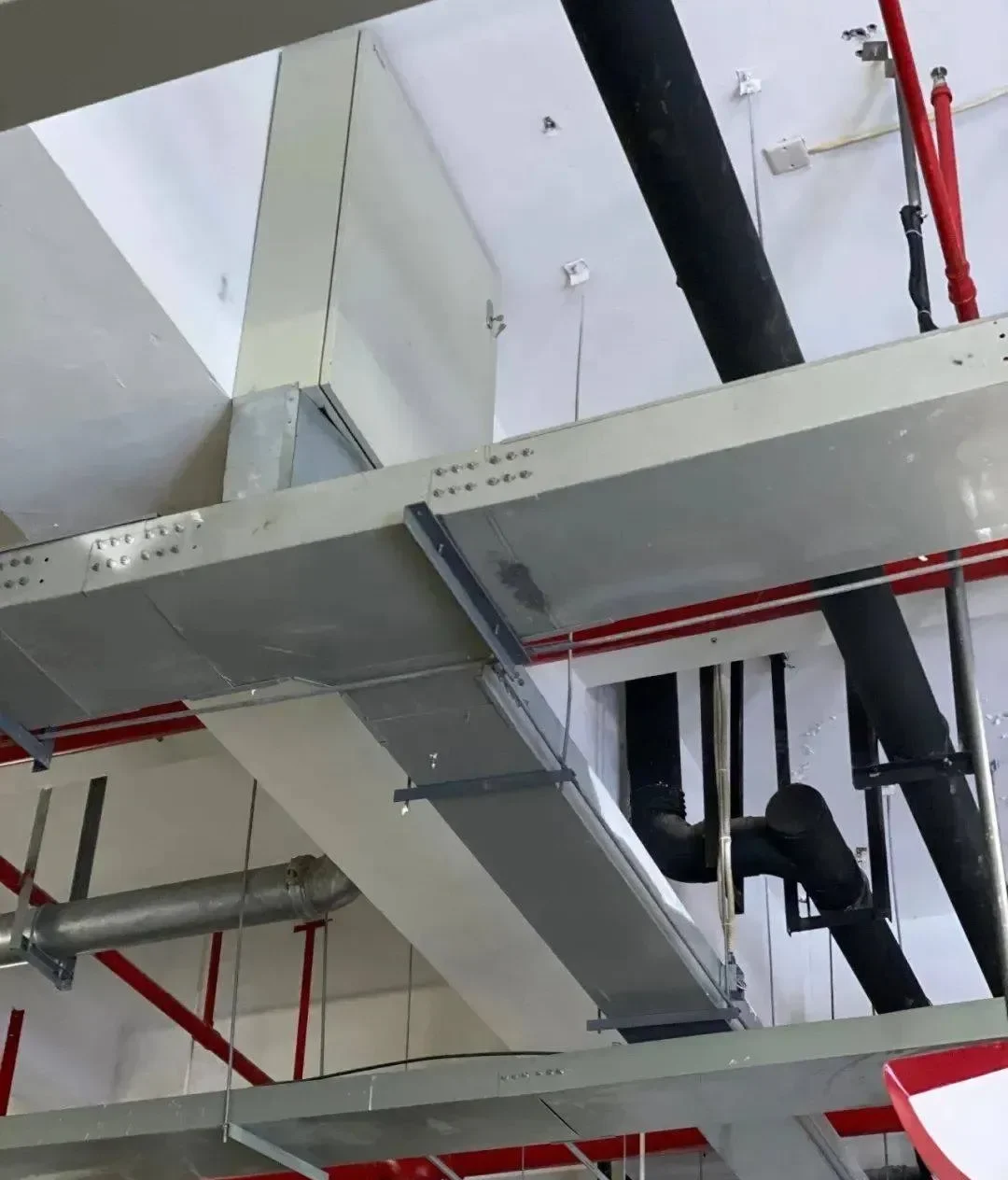
To address these challenges, implementing a cable tray system is essential in large container housing projects.Neglecting wiring will result in messy and disorganized wiring, increasing the likelihood of electrical problems in your home by 5%-11%.

3.1 Why Cable Trays Are Necessary
Cable trays provide a structured pathway for all power and communication lines, ensuring:
- Clear separation of circuits
- Organized routing across multiple units
- Reduced mechanical damage to cables
- Improved heat dissipation
More importantly, standardized cable management can reduce up to 8% of failures caused by disorganized wiring, significantly improving overall system stability.
3.2 Cable tray Application in Construction Site Projects
In construction site scenarios, where container houses are widely distributed:
- Main power lines can be routed through elevated cable trays
- Branch circuits can be distributed to each unit in an orderly manner
- Maintenance teams can quickly identify and access specific lines
This approach transforms a chaotic wiring environment into a structured, manageable electrical network.
Recognizing the importance of cable trays for expandable container houses, we carefully considered YDX Cable Tray Factory’s extensive global project production experience, global certifications, and professional quality control and production teams. Ultimately, we chose YDX Cable Tray Factory as our partner to supply cable trays.
After partnering with them, YDX Cable Tray Factory and our technical team communicated extensively to jointly provide wire protection and storage solutions for container houses. Since the start of our collaboration, we have jointly participated in 22 container house wire protection and storage projects in 7 countries worldwide. 95% of our clients are very satisfied with our solutions. 5% of our clients provided us with improvement suggestions based on their specific local market needs.
“I’ve purchased many container houses before. Some suppliers didn’t pay attention to electrical and wiring issues, creating potential problems for our subsequent distribution. However, through multiple communications with YDX, gkcpro’s cable tray and container manufacturing teams, I’ve obtained a satisfactory solution and container houses. I’ve now purchased over 30 container houses without receiving any customer complaints. I’m very satisfied and grateful to the YDX and gkcpro teams.”-Harper Darlene Japan
3.4 Other wire protection
For indoor wiring, we also use various methods such as junction boxes and cable ties to ensure proper wiring in the container houses, thereby improving their power efficiency.
4. Core Design Principles of an Expandable Container House Circuit
The electrical system is a crucial factor in container housing. We thoroughly inspect the electrical system before the container houses leave the factory. To ensure a reliable and scalable expandable container house system, every expandable container house circuit should follow these principles:
4.1 Standardized Pre-Installation
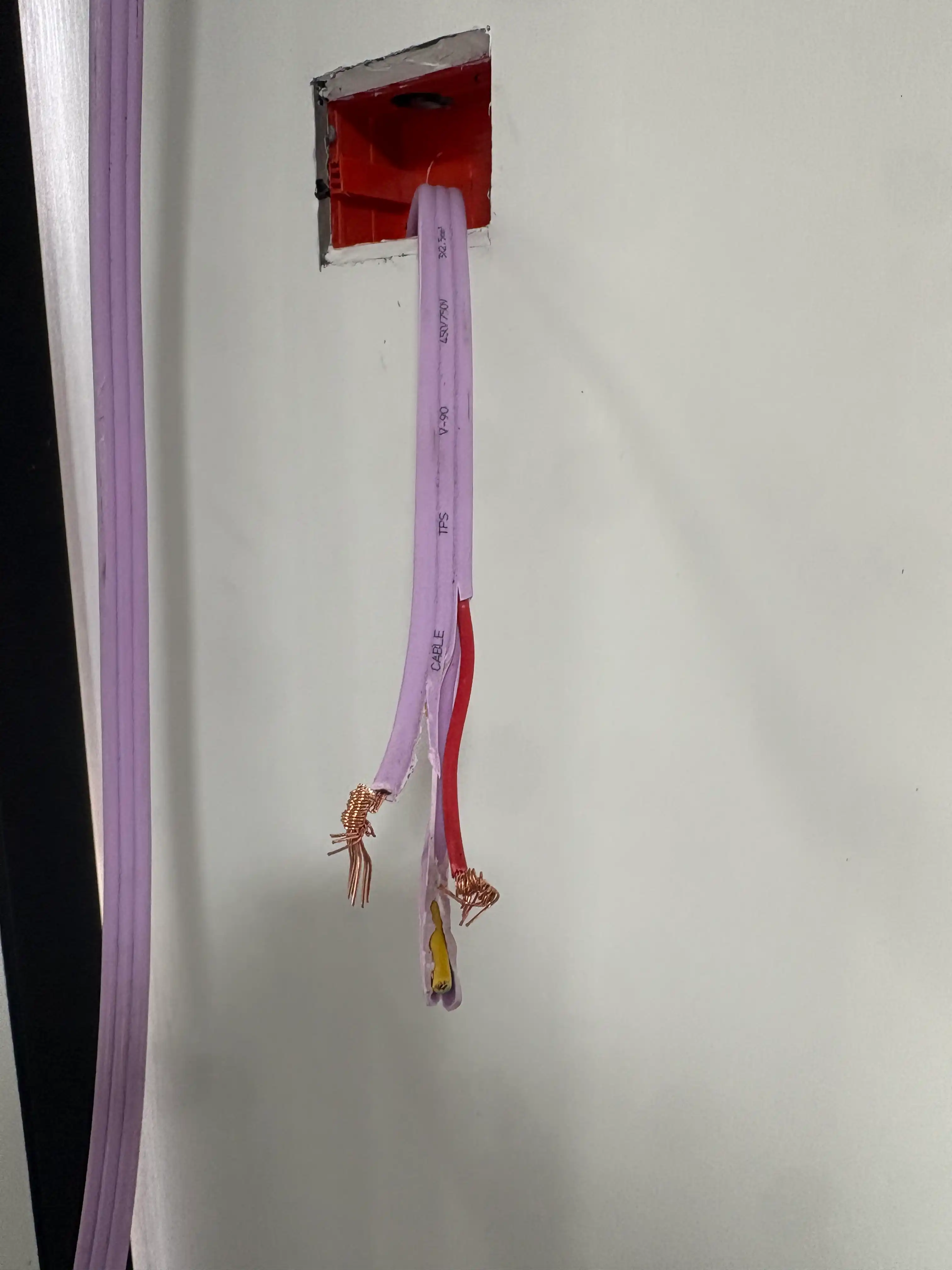
All wiring should be pre-planned for installation in a factory-controlled environment, with wiring either pre-installed or spaced in advance. The factory’s technical and production teams will be responsible for this work. This ensures:
Stable quality
Reduced on-site construction work
Speedier installation
Modular and standardized design
At our container housing company, our designs integrate cable trays directly into the wall panels, avoiding exposed cables and thus improving safety.
4.2 Modular Circuit Layout
Expandable container houses rely on modular expansion. Therefore, the circuit system must also be modular:
- Independent circuits for lighting, sockets, and high-power equipment
- Quick-connect interfaces for expansion sections
- Reserved wiring ports for future upgrades
- Custom wiring harness systems with quick-connect interfaces for seamless expansion sections
Our design and production team ensured that every container house, from blueprints to production, had wiring pre-installed in each room. This approach allows contractors to scale projects without rewiring the entire system.
4.3 Load Calculation and Distribution
Proper load calculation is essential to avoid overload or power failure. A typical configuration includes:
- Lighting circuit: 1.5 mm² copper wires
- Socket circuit: 2.5 mm² copper wires
- Air conditioning / heavy equipment: 4–6 mm² copper wires
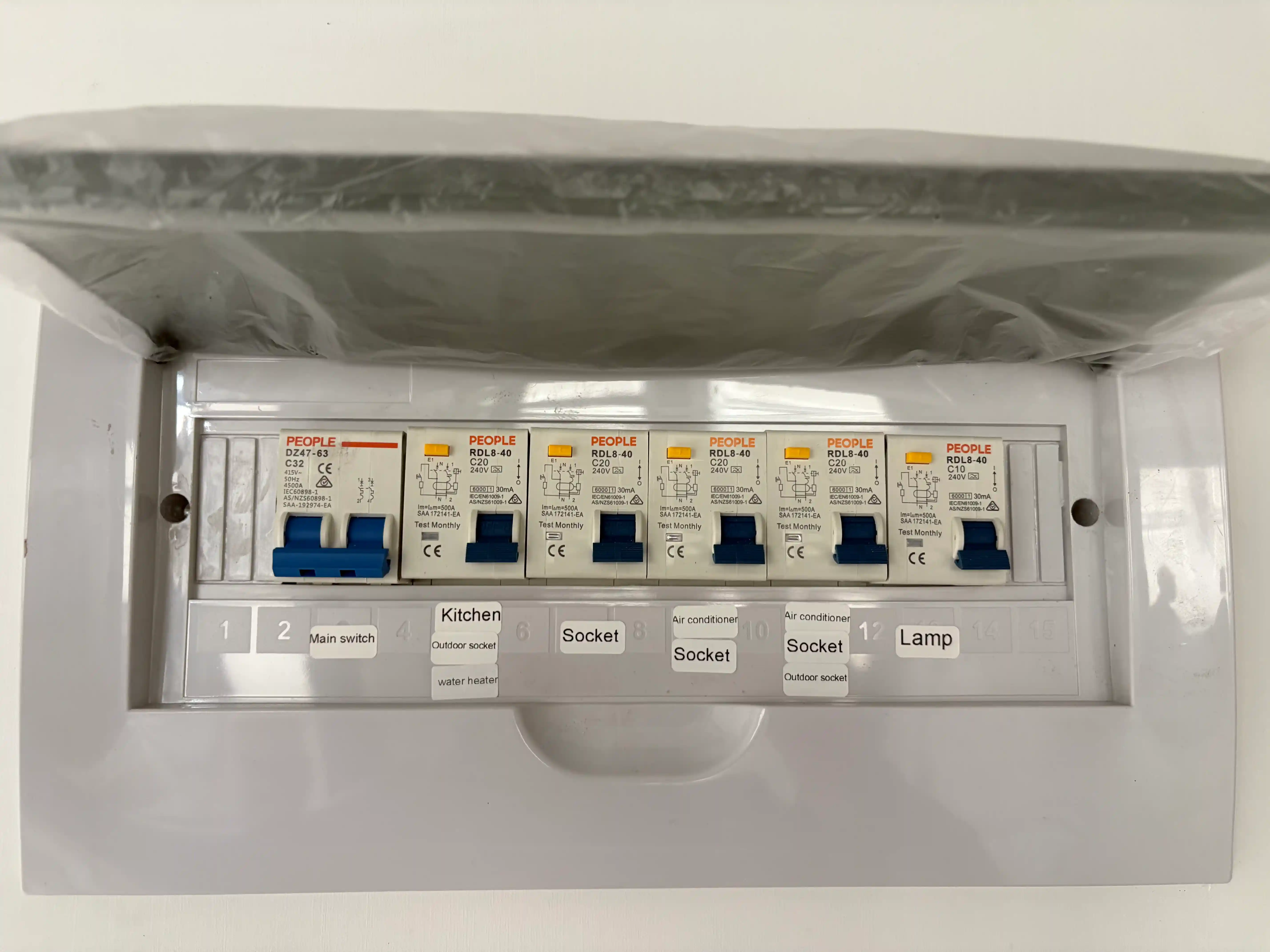
Each circuit should be protected by dedicated breakers to ensure safe operation.
5. Wiring System Structure and Materials
5.1 High-Quality Copper Wiring
We recommend using flame-retardant, high-conductivity copper wires to ensure:
- Stable current transmission
- Low energy loss
- Long service life
Choosing high-quality raw materials can fundamentally prevent circuit problems.
5.2 Concealed Wiring Design
All wiring should be installed inside wall panels or ceiling structures:
- Protects wires from physical damage
- Improves aesthetic appearance
- Reduces exposure to moisture and dust
A well-designed container house wiring system can prevent 10% of power outages caused by electrical problems.
5.3 Waterproof and Weather-Resistant Components
Expandable container houses are often used in construction sites, resorts, or remote areas. Therefore:
- Use IP-rated waterproof sockets and switches
- Apply sealed cable conduits
- Ensure junction boxes are moisture-proof
This is especially critical for projects in tropical or high-humidity regions.
6. Grounding and Safety Protection System
Because container houses use steel structures, grounding is not optional—it is mandatory.
6.1 Reliable Grounding System
- Connect the steel frame to a grounding electrode
- Ensure resistance meets local standards
- Use multi-point grounding for large units
6.2 Circuit Protection Devices
A complete expandable container house circuit must include:
- Miniature Circuit Breakers (MCB)
- Residual Current Devices (RCD)
- Surge Protection Devices (SPD)
These components prevent electric shock, overload, and voltage spikes.
We have equipped each room with a complete circuit breaker to ensure the proper functioning of the electrical circuits in each room.
7. Adaptation to International Standards
For export projects, electrical systems must comply with local regulations such as:
- Voltage differences (110V / 220V / 240V)
- Plug and socket types
- Certification requirements (CE, UL, etc.)
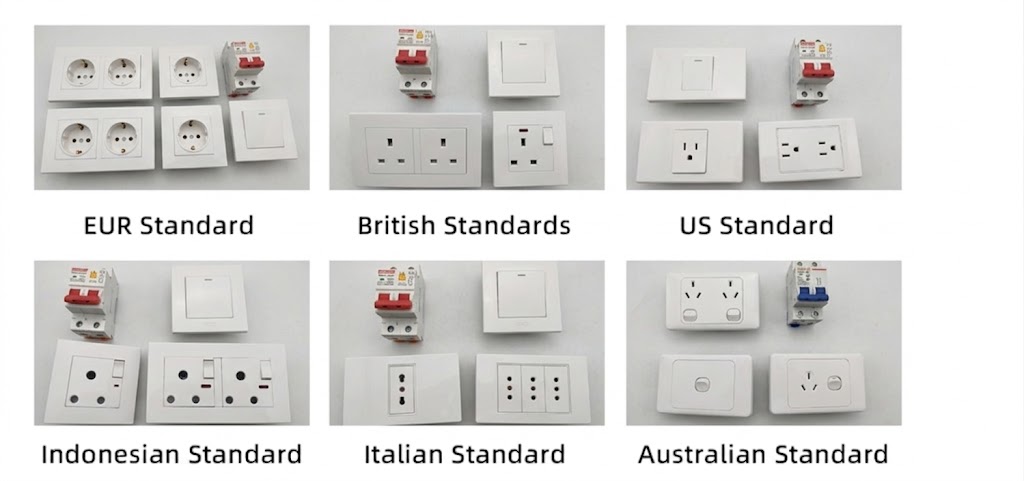
Container House Co., Ltd provides customized electrical configurations based on destination markets, ensuring smooth customs clearance and immediate usability upon installation.
8.1 Simplified On-Site Installation
Our pre-installed systems allow:
- Plug-and-play connections
- Minimal electrician involvement
- Reduced installation errors
When connecting an external power source, ensure that the power output of the external power source meets the actual power consumption of all container houses on the construction site. Avoid tripping or damaging the power switch due to insufficient power.
8.2 Easy Maintenance Access
- Centralized distribution box design
- Clearly labeled circuits
- Accessible inspection points
Combined with structured cable tray systems, this greatly improves maintenance efficiency in large-scale deployments.
Container house electrical safety must adhere to rigorous engineering standards. Effective protection begins at the external connection point, requiring verified power capacity, waterproofed interfaces, and stable sourcing to prevent system overloads. Internally, the system must utilize standardized copper wiring (2.5–4 mm²) with independent circuits and dedicated RCD-protected distribution boxes for each unit to ensure modular reliability. Beyond hardware, safety is maintained through strict usage protocols—such as avoiding simultaneous high-power appliance use and ensuring proper grounding—coupled with moisture-proofing and regular maintenance checks. Ultimately, integrating smart load planning and emergency response measures ensures that these versatile structures remain fire-safe, compliant, and durable for long-term residential or commercial use.

 English