Grandstand for School and Community Solutions: Cut Cost, Scale Capacity
Una moderna tribuna para la escuela y la comunidad debe ofrecer velocidad, seguridad y rentabilidad. Los compradores ya no aceptan construcciones lentas ni diseños fijos. Esta guía explica cómo los sistemas modulares de tribunas resuelven problemas reales de adquisición con lógica de ingeniería y retornos medibles.
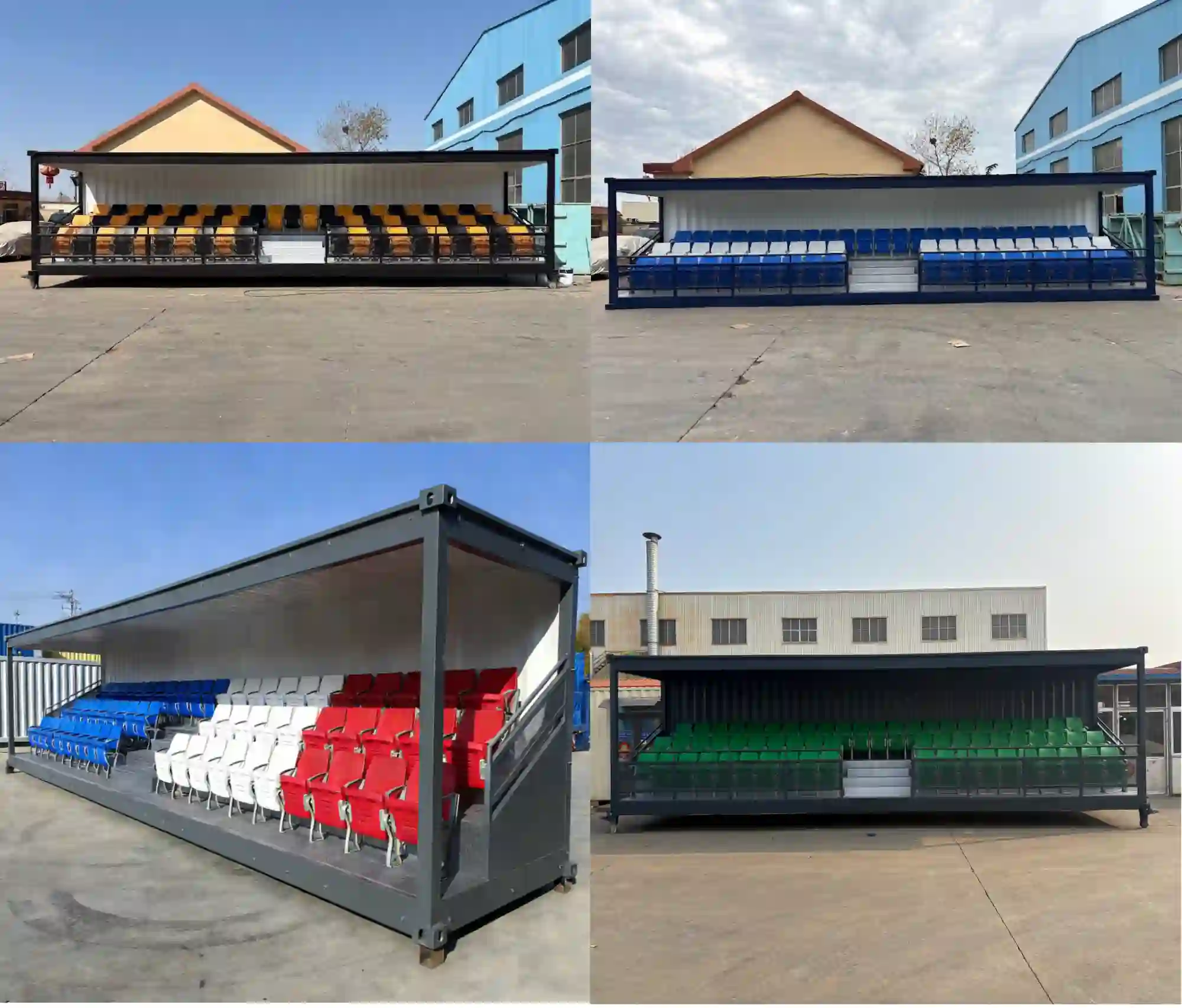
Por qué los proyectos tradicionales de tribunas para escuelas y comunidades fracasan bajo presión presupuestaria
Las estructuras de concreto fallan cuando los presupuestos se ajustan. Los números lo demuestran.
Las tribunas de concreto cuestan entre $350 y $600 por asiento. Una modular tribuna para la escuela y la comunidad promedia $220 por asiento. La diferencia supera el 60 por ciento.
Aquí está el desglose.
- Fenómeno: retrasos en la construcción y capital inmovilizado
- Principio: la hidratación del cemento requiere un ciclo de curado de 28 días según las normas ASTM
- Datos: el ciclo total de construcción alcanza 90 a 150 días, mientras que los sistemas modulares se completan en 10 a 30 días
- Resultado económico: el capital inactivo incrementa el costo de financiamiento en 15 a 25 por ciento
El uso del suelo también expone ineficiencias. Los diseños de concreto requieren 0,75 metros cuadrados por asiento. Los sistemas modulares reducen esto a 0,55 metros cuadrados mediante la optimización de niveles. Esto crea un 27 por ciento más de asientos en el mismo terreno.
Evidencia de caso:
Una escuela del sudeste asiático reemplazó un sistema de concreto por uno modular tribuna para la escuela y la comunidad.
- La capacidad aumentó de 600 a 820 asientos
- El tiempo de construcción se redujo de 110 días a 20 días
- Los ingresos anuales por entradas aumentaron en un 38 por ciento
Los ingresos crecen.
2. Principios de ingeniería estructural detrás de los sistemas modulares de tribunas para escuelas y comunidades
Los sistemas de acero resuelven los problemas de distribución de tensiones desde su origen.
Tres mecanismos de ingeniería impulsan el rendimiento.
Distribución de carga mediante marcos triangulares
- Fenómeno: la carga puntual causa fatiga estructural en sistemas planos
- Principio: la triangulación distribuye la fuerza a través de múltiples nodos
- Datos: la capacidad de carga alcanza 5,0 kN por metro cuadrado bajo la norma EN 13200
- Resultado económico: el costo de mantenimiento se reduce en un 70 por ciento durante diez años
Sistema de ensamblaje atornillado
Los sistemas soldados ralentizan la instalación. Los sistemas atornillados aceleran el despliegue.
- Equipo de instalación: 6 trabajadores
- Velocidad de ensamblaje: 6 a 8 horas por módulo unitario
- Reducción de mano de obra: 50 por ciento en comparación con estructuras soldadas
Esto mejora la rotación del proyecto.
Capa de protección anticorrosión
- Espesor del recubrimiento: 80 a 120 micras
- Resistencia a la niebla salina: más de 500 horas bajo la prueba ISO 9227
Caso:
Un proyecto escolar costero utilizó un sistema tribuna para la escuela y la comunidad modular.
- La tasa de corrosión se redujo del 7 por ciento a menos del 1 por ciento anual
- El ciclo de reemplazo se extendió de 5 años a 15 años
- Costo del ciclo de vida reducido en más del 45 por ciento
La durabilidad genera ahorros.
3. Estrategia de Planificación de Capacidad para Gradas en Proyectos Escolares y Comunitarios
Una capacidad incorrecta genera pérdida de ingresos o inversión desperdiciada.
La capacidad debe coincidir con los patrones de uso reales.
Análisis de Frecuencia de Eventos
- Eventos escolares: 12 a 20 por año
- Eventos comunitarios: 8 a 15 por año
Cálculo de Carga Máxima
La capacidad máxima debe incluir un factor de seguridad.
- Fórmula: asistencia promedio multiplicada por 1.3
- Ejemplo: 600 de asistencia promedio se convierte en 780 de capacidad máxima
Ventaja de Eficiencia de Espacio
Los sistemas modulares reducen el espaciado manteniendo la seguridad.
- Concreto: 0,75 metros cuadrados por asiento
- Modular: 0,55 metros cuadrados por asiento
- Ganancia: 27 por ciento más de asientos
Cálculo del Impacto en los Ingresos
- Precio del boleto: $5
- Asientos adicionales: 180
- Eventos por año: 20
- Ganancia anual: $18,000
Caso:
Una comunidad africana instaló una grada modular de 1.000 asientos tribuna para la escuela y la comunidad.
- El ahorro de terreno alcanzó 220 metros cuadrados
- Retorno de inversión logrado en 14 meses
- La utilización de eventos aumentó en 32 por ciento
La eficiencia se convierte en ganancia.
4. Eficiencia Logística y de Despliegue para Importadores y Mayoristas
El diseño de transporte determina el margen.
Estrategia de Contenedor Plano (Flat-Pack)
- Un contenedor 40HQ contiene 120 a 150 asientos
- La reducción de volumen alcanza 65 por ciento
El costo de envío disminuye.
Ventaja en el Cronograma de Instalación
El concreto requiere equipo pesado y larga preparación. Los sistemas modulares evitan ambos.
- Tiempo de instalación modular: 10 a 25 días
- Requisito de mano de obra: 6 a 8 trabajadores
- Equipo: solo herramientas de elevación ligeras
Normas de Cumplimiento
Un tribuna para la escuela y la comunidad debe cumplir con:
- EN 13200 para seguridad del espectador
- ISO 9001 para control de fabricación
- Resistencia al viento de 120 kilómetros por hora o superior
Estos reducen el riesgo legal y operativo.
Escalabilidad Después de la Instalación
- Agregue 100 asientos en un día
- El costo de reubicación se mantiene por debajo del 15 por ciento de la inversión inicial
Caso:
Un distribuidor de América Latina importó gradas modulares.
- Entregó 450 asientos en 12 días
- Dividido en tres proyectos escolares
- Logrado 28 por ciento de margen de beneficio
5. Cómo seleccionar el proveedor adecuado de gradas para escuelas y comunidades
La selección del proveedor determina la tasa de defectos y el tiempo de entrega.
Un proveedor confiable debe proporcionar datos verificables.
Requisitos técnicos clave
- Grado de acero: Q235 o superior
- Informe de recubrimiento: mínimo 80 micras
- Certificación de prueba de carga: cumplimiento con EN 13200
- Manual de instalación con detalles de mano de obra
- Historial de exportación a al menos cinco países
Ejemplo de desglose de costos para 500 asientos
- Costo del producto: $75,000
- Costo de envío: $8,000
- Costo de instalación: $5,000
- Inversión total: $88,000
La alternativa de concreto supera $210,000.
El ahorro supera $120,000.
Caso:
Un importador europeo cambió a un proveedor tribuna para la escuela y la comunidad modular.
- La tasa de defectos se redujo del 6 por ciento al 0.8 por ciento
- El tiempo de entrega se redujo de 45 días a 12 días
- La satisfacción del cliente aumentó en más del 30 por ciento
El control de calidad impulsa los pedidos repetidos.
Estrategia de implementación: Convertir las gradas para escuelas y comunidades en un activo generador de ingresos
La ejecución define el resultado financiero.
Paso uno: Preparación del sitio
- Tolerancia de nivelación del terreno: dentro de 5 milímetros
- Tipo de cimentación: bloques de concreto o placas de acero
- Tiempo requerido: 2 a 3 días
Paso dos: Fase de instalación
- Montaje del marco: 3 días
- Instalación de asientos: 4 días
- Inspección de seguridad: 1 día
Implementación total: menos de 10 días
Corto.
Paso tres: Activación de ingresos
- La programación de eventos comienza inmediatamente después de la inspección
- El período de recuperación de la inversión oscila entre 12 y 18 meses dependiendo de la frecuencia de uso
Caso:
Una escuela de Oriente Medio implementó una grada modular de 900 asientos tribuna para la escuela y la comunidad.
- La instalación se completó en 9 días
- Realizó su primer evento en 2 días
- Generó $22,000 de ingresos en el primer trimestre
La implementación rápida acelera el flujo de caja.
Resumen
Cada Gradas contenedoras para proyectos escolares y comunitarios Incluir:
Diseño de distribución basado en datos reales de asistencia
Cálculos estructurales basados en cargas de viento locales
Optimización de carga de contenedores para reducir costos de envío
 Inglés