حماية النظام الكهربائي لمنزل الحاويات: دليل سلامة عملي للمشاريع الحقيقية
تُستخدم بيوت الحاويات على نطاق واسع في مواقع البناء، ومخيمات العمال، والمكاتب المعيارية، وحتى التطبيقات السكنية نظرًا لسهولة نقلها، وفعاليتها من حيث التكلفة، وسرعة نشرها. ومع ذلك،, فإن الهياكل المؤقتة لا تعني معايير سلامة مؤقتة—خاصة عندما يتعلق الأمر بالأنظمة الكهربائية. في هذا الدليل، سنشرح كيفية تنفيذ حماية موثوقة للنظام الكهربائي لبيوت الحاويات, ، بناءً على خبرة التركيب الواقعية والمعايير الهندسية العملية.
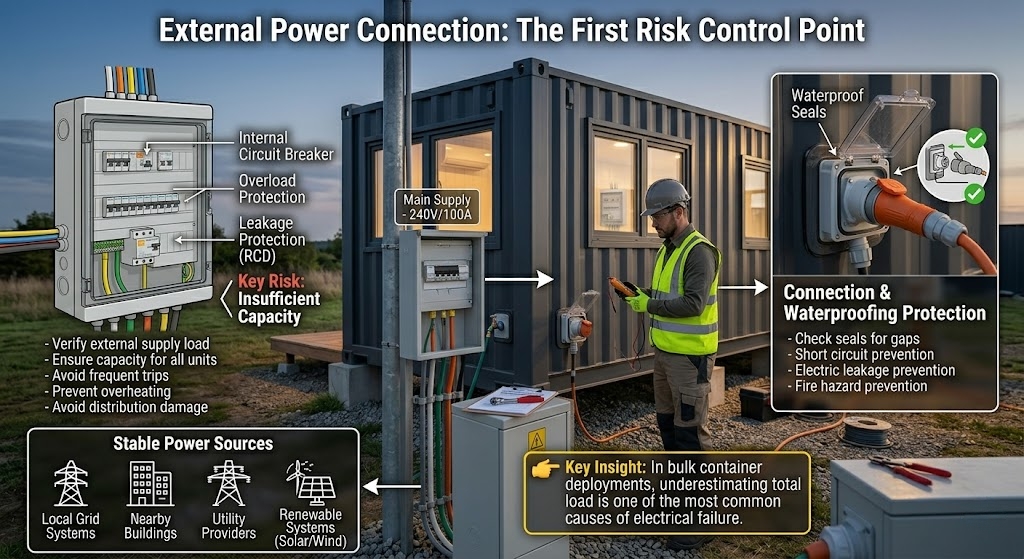
1. التوصيل الكهربائي الخارجي: أول نقطة للتحكم في المخاطر
تعتمد معظم بيوت الحاويات على توصيلات خارجية للمياه والكهرباء. بمجرد وضع الحاوية في مكانها، يمكن تشغيلها عن طريق توصيلها بمصادر الكهرباء والمياه القريبة.
ومع ذلك، يجب اتباع العديد من تدابير الحماية الحرجة:
- ضمان سعة طاقة كافية
قبل التوصيل، تحقق من أن مصدر الطاقة الخارجي يمكنه التعامل مع الحمولة الإجمالية لجميع وحدات الحاويات. قد تؤدي السعة غير الكافية إلى:
- انقطاع متكرر لقواطع الدائرة
- ارتفاع درجة الحرارة
- تلف أنظمة التوزيع
- عزل جميع نقاط التوصيل ضد الماء
قد يؤدي ضعف الإغلاق في الوصلات البينية إلى:
- دوائر قصر
- تسرب كهربائي
- مخاطر نشوب حريق
- استخدام مصادر طاقة مستقرة
يمكن الحصول على الكهرباء من:
- أنظمة الشبكة المحلية
- المباني القريبة
- مزودي الخدمات
- الأنظمة المتجددة (الطاقة الشمسية أو الرياح)
👉 الفكرة الرئيسية: في نشر الحاويات بكميات كبيرة، يُعد التقليل من تقدير الحمولة الإجمالية أحد أكثر أسباب الأعطال الكهربائية شيوعًا.
2.1 معايير الأسلاك الصحيحة
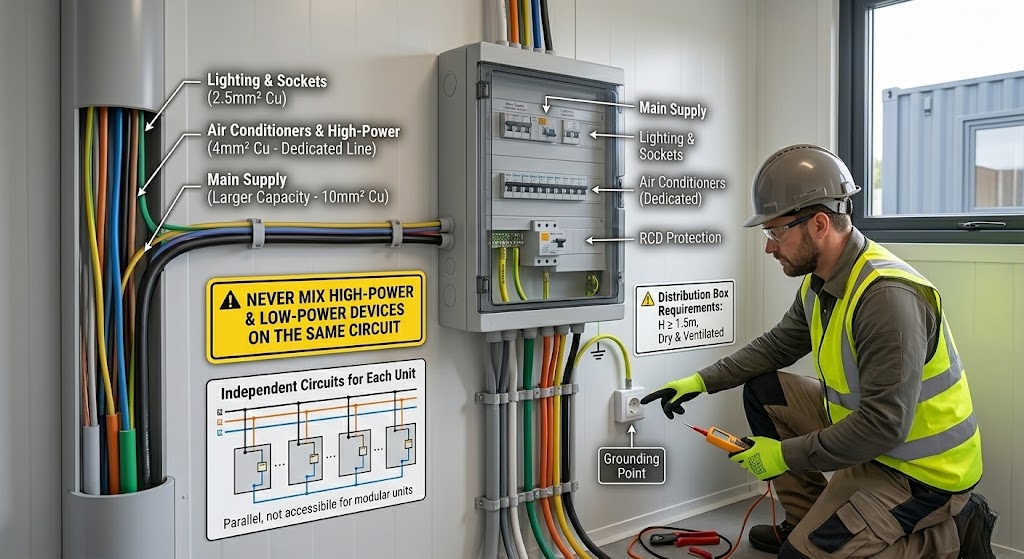
يجب أن يتبع بيت الحاوية الآمن قواعد الأسلاك المنظمة:
- دوائر الإضاءة والمقابس: أسلاك نحاسية بقطر 2.5 مم²
- مكيفات الهواء والمعدات عالية الطاقة: خطوط مخصصة بقطر 4 مم²
- خطوط الإمداد الرئيسية: كابلات ذات سعة أكبر بناءً على الحمولة
⚠️ لا تخلط أبدًا بين الأجهزة عالية الطاقة ومنخفضة الطاقة على نفس الدائرة.
2.2 دوائر مستقلة لكل وحدة
لمشاريع الحاويات المعيارية:
- يجب أن تحتوي كل حاوية على وصول طاقة رئيسي مستقل
- استخدم توصيلات متوازية, ، وليس توصيلات متسلسلة
- يجب أن تظل نقاط التوصيل الخارجية قابلة للوصول
هذا يضمن:
- يمكن إزالة وحدة واحدة أو نقلها دون التأثير على الأخرى
- توزيع طاقة مستقر عبر النظام
2.3 حماية صندوق التوزيع
صندوق التوزيع هو جوهر السلامة الكهربائية.
معايير التركيب:
- ارتفاع ≥ 1.5 متر عن الأرض
- يُركب في مناطق جافة وجيدة التهوية
- مزود بـ:
- قواطع الدائرة
- أجهزة الحماية من التسرب (RCD)
- حماية من الحمل الزائد
👉 تأكد دائمًا من التأريض السليم لمنع مخاطر الصعق الكهربائي.
3. قواعد السلامة اليومية لاستخدام الكهرباء
حتى مع وجود نظام مُركب جيدًا، يمكن أن يؤدي سوء الاستخدام إلى الأعطال.
أفضل الممارسات:
- تجنب الاستخدام المتزامن لأجهزة متعددة عالية الطاقة
- تعيين مسؤولية المراقبة اليومية للطاقة
- إيقاف تشغيل الطاقة عند عدم الاستخدام
- لا تسمح أبدًا بتعديلات الأسلاك غير المصرح بها
ملاحظة خاصة:
- يجب أن تحتوي مكيفات الهواء والسخانات على دوائر مخصصة مع حماية من التسرب
4. الحماية من الماء والرطوبة
المياه والكهرباء هما أكبر خطر مشترك في المنازل الحاوية.
مجالات التركيز:
- وصلات التوصيل الخارجية
- الحمامات والمطابخ
- تمديد الكابلات الخارجية
طرق الحماية:
- مقابس وصناديق توصيل مقاومة للماء
- تمديد الكابلات بشكل مرتفع
- إحكام الغلق المناسب باستخدام مادة EPDM أو مواد مماثلة
5. الفحص والصيانة الدورية
حتى النظام القوي يتطلب مراقبة مستمرة.
قائمة التفتيش:
- فحص كهربائي شامل أسبوعيًا
- التحقق من:
- الأسلاك المتقادمة
- التوصيلات المرتخية
- نقاط السخونة الزائدة
- اختبار استقرار الجهد (عادة حوالي 220 فولت ±10%)
- التأكد من سهولة الوصول إلى طفايات الحريق
6. إجراءات الحماية في حالات الطوارئ
يجب معالجة الأعطال الكهربائية فورًا وبشكل صحيح:
- انقطاع التيار → إيقاف تشغيل جميع الأجهزة
- حريق كهربائي → قطع التيار قبل الإطفاء
- صدمة كهربائية → استخدام أدوات إنقاذ معزولة فقط
👉 إنشاء نظام استجابة للطوارئ على مدار الساعة للمشاريع واسعة النطاق.
7. التخطيط الكهربائي الذكي لمشاريع الحاويات
قبل التركيب، دائمًا:
✔ حساب الحمل الإجمالي
- الحمل النموذجي لوحدة الحاوية: يُوصى بـ ≤ 8 كيلوواط
✔ تخطيط المناطق الوظيفية
- سكني: إضاءة، مقابس، أجهزة
- مكتبي: أجهزة كمبيوتر، طابعات، شبكات
- تجاري: متطلبات خاصة بالمعدات
✔ التحضير للتوسع المستقبلي
- احتياط سعة إضافية في أنظمة التوزيع
- تخطيط تمديدات أسلاك قابلة للتوسع
8. لماذا تعتبر الحماية الكهربائية مهمة في منازل الحاويات
الأنظمة الكهربائية غير السليمة قد تؤدي إلى:
- دوائر قصر
- مخاطر نشوب حريق
- تلف المعدات
- حوادث سلامة
النظام المصمم جيدًا يضمن:
- تشغيلًا موثوقًا
- متانة طويلة الأمد
- الامتثال للوائح المحلية
- ظروف معيشة وعمل آمنة
أفكار ختامية: ابنِ بأمان، وليس فقط بسرعة
| القسم | النقاط الرئيسية | التوصيات العملية |
| 1. التوصيل الكهربائي الخارجي | أول وأخطر نقطة خطر | • التحقق من كفاية سعة الطاقة قبل التوصيل • عزل جميع نقاط التوصيل ضد الماء • استخدام مصادر طاقة مستقرة (شبكة، مولد، أو طاقة شمسية) |
| 2. التصميم الكهربائي الداخلي | تمديدات أسلاك وتخطيط دوائر مناسب | • الإضاءة والمقابس: سلك نحاسي 2.5 مم² • مكيفات الهواء والأجهزة عالية الطاقة: خطوط مخصصة 4 مم² • يجب أن تحتوي كل حاوية على دوائر مستقلة • عدم خلط الأجهزة عالية ومنخفضة الطاقة على نفس الدائرة |
| 3. صندوق التوزيع | جوهر السلامة الكهربائية | • التركيب على ارتفاع ≥ 1.5 متر • يجب أن يشمل قواطع دوائر، وحماية من التسرب (RCD)، وحماية من الحمل الزائد • ضمان التأريض السليم |
| 4. الحماية من الماء والرطوبة | منع المخاطر الكهربائية المرتبطة بالمياه | • استخدام مقابس وصناديق توصيل مقاومة للماء • تمديد الكابلات بشكل مرتفع • إحكام غلق جميع الوصلات باستخدام EPDM أو مواد مكافئة • إيلاء اهتمام خاص للحمامات والمطابخ |
| 5. قواعد السلامة اليومية | تجنب سوء الاستخدام والحوادث | • تجنب استخدام أجهزة عالية الطاقة متعددة في وقت واحد • إيقاف تشغيل الطاقة عند عدم الاستخدام • لا يُسمح بتعديلات الأسلاك غير المصرح بها • تعيين مسؤولية مراقبة الطاقة اليومية |
| 6. التفتيش والصيانة الدورية | ضمان السلامة المستمر | • فحوصات كهربائية أسبوعية • التحقق من الأسلاك المتقادمة، والتوصيلات المرتخية، والسخونة الزائدة • اختبار استقرار الجهد (220 فولت ±10%) • الاحتفاظ بطفايات حريق في متناول اليد |
| 7. إجراءات الطوارئ | استجابة سريعة وصحيحة | • انقطاع التيار: إيقاف تشغيل جميع الأجهزة • حريق كهربائي: قطع التيار أولاً • صدمة كهربائية: استخدام أدوات معزولة فقط • إنشاء نظام استجابة للطوارئ على مدار الساعة للمشاريع الكبيرة |
| 8. نصائح التخطيط الذكي | قبل التثبيت | • احسب الحمولة الإجمالية (يُوصى بألا تتجاوز 8 كيلوواط لكل وحدة) • خطط للتوسع المستقبلي • احتفظ بسعة إضافية في نظام التوزيع |
يتم تركيب المنازل الحاوية بسرعة—ولكن لا يمكن التسرع في سلامة الكهرباء.
في شركة بيت الحاويات المحدودة, ، نؤكد على:
- أنظمة كهربائية متوافقة مثبتة مسبقًا
- تصميم اتصال خارجي معياري
- واجهات مقاومة للماء وقابلة للفصل
- معايير سلامة على المستوى الهندسي للمشاريع العالمية
إذا كنت تخطط لمشروع إسكان باستخدام الحاويات،, يجب أن تكون حماية النظام الكهربائي جزءًا من قائمة المشتريات الأساسية—وليست فكرة لاحقة.
 اللغة الإنجليزية