Chinese Expandable House: Service Life and Durability The Chinese expandable house is built for long-lasting performance. It provides a reliable, efficient solution for construction sites, emergency housing, and temporary living solutions. In this post, we’ll break down the service life of the expandable container house. We’ll highlight key features, materials, and maintenance strategies that contribute […]
The Chinese expandable house is built for long-lasting performance. It provides a reliable, efficient solution for construction sites, emergency housing, and temporary living solutions. In this post, we’ll break down the service life of the expandable container house. We’ll highlight key features, materials, and maintenance strategies that contribute to its 25-30 year lifespan.
Our expandable container houses are made with top-quality materials for long-term stability. Here’s how we ensure their durability:
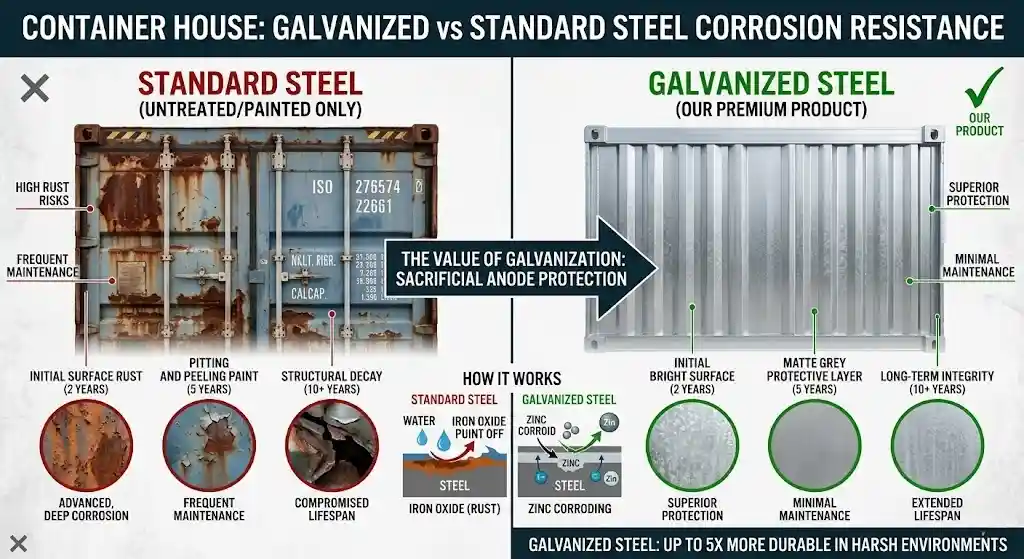
Galvanized Steel Frame: Made from Q235 galvanized steel (2.0-2.5mm thickness) and powder-coated for corrosion resistance. This frame has a lifespan of 25 years under standard climate conditions. Hot-dip galvanizing extends the durability to 30 years.
Example: In Turkey’s earthquake zones, our expandable homes have remained structurally sound for over 10 years in high humidity and seismic conditions.
Wall and Roof Materials: We use rock wool sandwich panels (density ≥ 100kg/m³) or EPS foam panels. These materials are fire-resistant, moisture-proof, and anti-deformation. Rock wool is chemically stable, ensuring long-lasting performance.
Sealing System: EPDM rubber seals maintain their elasticity across -40°C to 80°C, providing up to 15 years of reliable sealing. These seals should be checked every 5-8 years for optimal performance.
The expandable container house uses advanced systems for expansion and retraction. Here’s how they last:
Dual Hydraulic Synchronization System or side slide track mechanism: Tested for 500 fold operations. We use abrasion-resistant steel alloys for key components like hinges and sliding tracks. This ensures precision after repeated use.
Example: In the Middle East desert, our units have completed over 300 expansions with no expansion error greater than 2mm.
The expandable container house adapts to different environments. Here’s what you need to know:
High Humidity/Coastal Areas: Apply an extra fluorocarbon coating for 20 years of protection against corrosion. Regular drainage system maintenance is essential for extending the lifespan to 25 years.
Cold Climates: We use polyurethane foam for insulation, preventing frost damage and allowing the home to last 28 years.
Hot and Dry Climates: Rock wool panels maintain stability in high temperatures, ensuring a lifespan similar to milder climates.
Mild Climates: With annual maintenance (inspections, rust checks, and sealant re-coating), the expandable container house can last up to 30 years.
Our expandable container houses have been deployed in several large-scale projects globally. Here are a couple of examples:
Argentina, Porte Hydroelectric Project: In 2023, we supplied 300 units of our expandable homes. These homes are expected to meet the project’s housing needs for 25 years.
Ukraine Reconstruction: Deployed in 2022, our homes have withstood extreme temperature fluctuations and frequent expansion operations. They continue to perform optimally, proving their fatigue resistance.
These real-world applications show that our expandable homes exceed industry standards for reliability and resilience.
Our expandable container houses meet top industry standards:
CE Certification: Our units meet EN 1090-1, which guarantees 25-year steel frame lifespan.
ISO 104: The international standard for container buildings recommends a 25-year service life, which our modular design surpasses.
These certifications ensure that our expandable homes meet global standards, providing peace of mind for developers, contractors, and importers.
Several factors impact the long-term durability of the expandable container house:
Usage Frequency and Load: Frequent folding (more than 20 times a year) can wear down the mechanical parts. We recommend limiting folding to 10 times per year. The roof load should stay below 150kg/㎡.
Installation and Foundation: Proper installation is critical. Use concrete strip foundations or prefabricated steel pads to evenly distribute the load and maintain stability.
Energy Systems Integration: Well-designed energy-efficient systems reduce wear on components, ensuring longevity.
To maximize the service life of your expandable container house, follow this schedule:
Annual Maintenance: Clean roof drainage, inspect seals, and check the expansion mechanism.
5-Year Maintenance: Replace sealing strips, check for rust, and update firmware.
10-Year Maintenance: Replace key components and refresh the paint.
Maintenance Costs: Basic annual maintenance costs are 1%-2% of the initial cost. Major repairs, such as replacing seals or updating systems, are manageable due to the modular design.
The expandable container house market is evolving, with advancements like:
Material Innovation: Some manufacturers use aluminum-magnesium alloy frames (with a 30-year lifespan) and graphene-based coatings to improve corrosion resistance.
Smart Technology: AI and IoT are being integrated into homes for remote monitoring, predictive maintenance, and smart operations, reducing manual labor and extending lifespan.
The 25-30 year service life of the expandable container house is based on high-quality materials, engineering practices, and industry certifications. Regular maintenance and key component replacement can further extend the lifespan.
For developers, contractors, and businesses seeking cost-effective, long-term housing solutions, the expandable container house is a smart investment. It meets the growing demand for modular housing solutions.
Contact us today to get a quote or discuss customization options for your project needs.
Your email address will not be published. Required fields are marked *

 English