Top Africa Grandstand Brand list: A 2026 Buyer’s Guide to Stadium and Event Seating The Africa Grandstand Brand List represents Africa’s stadium industry is in the middle of its biggest building boom in decades. Morocco is racing to finish venues for the 2025–2026 Africa Cup of Nations and the 2030 FIFA World Cup, Kenya, Uganda, […]
The Africa Grandstand Brand List represents Africa’s stadium industry is in the middle of its biggest building boom in decades. Morocco is racing to finish venues for the 2025–2026 Africa Cup of Nations and the 2030 FIFA World Cup, Kenya, Uganda, and Tanzania are constructing new arenas for the 2027 AFCON, and dozens of smaller markets are upgrading school, club, and community sports grounds. Behind every one of these projects sits a less glamorous but equally critical decision: which grandstand brand will supply the seating.
This guide breaks down the grandstand brands actually active in Africa right now — international seating manufacturers, South African fabricators, European temporary-structure specialists, and the fragmented but fast-growing pool of modular exporters — so that facility managers, event organizers, contractors, and procurement teams can shortlist suppliers with confidence.
Quick takeaways
The Confederation of African Football (CAF) has tightened its venue requirements significantly ahead of the 2027 AFCON, which Kenya, Uganda, and Tanzania will co-host. Host venues are now expected to provide presidential and VVIP seating areas, dedicated press sections with one to two hundred seats, hospitality skyboxes, and media centers, in addition to the core spectator bowl. Kenya’s 60,000-seat Talanta Sports City in Nairobi and the 48,000-seat Moi International Sports Centre, Tanzania’s Benjamin Mkapa and Samia Suluhu Hassan stadiums, and Uganda’s Mandela National and Akii Bua stadiums are all being expanded or rebuilt to meet these standards.
A similar pattern played out for the 2023 AFCON in Ivory Coast, where the 60,000-seat Alassane Ouattara Stadium was built, and is playing out again in Morocco, where venues such as the Grand Stade de Tanger, Grand Stade Mohamed V, and the Complexe Sportif Prince Moulay Abdellah are being upgraded toward a combined capacity well beyond 250,000 seats across the tournament’s host cities. Many of these projects are financed and built through partnerships with Chinese state construction firms, a pattern often described as “stadium diplomacy,” which has shaped how seating and grandstand contracts get awarded across the continent for nearly two decades.
Beyond elite football, the same demand curve applies to athletics tracks, multipurpose arenas, university sports grounds, and the steady stream of concerts, festivals, and corporate events that need temporary tiered seating. This combination of mega-tournament infrastructure and everyday event demand is what has pulled in such a varied mix of grandstand brands — from century-old European seating houses to nimble local fabricators.
Alternative Grandstand: Why Buyers Are Moving Away from Traditional Systems
Before comparing brands, it helps to separate the market into two broad categories, since most manufacturers specialize in one or the other.
Permanent grandstands are bolted or cast into a stadium’s structure, typically using tip-up plastic or polypropylene seats mounted on steel or concrete risers. They are built for decades of service, must meet strict fire, load, and accessibility standards, and are the category most major stadium seating manufacturers compete in.
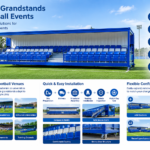
Temporary or demountable grandstands are modular systems — usually aluminum, steel, or a scaffolding base — that can be assembled, taken apart, and reused across multiple events or seasons. They are the standard choice for festivals, marathons, rodeos, school sports days, and venues that need extra capacity for a single tournament without committing to permanent construction.
Figueras is one of the most established stadium seating manufacturers with a documented African footprint. The company recently outfitted Rabat’s Stade Olympique Annexe Prince Moulay Abdellah with three of its seating models ahead of the 2025–2026 AFCON, working alongside a local logistics partner to manage installation. Figueras also lists reference projects in Nigeria, including the Kaduna Township Stadium and Lagos Business School, and maintains a broader catalogue of theatre, auditorium, and arena seating used worldwide. For large-scale, multi-decade stadium fit-outs, Figueras is consistently shortlisted by African architects and project managers.
OMSI has become one of the most active seating brands in North Africa over the past two years, installing seats in more than ten stadiums across Morocco, Algeria, and Cameroon. Its largest African contract to date was the Grand Stade de Tanger, where it supplied roughly 70,500 seats, and it also fitted out Rabat’s Stade Al Medina and contributed around 26,700 seats to Algeria’s Stadio 5 Juillet 1962. OMSI’s North African projects are tied directly to Morocco’s preparation for both the 2025–2026 AFCON and the 2030 World Cup, making it a brand worth watching as more North African tournament venues come online.
Khanda Seating is a South African manufacturer that handles the full chain — manufacturing, transport, and installation — in-house rather than outsourcing any stage of the process. With around three decades of operating history, the company has supplied stadium and sport seating across South Africa and into other parts of the continent, and it is known for being flexible enough to customize products for individual client specifications rather than offering only standard catalogue items.
Founded in 1993 with offices in Johannesburg and Cape Town, Rodlin Design produces fixed seating that meets South African Bureau of Standards (SABS) compliance, a useful reference point for any buyer benchmarking quality standards in the region. Its portfolio spans stadiums, convention centers, churches, and universities across Southern Africa, and its product range includes UV-resistant, flame-retardant, and vandal-resistant stadium seating for both general spectator areas and VIP sections.
Gearhouse Group, a South African live-events technical supplier founded in 1991, distributes the German-engineered PERI Arena grandstand system under its Havaseat brand. The system is designed for fast assembly and disassembly, uses non-slip wooden decking to reduce noise, and is built to European and American safety standards — making it a popular choice for prestige temporary seating at fashion shows, concerts, and sporting events across South Africa.
Flicx manufactures steel grandstands finished in enamel paint, designed to be moved easily between locations and offered for either rental or purchase. Optional add-ons include dome, galvanized sheet, or shade-cloth roofing and handrails, and the company’s grandstands are most commonly seen at athletics facilities alongside its other track-and-field equipment.
AFIX Group’s AFIXFAST product line builds grandstands and stages on a modular scaffolding base, designed to work on uneven or constrained sites. The system uses adjustable baseplates so it can level itself across sloped or irregular terrain, and it is engineered to meet international audience-load safety regulations — relevant for any African event site that lacks a purpose-built, perfectly flat venue.
Arena Group offers two distinct tiered grandstand systems: ClearView, a demountable modular seating system, and the A-Frame system, which has been used commercially for more than 30 years. Both are built to comply with the Green Guide to Safety at Sports Grounds, the UK’s benchmark safety standard for spectator facilities, and the company markets its systems for everything from golf tournaments to festivals and conferences — a flexible profile that suits the wide variety of event types found across African markets.
EPS.net manufactures temporary standing and seated grandstands built from steel, aluminum, and planed wood, including a folding five-tier system designed for compact urban sites such as marathon finish lines or city-center concerts. Its grandstands come with safety certification for every configuration and can be adapted with wheelchair ramps, individual seat numbering, and flag adapters — practical features for organizers running multi-day events with changing capacity needs.
GT Grandstands is an international bleacher and grandstand manufacturer best known for custom permanent installations using I-beam construction, which adapts well to hillsides and uneven terrain — a useful trait for African sites without flat, pre-leveled ground. The company also builds press boxes, team benches, and ADA-compliant accessible seating, and works directly with clients through site measurement and design consultation phases.
Two distinct types of Chinese suppliers show up repeatedly in Africa’s grandstand market. The first is a layer of large state-owned construction firms — such as Beijing Construction Engineering Group and China Road and Bridge Corporation — which have built or renovated entire stadiums across the continent, including Tanzania’s Benjamin Mkapa Stadium, Ivory Coast’s Alassane Ouattara Stadium, and Kenya’s Talanta Sports City, typically as part of broader bilateral infrastructure financing. The second is a much larger and more fragmented group of small and mid-sized factories, mostly based in Guangdong, Shandong, and Jiangxi provinces, that export cost-competitive aluminum, steel, and HDPE modular grandstands and bleachers through global B2B trade platforms. This segment is growing quickly — industry estimates put the global temporary stadium seating market above $1.2 billion annually with growth near 6.8% a year — but quality and after-sales support vary widely between suppliers, so buyers sourcing this way should request certifications and references before committing to a large order.
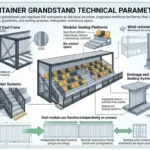
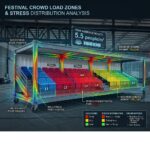
Container Grandstand is a revolutionary, modular seating solution designed to meet the growing demand for sports infrastructure across Africa. Engineering a perfect blend of structural integrity and modern architectural aesthetics, our container grandstands repurpose high-grade shipping containers into durable, secure, and elevated stadium seating. Whether for community football pitches, school sports fields, or temporary event arenas, this eco-friendly solution offers unmatched versatility and an exceptional viewing experience.
With this many categories of supplier, the right choice depends less on brand reputation alone and more on matching the product to your specific project conditions.
Climate and material durability should be the first filter. Coastal, high-humidity, and high-UV regions common across much of Africa put real stress on plastics and unprotected steel, so ask any manufacturer for material specifications and warranty terms rather than relying on a generic catalogue description.
Certification matters more than it might seem. Look for compliance with recognized standards such as SABS (South Africa), CE marking (common among European manufacturers), or the UK’s Green Guide to Safety at Sports Grounds — these give a transferable benchmark for safety and load-bearing performance even when local regulations are still developing.
Permanent versus temporary needs should be decided early, since most manufacturers specialize heavily in one category. A tournament-grade national stadium calls for a fixed-seating specialist like Figueras or OMSI, while a touring event, festival, or seasonal sports league is far better served by a temporary or modular system from a brand like AFIX Group, EPS.net, or a regional hire company.
Capacity and budget naturally narrow the field further — large stadium contracts justify the lead times and costs of premium European manufacturers, while smaller venues, schools, and community sports grounds are often better matched to local South African fabricators or export-grade modular suppliers.
Logistics and lead time deserve more attention than they usually get. Imported seating systems can involve long sea-freight transit times and customs processes, so factor shipping schedules into any tournament-driven deadline well before signing a contract.
Finally, local installation and after-sales support can make or break a project regardless of how good the seating itself is. Brands with an established African presence or local distribution partner — as seen with Gearhouse Group’s relationship with PERI Arena, or Figueras’ work with local logistics partners in Morocco — tend to deliver smoother installations than suppliers shipping a product with no regional support network.
What exactly counts as a “grandstand”? A grandstand is any raised, tiered seating structure built to give spectators a clear view of a sports field, stage, or event area. The term covers everything from a simple steel bleacher at a school sports day to a fully engineered, multi-tier permanent stadium stand.
Are grandstands in Africa mostly imported or locally manufactured? Both. Large national stadiums tied to international tournaments tend to use imported European seating systems from brands like Figueras or OMSI, while smaller venues, schools, and regional sports clubs are frequently served by local manufacturers such as Khanda Seating, Rodlin Design, or Flicx South Africa, alongside imported modular systems from Asian and European exporters.
How much does a grandstand cost in Africa? Costs vary enormously by scale and material — a small modular bleacher seating a few hundred people can cost a fraction of what a permanent tip-up seating contract for a 40,000-seat stadium requires. Buyers should request itemized quotes covering materials, shipping, installation, and any required certification testing rather than comparing headline prices alone.
What safety standards should grandstands in Africa meet? At minimum, buyers should look for compliance with a recognized international or regional standard — SABS in South Africa, CE marking from European manufacturers, or sport-specific guidance such as the UK’s Green Guide to Safety at Sports Grounds — since many African countries are still formalizing their own dedicated stadium safety codes.
Which African countries are building the most new stadiums right now? Morocco currently leads, driven by the 2025–2026 AFCON and 2030 World Cup preparations, followed closely by Kenya, Uganda, and Tanzania, which are jointly building and upgrading venues for the 2027 AFCON. Nigeria, Ivory Coast, and several other West and East African nations also have active stadium construction or renovation projects underway.
Besides local African brands, what other grandstand brands are worth noting?
There are different well-known grandstand suppliers all over the world.
When selecting a local grandstand supplier in Africa, you can also consider different suppliers in other markets.
The Africa Grandstand Brand list operating across Africa today range from century-old European seating houses fitting out 60,000-seat tournament venues to nimble South African fabricators serving regional clubs and schools. Choosing among them comes down to matching your venue’s scale, climate, budget, and timeline to a manufacturer with a proven track record in similar conditions — and increasingly, that means looking specifically for brands with documented African project experience rather than relying on global reputation alone.
Your email address will not be published. Required fields are marked *

 English