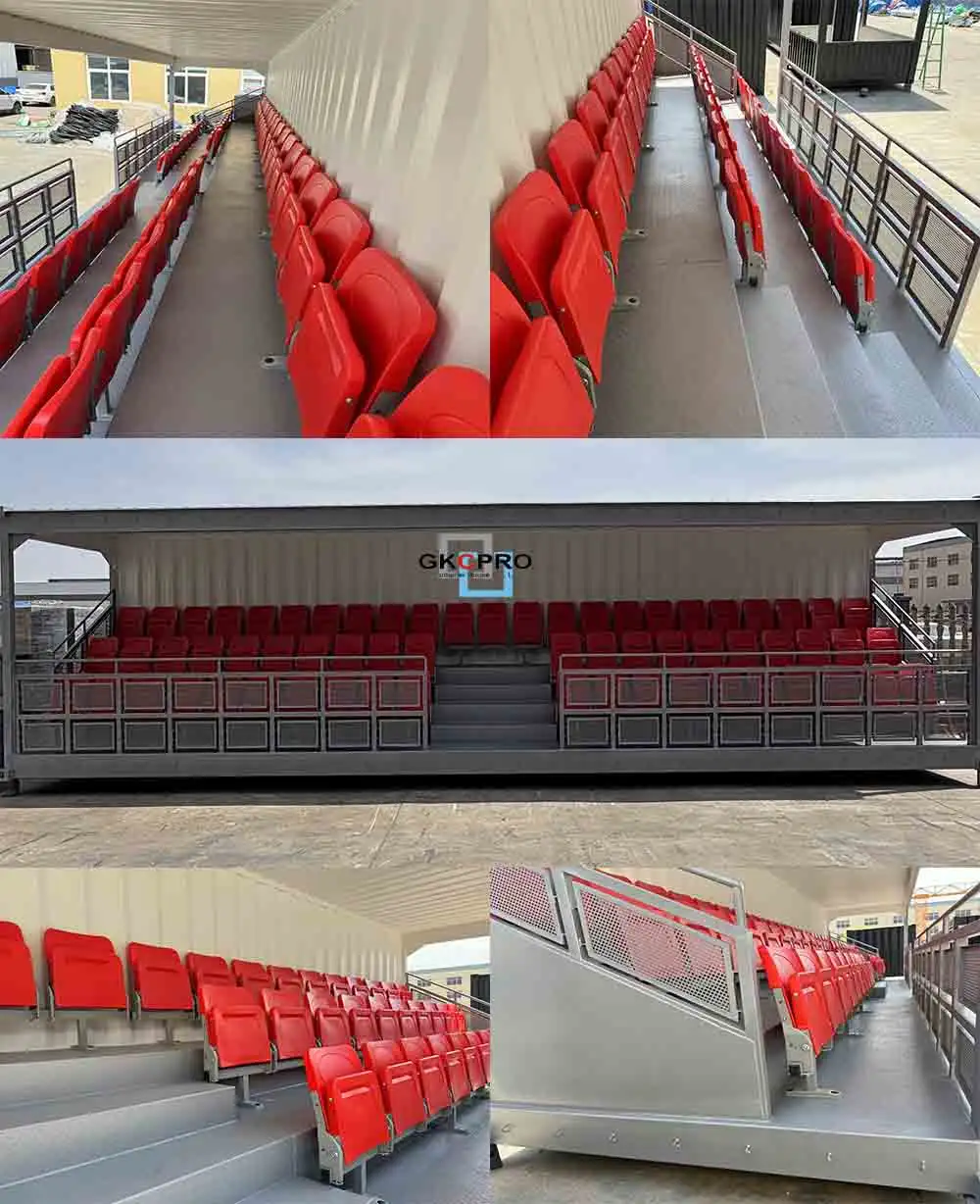
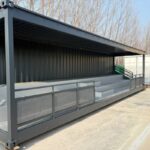
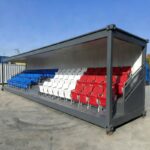
Наша новая конструкция контейнерной трибуны представляет собой прочный и доступный вариант рассадки для мероприятий и спортивных площадок. Это практичное решение для предприятий, нуждающихся в прочных и гибких сидениях, которые легко устанавливать и экономически выгодно использовать.
Container grandstand represents a fundamental shift in how event venues approach temporary and modular seating. Whether you’re an importer evaluating suppliers, a wholesaler building bulk procurement strategies, or an engineering contractor managing event infrastructure, understanding these structures matters. We’ve worked with container house manufacturers serving event organizers across Europe and Asia, and the design advantages are substantial—both operationally and financially.
Traditional grandstands demand substantial investment. You’re looking at steel frameworks, concrete foundations, permanent installations, and months of construction. A standard stadium seating project requires specialized crews, heavy equipment, and deep pockets. Container grandstands eliminate most of that friction.
A shipping container is already engineered for structural load-bearing. It’s built to withstand ocean transport, stacking, and harsh weather. Manufacturers simply modify these existing structures—cutting openings, installing seats, adding safety railings—rather than building from zero. The container itself becomes the load-bearing framework.
The modular nature changes the calculus entirely. Each unit is self-contained, transportable, and stackable. Standard 40-foot containers seat 63 spectators comfortably. Stack two units, you get 126 seats with overlapping sight lines. Stack three, you reach 189. Manufacturers like UNIT45 and Embankment Seating now offer units that expand vertically within the standard 2.5-meter footprint, multiplying capacity without additional ground space.
Buyers worry about regulatory risk. We understand that concern. Container modifications must meet local building codes, structural standards, and fire regulations. This isn’t ad-hoc fabrication.
Professional manufacturers design grandstands to the equivalent safety frameworks globally. Each unit undergoes structural analysis for dynamic loads—spectator weight, movement, environmental forces like wind. The containers are reinforced with steel cross-bracing. Welds are inspected. Railings meet fall-prevention specifications.
Fire safety requires flame-retardant seating materials. Wheelchair ramps can be designed, and handrails throughout. Emergency egress routes must be clearly marked and unobstructed. Load testing is performed to certification levels before delivery.
Our customers are very satisfied with the evaluation of this container grandstand. “The container grandstands passed all structural assessments equivalent to traditional metal grandstands. The key difference: the manufacturer had done the engineering once, in the factory, then replicated it across units. That standardization reduces on-site risk and inspection time.”
The Qatar World Cup 2022 offers the highest-profile case study. Stadium 974 (named for the 974 containers used) holds 40,000 spectators. Built by Fenwick Iribarren Architects, the venue was designed as fully demountable—components could be transported and reassembled in future host nations. The modular design reduced material waste by 35% compared to traditional stadium builds. Construction costs were lower, and build time compressed significantly.
A rugby club in South Wales needed capacity for 300 spectators during tournament season. Their ground had limited space. They purchased five container grandstand units from a UK distributor. Delivered and installed in 10 days. Four years later, they’ve hosted 40+ events. The units are still operational, requiring only annual inspection and maintenance (seal checks, bolt tightening). Per-event cost per seat has fallen to near-zero given the reuse cycle.
A festival organizer in Berlin manages six outdoor events annually—music, food, sports. Rather than rent temporary bleachers for each event, they own six 63-seat container units. They’re stored in a logistics hub between events. Deployment per event takes two days. They’ve recovered their initial investment within 18 months and now pocket the rental savings. The units generate additional revenue when leased to smaller festivals during off-months.
Engineering contractors see the benefit differently. A contractor in Amsterdam manages modular event infrastructure for municipalities. Container grandstands fit their existing fleet logistics. One truck transports one unit. Setup crews are smaller (no heavy lifting of steel frameworks). Labor hours compress by 40% compared to traditional scaffolding. That efficiency margin improves their bid competitiveness.
The customization options are broader than most buyers realize. Standard options include:
Seating Configuration: Bleacher-style tiered seating. Individual tip-up seats for comfort. VIP sections with armrests and padding. Box suites with private access.
Capacity Scaling: Single containers (63 seats). Extended-length modules (175+ seats in a 40-foot footprint). Stacked configurations reaching 3 levels within the container infrastructure.
Name printing service. We can put name stickers on the seats for your customers. Increase your customers’ enthusiasm for participating in activities at the stands or containers.
Aesthetics and Branding: Custom paint colors matching club or event branding. Vinyl wraps with logos or sponsor graphics. Removable panels for seasonal rebranding.
For wholesalers and distributors,We will provide these services for you.
Lead times. If you’re importing from our manufacturing facility in China, expect 10-14 weeks for new custom units.
OEM/ODM opportunities exist. We Support—you specify the design, and we manufacture under your brand.
A practical workflow for procurement:
Define capacity and configuration requirements.
Request CE certifications from us.
Verify regulatory compliance
Negotiate minimum orders and payment terms
Build in 12-14 week lead time for custom units.
We will provide you with quality inspection of the container
Price support and Technical Support.
Setup and takedown are faster than traditional grandstands, but they’re not friction-free. Site preparation still matters.
Ground must be level or near-level. If the site slopes significantly, you’ll need ground works—gravel base layers or concrete pads. A standard container grandstand requires a footprint of 2.5m × 12.3m (for a 63-seat unit). The ground should be compacted and cleared of debris.
Delivery logistics: One container per truck. A fleet of five units requires five deliveries or one visit with multiple trucks, depending on your haulage partner. Positioning takes 1-2 hours per unit with forklifts or container positioning equipment (a spreader bar is standard).
Assembly and seating installation: A crew of 4-6 people (laborers and a supervisor with container experience) can install a unit in 4-6 hours. This includes installing seats, railings, stairs, and final safety checks. For a complete venue with multiple units, 1-2 days is typical.
Utilities: If you’re integrating restrooms or concession stands, electrical and water connections add complexity. Budget an additional 1-2 days for these systems.
Weather protection: Container grandstands can have optional roofs or canopy covers. These add weight and require additional bracing. Installation time increases, but weather resilience improves significantly—important for outdoor venues in climates with rain.
Maintenance is straightforward. Inspect welds annually. Check bolts for tightness. Reseal any areas where the container’s protective coating has worn. Repaint if branding or aesthetics require it. Clean seats and surfaces before each use. In temperate climates, a unit can operate reliably for 10+ years with basic care.
Q: What’s the lifespan of a container grandstand?
A: With proper maintenance, 10-15 years. The container’s structural integrity remains strong. Seats and railings may require replacement after 7-10 years depending on usage frequency and weather exposure.
В: Можем ли мы настроить цвета и брендинг?
A: Безусловно. Пожалуйста, сообщите мне ваше требование, мы будем общаться с производством и техническими командами.
В: Что делать, если наша площадка не ровная?
О: Неровная поверхность - обычное дело. Хорошо подходят слои гравийного основания. При значительных уклонах могут потребоваться бетонные площадки или забивка свай.
В: Как нам пройти таможню при импорте из Китая?
A:Выбор контейнерной трибуны очень важен. Мы обеспечим вам полный цикл поставок. Предоставим необходимые документы и сертификаты для таможенного оформления. Наш профессиональный отдел продаж будет сопровождать вас на протяжении всего процесса, контролируя качество товара и транспортировку.
В: Как обеспечить безопасность конструкции во время монтажа?
О: Нанимайте опытные монтажные бригады. Убедитесь, что они уже устанавливали контейнерные конструкции. Поручите проверку инженеру-строителю или квалифицированному специалисту по контролю за строительством.
Ваш адрес электронной почты не будет опубликован. Обязательные поля отмечены *
 Английский язык