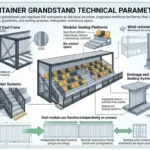
A Arquibancada para Esporte Deve Corresponder aos Cronogramas do Evento
Grandes estádios tradicionais:
Taxas de aluguel elevadas
Poucas pessoas – optar por grandes estádios. Alta taxa de assentos vazios e espaço ocioso.
Grandes estádios têm cronogramas apertados. Há muitos eventos. É difícil fazer reservas.
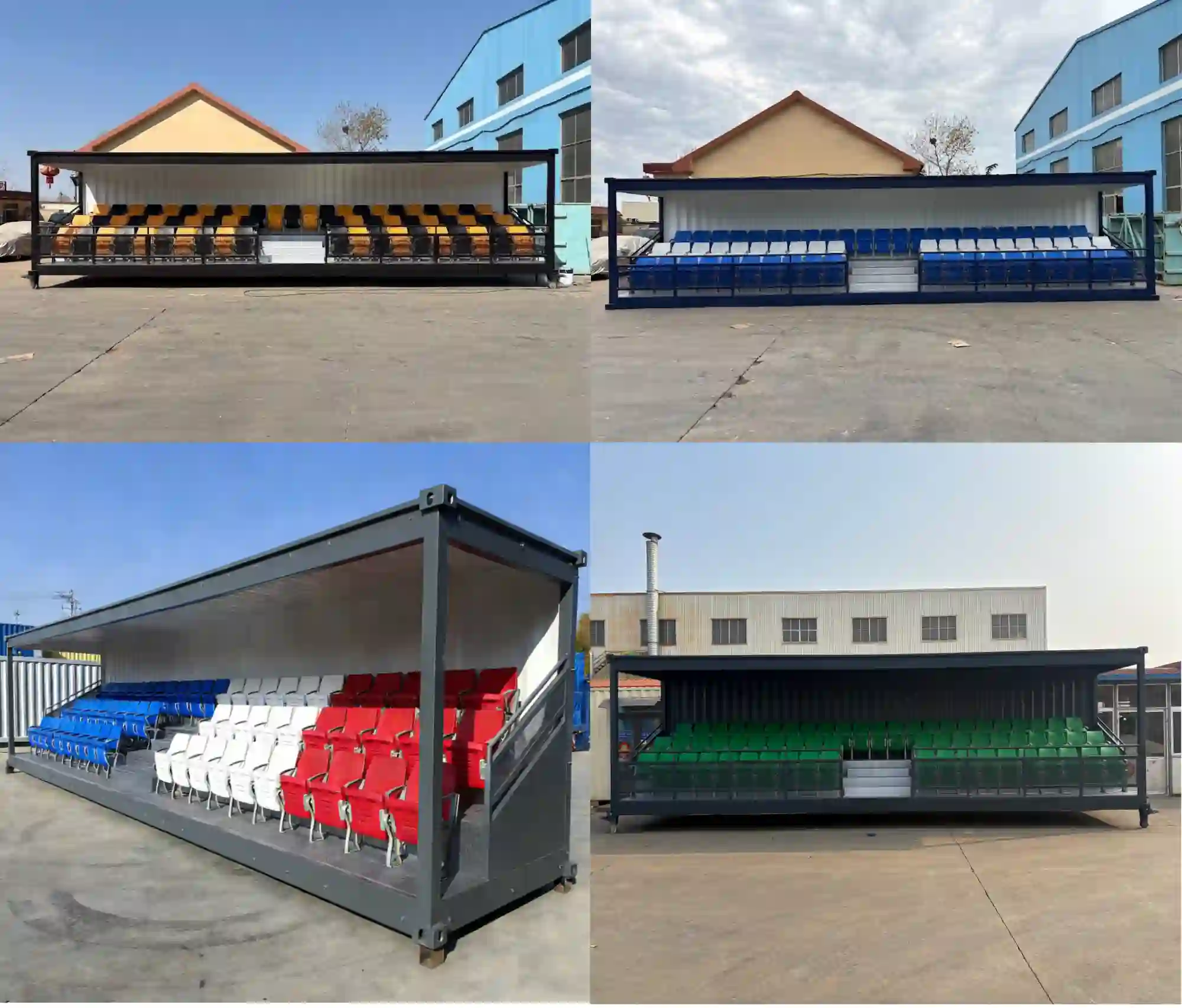
Escolher o container para espectadores pode resolver esses problemas.
As arquibancadas em contêineres Operam por montagem mecânica, em vez de cura química. Estruturas de aço são conectadas por parafusos de alta resistência com torque de pré-carga em torno de 20–30 kN, criando capacidade de carga imediata após a instalação. Sem espera.
Os números falam por si. Uma arquibancada container para 3.000 assentos é instalada em 8–12 dias com uma equipe de 6 pessoas, enquanto uma estrutura de concreto equivalente exige mais de 70 dias com 25+ trabalhadores. A densidade de mão de obra passa de uma forte dependência do canteiro para uma montagem modular controlada.
Em operações reais, organizadores de eventos que reduzem o tempo de montagem em 50 dias liberam a venda antecipada de ingressos. Considerando uma receita diária de $20,000, essa mudança gera uma janela de receita adicional de $1M antes mesmo do primeiro jogo começar.
Em vários eventos esportivos, existem jogos em casa e jogos fora. Os containers para espectadores podem ser transportados rapidamente e movidos para diferentes locais conforme as mudanças de cronograma.
Comportamento Estrutural da Arquibancada para Esporte sob Movimento da Multidão
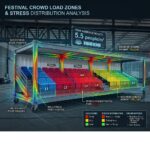
Saltos de espectadores introduzem cargas periódicas. A frequência do movimento sincronizado frequentemente fica entre 1,5–2,5 Hz, o que pode amplificar a vibração estrutural se ocorrer ressonância.
As arquibancadas container evitam isso por meio de uma geometria de pórtico rígido, garantindo que a estrutura permaneça fora das faixas de frequência perigosas definidas nas diretrizes de desempenho dinâmico e projeto de estádios . O uso de juntas de aço resistentes a momento e contraventamentos diagonais aumenta a frequência natural além das faixas típicas de excitação da multidão. Isso previne a ressonância.
O desempenho medido mostra que o deslocamento máximo permanece abaixo de 2,5 mm sob carga total, em comparação com sistemas de andaimes que podem exceder 6 mm de deslocamento, criando oscilação visível.
Frase curta: rigidez é importante.
Essa diferença altera a percepção de segurança. As seguradoras quantificam o risco estrutural com base na deflexão e nos ciclos de fadiga. Menor deslocamento reduz o acúmulo de tensão de fadiga em mais de 40%, estendendo a vida útil do sistema além de 10 ciclos de implantação sem degradação estrutural.
Para os operadores, isso significa menos inspeções, menos reforços e menos interrupções operacionais.
A estrutura das arquibancadas container transformadas a partir de contêineres de transporte possui estabilidade, e as arquibancadas container não balançarão quando as pessoas vibrarem e comemorarem.
Estrutura de Custos da Arquibancada para Esporte em Múltiplos Eventos
Estruturas de uso único drenam capital. Sistemas modulares acumulam valor. Diferentemente das estruturas de concreto, as arquibancadas container funcionam como ativos móveis, incorporando os princípios de sustentabilidade de edifícios realocáveis ao reduzir resíduos de demolição e maximizar a reutilização.
Arquibancadas tradicionais prendem o investimento em um único local. Uma vez que o evento termina, a estrutura permanece sem uso ou requer demolição.
As arquibancadas container funcionam como ativos móveis. A estrutura de aço, protegida por camadas de galvanização que excedem 80 μm de espessura, resiste à corrosão por mais de , proporcionando até sob exposição externa. Isso permite implantação repetida sem degradação significativa do material.
A modelagem financeira revela a mudança claramente. O custo inicial por assento para sistemas container varia de $140–$180, enquanto estruturas de concreto frequentemente excedem $350 por assento quando incluem fundação e mão de obra.
O fator crítico é a reutilização. Após cinco eventos, o custo efetivo por assento para sistemas container cai abaixo de $40, enquanto o concreto permanece acima de $300 devido à sua natureza fixa.
Na prática, um organizador esportivo regional que realiza torneios sazonais reduziu o gasto de capital em mais de $1,3M anualmente ao migrar para sistemas modulares de assentos.
A Logística Define se a Arquibancada para Esporte Pode Escalar Globalmente
Eventos atravessam fronteiras. A infraestrutura deve acompanhar.
As arquibancadas container estão alinhadas com os sistemas de transporte ISO. Cada módulo se encaixa em contêineres padrão de 20 pés ou 40 pés, permitindo a integração nas redes logísticas marítimas e terrestres existentes sem a necessidade de licenças especiais.
A eficiência de carregamento melhora drasticamente. Um único contêiner de 40 pés transporta componentes estruturais para aproximadamente 250–300 assentos, dependendo da densidade da configuração. Isso reduz o volume de transporte em comparação com materiais de andaimes soltos.
O tempo de transporte torna-se previsível. As programações de frete marítimo operam dentro de ciclos fixos, enquanto o transporte local requer apenas caminhões padrão.
Frase curta: a previsibilidade reduz o risco.
Do ponto de vista dos custos, a embalagem otimizada reduz as despesas de frete em 25–35%, especialmente em implantações intercontinentais. Isso é relevante quando os eventos ocorrem em várias cidades ou países dentro de uma única temporada.
Operacionalmente, isso permite um novo modelo: movimentar ativos de assentos em vez de reconstruí-los.
A escolha de arquibancadas em contêiner permite o transporte usando métodos de transporte de contêineres, mesmo além de fronteiras regionais. Nossa equipe de transporte possui vasta experiência em transporte de contêineres, minimizando o risco de danos durante o transporte. Garantimos que os contêineres possam ser entregues em eventos esportivos em todo o país.
Arquibancada para Esporte Deve Adaptar-se às Condições Variáveis do Local
Locais esportivos temporários podem ser realizados em diferentes locais. A arquibancada em contêiner só precisa de uma fundação plana adequada e pode se adaptar a qualquer terreno.
As arquibancadas em contêiner dependem de uma geometria modular. Cada unidade funciona como um bloco estrutural que se conecta horizontal e verticalmente. Placas de base ajustáveis compensam irregularidades no solo de até 50 mm de variação sem necessidade de trabalho adicional de fundação.
A inclinação dos assentos, tipicamente entre 20° e 30°, pode ser modificada ajustando a altura de empilhamento dos módulos. Isso garante linhas de visão desobstruídas, independentemente das dimensões do campo.
Frase curta: flexibilidade vende ingressos.
Melhores linhas de visão traduzem-se diretamente em maior utilização dos assentos. Estudos em gestão de eventos mostram que ângulos de visão aprimorados aumentam as taxas de ocupação em 15–25%, especialmente em zonas de assentos intermediárias.
Do ponto de vista comercial, isso transforma o design do layout em uma ferramenta de otimização de receita, em vez de uma restrição fixa.
Por que a Arquibancada para Esporte Usando Sistemas de Contêiner se Torna a Escolha Padrão
A mudança já está acontecendo.
Organizadores de eventos priorizam velocidade, mobilidade e retorno sobre o investimento. Soluções de arquibancada para esporte baseadas em contêiner atendem a todos os três com impacto mensurável: implantação mais rápida, menor custo de ciclo de vida e desempenho de segurança consistente.
Cada vantagem se acumula. A montagem mais rápida leva a uma receita antecipada. A reutilização reduz o ônus de capital. A mobilidade permite a expansão entre mercados.
Frase curta: o impulso se constrói.
Resumo
Este artigo apresenta principalmente as vantagens e características das arquibancadas em contêiner como assentos para espectadores em eventos esportivos. As arquibancadas em contêiner também têm outros usos, como festivais de música, celebrações de feriados, cerimônias de posse, atividades escolares e muito mais. Em resumo, as arquibancadas em contêiner são uma solução muito adequada para assentos ao ar livre.
 Inglês