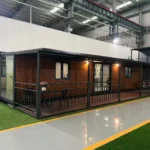
The Triple Advantage: Why Premium Materials in Expandable Container Houses Drive Profit and Comfort For global distributors and project developers, the transition from traditional prefab units to the modern expandable container house represents a strategic shift toward quality. It is no longer just about providing a temporary shelter; it is about delivering a high-performance home. […]
For global distributors and project developers, the transition from traditional prefab units to the modern expandable container house represents a strategic shift toward quality. It is no longer just about providing a temporary shelter; it is about delivering a high-performance home. By prioritizing superior expandable container house material, you are investing in three core pillars: long-term economic ROI, unparalleled tenant comfort, and a product life cycle that spans decades.
The most immediate advantage of the expandable container house over traditional prefab buildings is its “Heavy-Duty” DNA. While traditional prefab houses are often viewed as 5-to-10-year temporary solutions, a high-spec expandable house is designed for 20 to 30 years of continuous use.
Corrosion-Proof Skeleton: We utilize Q235B or Q355B hot-dip galvanized steel. Unlike the light-gauge steel used in standard prefab, this framework is treated with a zinc coating thickness of over 60μm to 80μm. This ensures the structure remains rust-free even in salty coastal air or high-moisture tropical climates.
Mechanical Precision: The hinges and hydraulic/manual expansion systems are made from reinforced stainless steel components. This allows the house to be folded and relocated dozens of times without the frame sagging or the joints leaking—a durability factor that traditional “knock-down” prefab kits simply cannot provide.
A house is only as good as it feels to live in. One of the biggest complaints regarding traditional prefab buildings is that they feel “flimsy” or “loud” during rain and wind. The premium material selection in an expandable container house solves these pain points:
Acoustic and Thermal Shielding: By using 75mm or 100mm high-density Rock Wool or PU (Polyurethane) sandwich panels, we create a thermal bridge-free environment. This keeps the interior 5°C to 10°C cooler in summer and significantly warmer in winter compared to thin-wall prefab units.
Solid Underfoot Feel: Traditional prefab often uses thin plywood flooring that flexes or creaks. Our expandable houses feature 18mm cement fiberboard topped with heavy-duty SPC (Stone Plastic Composite) flooring. This provides a stone-solid feel underfoot, mimics the aesthetics of high-end apartments, and is 100% waterproof and termite-proof.
Air Quality: All interior finishes are “E0” or “E1” grade, meaning they emit zero or negligible VOCs (Volatile Organic Compounds), ensuring a healthy breathing environment for the end-user from day one.
R-Value Advantage: These materials provide a significantly higher R-value (resistance to heat flow). Rock wool, being a mineral-based fiber, does not just block heat; it absorbs sound and is entirely fireproof.
Reflective Outer Coating: The galvanized steel skin is finished with high-reflectivity fluorocarbon paint. This acts as a radiant barrier, reflecting up to 70% of solar radiation before it even reaches the insulation layer.
Eliminating Thermal Bridges: Traditional prefab structures often have gaps in the frame where heat “leaks” in. Expandable container houses use precision-engineered EPDM rubber sealing strips at every folding joint, creating an airtight seal that prevents hot air infiltration.
From a procurement perspective, the “cheap” price tag of traditional prefab is often a trap. The total cost of ownership (TCO) of an expandable container house is significantly lower over time.
Zero Maintenance Costs: Because the exterior is finished with fluorocarbon paint or high-grade powder coating, there is no need for frequent repainting. The materials are UV-resistant, preventing the “chalking” or fading common in cheaper prefab materials.
Quantifiable Energy Savings: The superior insulation leads to an average 40% reduction in HVAC electricity consumption. For a developer managing a village of 50 units, this equates to thousands of dollars saved in utility overhead annually.
High Asset Residual Value: Because the materials are highly recyclable and the structure is robust, these houses retain a high resale value. While a 10-year-old traditional prefab is often scrap metal, a 10-year-old expandable container house remains a valuable, movable real estate asset.
| Advantage | Key Benefits | Specific Materials and Features | Comparison with Traditional Prefab |
|---|---|---|---|
| Built for Decades | Material Longevity and Structural Integrity | Q235B or Q355B hot-dip galvanized steel with zinc coating over 60m to 80m | Designed for 20-30 years vs 5-10 years |
| Built for Decades | Mechanical Precision | Reinforced stainless steel hinges and hydraulic/manual expansion systems | Can be folded and relocated dozens of times without sagging or leaking |
| Tenant Experience | Acoustic and Thermal Shielding | 75mm or 100mm high-density Rock Wool or PU sandwich panels | Keeps interior 5°C to 10°C cooler in summer and warmer in winter |
| Tenant Experience | Solid Underfoot Feel | 18mm cement fiberboard topped with heavy-duty SPC flooring | Stone-solid feel, waterproof, termite-proof, mimics high-end apartments |
| Tenant Experience | Air Quality | E0 or E1 grade interior finishes with zero or negligible VOCs | Healthy breathing environment from day one |
| Tenant Experience | R-Value Advantage | High-density Rock Wool insulation, fireproof and sound-absorbing | Significantly higher R-value than thin-wall prefab |
| Tenant Experience | Reflective Outer Coating | High-reflectivity fluorocarbon paint on galvanized steel skin | Reflects up to 70% of solar radiation |
| Tenant Experience | Eliminating Thermal Bridges | Precision-engineered EPDM rubber sealing strips at folding joints | Creates airtight seal preventing heat infiltration |
| Economic Gains | Zero Maintenance Costs | Fluorocarbon paint or high-grade powder coating, UV-resistant | No need for frequent repainting, no chalking or fading |
| Economic Gains | Quantifiable Energy Savings | Superior insulation | Average 40% reduction in HVAC electricity consumption |
| Economic Gains | High Asset Residual Value | 90% recyclable steel, robust structure | Retains high resale value after 10 years vs scrap metal |
About purchasing expandable container house, you are opting for a “Long-Life” building. The combination of 90% recyclable steel, fire-rated insulation, and luxury interior finishes creates a product that is environmentally responsible, financially lucrative, and—most importantly—a place that people are proud to call home. Whether for a remote mining camp, a luxury granny flat, or disaster relief, the material quality ensures your investment stands the test of time.
Your email address will not be published. Required fields are marked *
 English