News

Expandable Container House guide and walkthrough for purchasing reference

03.24.2026

Expandable Container House Guide Walkthrough for Purchasing A Complete B2B Buyer’s Reference In today’s fast-moving construction and modular building market, expandable container houses are no longer a niche product—they are becoming a mainstream solution for fast deployment, cost control, and scalable space expansion.  For importers, contractors, and project developers, understanding how to evaluate and purchase […]

Expandable Container House Guide Walkthrough for Purchasing

A Complete B2B Buyer’s Reference

In today’s fast-moving construction and modular building market, expandable container houses are no longer a niche product—they are becoming a mainstream solution for fast deployment, cost control, and scalable space expansion.  For importers, contractors, and project developers, understanding how to evaluate and purchase the right expandable container house is critical. This guide provides the Expandable Container House for Purchasing experience. Learn about what is the exapndable container house,container house design,market trend and more.


1. What Is an Expandable Container House?

As a purchaser, it is very important to understand more container house Contents.

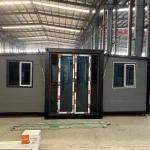
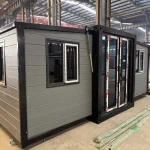
An expandable container house is a foldable modular structure that can be transported in a compact form and expanded on-site into a fully functional building.

Key Characteristics:

  • Folded during transportation → reduced shipping cost
  • Expanded on-site → instant usable space
  • Pre-installed electrical & plumbing systems
  • Reusable and relocatable

Typical Sizes:

  • 20ft expandable container house
  • 30ft expandable container house
  • 40ft expandable container house

Compared with traditional container houses, the expandable version offers:

  • 2–3x usable space after unfolding
  • Faster installation (usually within hours)
  • Lower labor dependency

2. Market Demand & Industry Trends

2.1 Why Demand Is Growing

From a global B2B perspective, buyers are shifting toward expandable solutions due to:

1) Rising Construction Costs

Traditional buildings:

  • High labor costs
  • Long project timelines
  • Increasing material prices

Expandable container houses:

  • Factory-controlled production
  • Reduced on-site labor
  • Predictable cost structure

2) Need for Rapid Deployment

Projects today require speed:

  • Emergency housing
  • Worker camps
  • Temporary commercial spaces

Expandable houses can be installed in 1–2 days instead of weeks or months.


2.2 Industry Trends You Should Know

Trend 1: Modular + Customization

Buyers are no longer satisfied with standard units. They want:

  • Custom layouts
  • Integrated bathrooms/kitchens
  • Branding-ready designs

Trend 2: Energy Efficiency

Increasing demand for:

  • Insulated wall panels (rock wool / EPS)
  • Heat-resistant roofing
  • Energy-saving windows and doors

Trend 3: Multi-Scenario Use

Expandable container houses are evolving from “temporary use” to:

  • Semi-permanent housing
  • Commercial applications
  • Tourism accommodation

3. Key Design & Structural Considerations

When purchasing expandable container houses, design determines long-term usability and cost efficiency.

3.1 Structural Frame

High-quality expandable houses use:

  • Q235 galvanized steel frame (2.0–2.5mm thickness)
  • Powder-coated surface for corrosion resistance

Why it matters:

  • Ensures durability during repeated folding/unfolding
  • Improves lifespan in humid or coastal environments

3.2 Wall & Roof System

Common options:

  • Rock wool sandwich panels (fireproof, high insulation)
  • EPS panels (lightweight, cost-effective)

Key decision factors:

  • Climate conditions
  • Fire safety requirements
  • Budget level

3.3 Expansion Mechanism

This is one of the most overlooked but critical parts.

Look for:

  • Precision steel hinge systems
  • Stable sliding/expansion structure
  • Reinforced support columns

Poor expansion systems lead to:

  • Misalignment
  • Water leakage
  • Structural instability

3.4 Sealing & Waterproofing

A professional supplier should provide:

  • EPDM rubber sealing systems
  • Waterproof roof design
  • Drainage planning

This directly impacts:

  • Rain resistance
  • Long-term maintenance cost

4. Main Application Scenarios

Understanding use cases helps buyers choose the right configuration.

4.1 Worker Accommodation Camps

  • Construction sites
  • Mining projects
  • Infrastructure development

Benefits:

  • Fast deployment
  • Easy relocation
  • Scalable capacity

4.2 Resort & Hotel Projects

  • Eco-resorts
  • Glamping sites
  • Tourist villages

Why expandable houses work:

  • Low initial investment
  • Fast ROI
  • Flexible layout expansion

4.3 Commercial Use

  • Pop-up stores
  • Street shops
  • Exhibition booths

Advantages:

  • Eye-catching modular design
  • Easy transport between locations
  • Custom branding options

4.4 Emergency & Government Projects

  • Disaster relief housing
  • Temporary medical facilities
  • Refugee shelters

Key requirement:

  • Rapid mass deployment
  • Reliable structural safety

Conclusion

Expandable container houses are not just a product—they are a complete modular building solution.

For B2B buyers, they offer:

  • Speed
  • Flexibility
  • Cost efficiency
  • Scalable growth potential

By following this guide, you can know about Expandable Container House for purchasing tips,make a well-informed purchasing decision and maximize the value of your investment.


Leave a Reply

Your email address will not be published. Required fields are marked *

Post Comment
Index